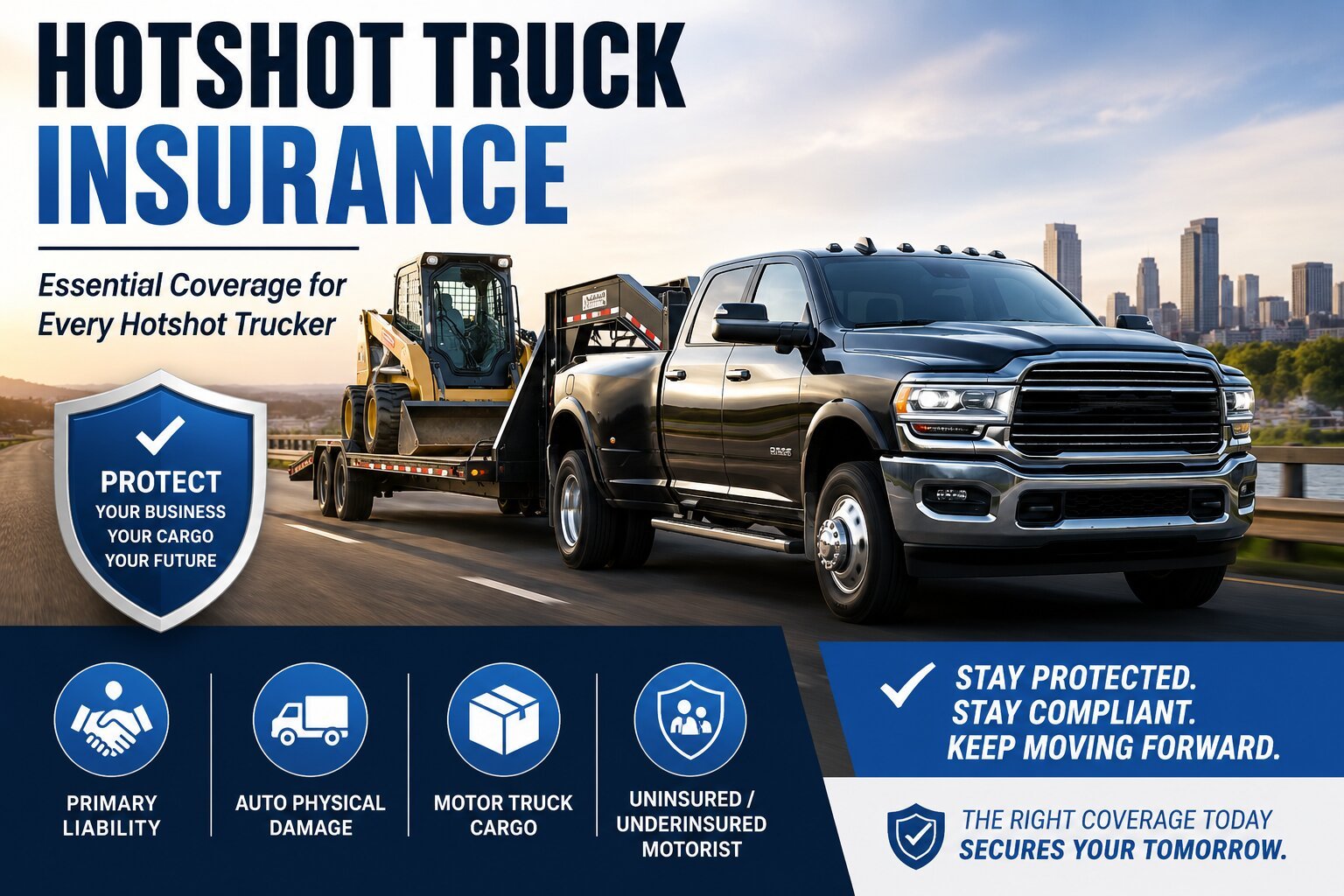
What Is Hotshot Truck Insurance?
Hotshot Truck insurance is designed for drivers who haul time-sensitive loads using medium-duty pickup trucks or similar vehicles rather than large commercial rigs. These drivers, often called hotshot truckers, transport smaller loads quickly from one location to another.
Typically, hotshot truckers use non-commercial vehicles such as duallies or medium-duty pickup trucks to pull gooseneck, dovetail, or flatbed trailers.
Because of the fast-paced, time-critical nature of their work, hotshot trucking operations require specialized insurance to protect against potential risks on the road — covering the vehicle, trailer, cargo, and liability exposures.
Quick Answers
Hotshot truck insurance protects drivers who haul time-sensitive loads using pickup trucks, duallies, or medium-duty trucks with trailers. It covers liability, cargo, physical damage, and other road risks.
Most hotshot truckers need primary liability coverage, while cargo and physical damage insurance are strongly recommended. Insurance costs vary based on cargo type, truck size, operating radius, and whether you haul for personal or commercial purposes. Personal-use coverage may cost around $1,500 annually, while for-hire hotshot operations often pay $7,500 or more per year. Drivers operating over 26,000 lbs GVWR or crossing state lines may also need FMCSA filings and MC Authority compliance.
What Can Hotshot Truckers Haul?
Hotshot truckers have the flexibility to transport a wide variety of commodities depending on the type of trailer they use and their hauling capacity.
Most hotshot truckers typically move general freight, but they are also known for transporting flatbed loads such as:
- Building materials
- Light machinery and equipment
- Pipes and lumber
- Automobiles and other vehicles
Because of this versatility, hotshot trucking is an attractive option for newcomers to the trucking industry. It offers a lower entry cost, faster turnaround times, and the ability to haul different types of loads without operating a full-sized commercial truck.
Do Hotshot Truckers Need State Filings?
In most cases, hotshot truckers using a dually or medium-duty pickup do not need state or federal filings — unless certain conditions apply.
You’ll need filings only if:
- Your vehicle has a gross vehicle weight rating (GVWR) above 26,000 lbs, or
- You cross state lines as part of your operations.
If either applies, you’ll likely need to meet FMCSA filing requirements and obtain proper authority and insurance documentation to stay compliant.
Essential Insurance Coverages for Hotshot Trucks
Hotshot trucking operations require specific insurance policies to stay protected on the road. Here’s what you need and want for complete coverage:
✅ Primary Liability – Required by law, this covers bodily injury and property damage caused to others in an accident.
Optional but Recommended Coverages:
Auto Physical Damage – Covers repair or replacement costs for your truck and trailer in case of an accident, theft, or vandalism.
Motor Truck Cargo – Protects the freight you’re hauling from damage, loss, or theft.
Uninsured/Underinsured Motorist – Covers injuries or damages if you’re hit by a driver with little or no insurance.
These coverages together provide a solid protection plan for any hotshot trucker
Hotshot Truck Insurance Limits and Costs
Required Insurance Limits:
Hotshot truckers typically carry their state’s required minimum coverage unless a shipper or broker contract specifies higher limits.
State Requirement: Most states require Primary Liability coverage of $750,000 Combined Single Limit (CSL) for vehicles over 26,000 lbs.
Shipper Requirement: Many shippers and brokers expect $1,000,000 CSL, even if the vehicle weighs less than 26,000 lbs.
Hotshot Insurance Cost Breakdown:
The cost of hotshot insurance depends on what you haul and whether it’s for personal or commercial purposes.
- For personal use (hauling your own equipment): Around $1,500 per year.
- For hire (hauling for clients): Roughly $7,500 per year.
- When speaking with an insurance agent, clearly explain:
- What kind of cargo you’re hauling
- Whether you’re using a trailer
- If the hauling is for your own business or for-hire transport
If you have MC Authority, you must maintain at least $750,000 in liability coverage, though most shippers prefer carriers with $1,000,000 for better protection and credibility.