
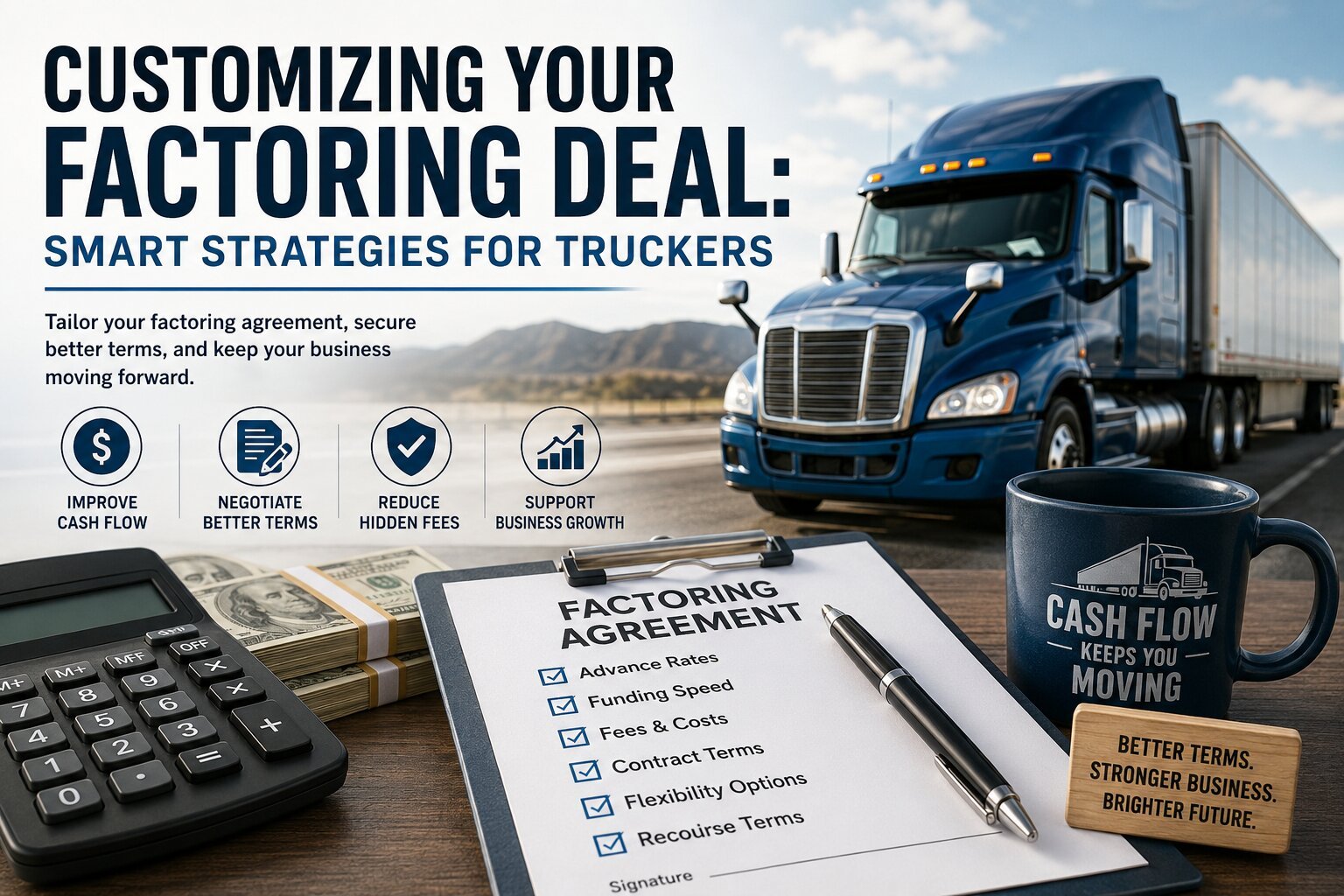
Smart Strategies for Truckers
Learn how to tailor your factoring agreement to fit your trucking business and secure the best possible financial terms.
Factoring contracts can be tricky, yet they directly influence your cash flow, flexibility, and long-term growth. After years of experience working with factoring companies and owner-operators, one thing is certain — every trucking business is unique. That’s why your factoring agreement should be personalized to match your specific routes, clients, and financial goals, ensuring you get the most value from your partnership.
Quick Answers
Customizing your factoring agreement helps trucking businesses improve cash flow, reduce hidden costs, and gain more flexibility. Truckers should carefully review advance rates, funding speed, contract length, termination fees, and recourse terms before signing.
Negotiating better terms and understanding fees like float days, monthly minimums, and auto-renewals can protect profits and support long-term business growth. Choosing a factoring company with trucking industry experience and transparent pricing is essential for building a strong financial partnership.
Understanding Factoring Contracts: What Every Trucker Should Know
A factoring contract is an agreement between your trucking company and a factoring service provider that helps boost your cash flow. In simple terms, you sell your unpaid invoices at a small discount in exchange for immediate payment. The factoring company then takes on the responsibility of collecting payment from the shipper or broker, usually within 30, 60, or 90 days.
These contracts typically last 1 to 3 years and include important terms like renewal clauses, termination policies, and funding rules. Many modern factoring companies now offer carrier-focused contracts designed for growing trucking businesses.
Here are some key contract terms to watch closely:
Termination Fees: Some contracts charge a fee if you cancel early or switch providers.
Notice Periods & Penalties: Ensure the contract includes clear, fair language that protects both you and the factoring company.
Recourse vs. Non-Recourse: In recourse factoring, you’re responsible if the customer doesn’t pay. In non-recourse factoring, the factoring company takes on that risk — a crucial distinction.
Why Customizing Your Factoring Contract Matters
Before signing any factoring agreement, it’s essential to understand your cash flow patterns and the seasonal trends in the regions you operate. These factors determine how factoring will best fit into your overall business strategy.
Entering a factoring contract without a clear grasp of your company’s financial needs can lead to unnecessary challenges. By customizing your contract to align with your freight cycles and revenue flow, you can ensure the agreement truly supports your trucking business instead of restricting it.
Mastering the Art of Negotiation
When it comes to factoring agreements, there’s always room to negotiate. The best factoring companies take the time to understand your business and offer customized contracts that meet your specific needs. After all, factoring isn’t just a service — it’s a partnership.
A strong, profitable trucking operation benefits both you and the factoring company. Don’t hesitate to speak up during the quotation process to discuss terms, rates, or contract flexibility. You can also gain valuable insights by talking with other trucking business owners who have firsthand experience with different factoring providers.
What You Can Negotiate in a Factoring Contract
When finalizing a factoring agreement, understanding what terms are negotiable can help you get the best deal for your trucking business. Here are some key areas to focus on:
Advance Rates:
Try to negotiate a higher advance rate—the percentage of your invoice paid upfront. A better rate means more cash flow available immediately for your operations.
Speed of Funding:
Request faster funding timelines so you can access working capital quickly. Ensure the process is reliable and straightforward, with minimal delays or unnecessary steps.
Recourse vs. Non-Recourse:
If your customers have a strong payment history, aim for non-recourse factoring, which protects you from unpaid invoices. In some cases, recourse factoring can still make sense—choose what aligns best with your business needs.
Contract Terms:
Carefully review your agreement to identify and remove hidden fees or unnecessary restrictions. Whenever possible, ask for a trial period or short-term contract to evaluate the service before committing long-term.
Smart Options to Explore in Your Factoring Agreement
When tailoring your factoring contract, exploring additional options can help you save money and improve efficiency. Here are two key areas to consider:
Seasonal Flexibility:
If your trucking business experiences seasonal slowdowns, ask your factoring company about adjustable advance rates. This allows you to reduce costs during off-peak periods while still maintaining access to funds when you need them most.
Credit Control Services:
Some factoring companies offer credit control, managing collections, tracking payments, and following up on unpaid invoices. This service can free up your time and reduce stress. In many cases, these companies operate confidentially, so your clients won’t know you’re using a factoring service.
Understanding Common Fees and Terms in Factoring Agreements
Before signing a factoring contract, it’s important to know the typical fees and terms involved. Here are two of the most common ones:
Origination Fee:
This is an upfront fee you pay when starting a factoring agreement. It’s usually a small percentage of your credit line and helps cover the setup process. The good news is that this fee is often included in the funds you receive from the factoring company, so it won’t strain your cash flow.
Termination Fee:
If you decide to end your contract early or switch to another factoring provider, you might need to pay a termination fee. This fee is typically a percentage of your credit line but can vary depending on the terms in your agreement. Always review these details carefully before signing to avoid surprises later.
Monthly and Weekly Fees
Depending on your factoring agreement, you may need to pay monthly or weekly fees. These charges vary from one factoring company to another, as each may offer different rates or billing schedules. To get the best deal, take time to compare offers from multiple providers and understand how their fee structures work. Some companies may provide lower rates or more flexible payment terms, which can make a big difference for your business.
Customer Limit
Factoring companies often set a customer limit to reduce risk. This means they limit how much of your credit line can be tied to invoices from a single customer. If most of your invoices come from one client, you may not qualify for the full funding amount. Knowing your customer limit helps you plan your cash flow and manage your funding expectations more effectively.
Common Mistakes to Avoid When Using Factoring
Even though factoring can be a great way to manage cash flow, there are a few pitfalls that truckers and small business owners should watch out for:
1.Long-Term Contracts
Always read the fine print before signing anything. Choose a contract length that fits your business goals. If you prefer flexibility, negotiate shorter terms or make sure your agreement allows you to adjust when your financial situation changes.
2.High or Hidden Fees
Transparency is key. Ask your factoring provider to clearly outline all fees upfront—no surprises later. Understanding the full cost helps you plan your finances better and ensures factoring truly benefits your cash flow.
4.Incorrect Payment Routing
It may sound simple, but make sure all payments from your customers are directed to your factoring company, not to you. This prevents confusion, delays, and unnecessary credit control issues.
4. Lack of Customer Credit Checks
Choose a factoring company that performs thorough credit checks on your customers. This helps protect you from non-payment and builds a safer, more stable business relationship. After all, both you and your factoring partner benefit from reliable clients.
Key Things to Keep in Mind Before Signing a Factoring Agreement
Before entering a factoring contract, it’s important to understand all the details so you can make informed decisions. Here’s what to pay close attention to:
Be Aware of All Fees
Factoring costs often include more than just the basic rate. Fees can increase depending on how long your invoices remain unpaid. You may also face early termination (breakup) fees if you end your contract early, or monthly minimum fees if your invoice totals don’t meet a set amount.
Knowing about these potential charges ahead of time will help you avoid surprises and manage your cash flow more effectively.
Watch Out for Auto-Renewal Clauses
When reviewing a factoring contract, always check for an auto-renewal clause. This clause allows the factoring company to automatically extend your agreement for another term—often billing you without requiring new approval.
Many contracts automatically renew 60 to 90 days before the current term ends, which can catch some truckers off guard. To protect yourself, choose a factoring partner that offers a 30-day cancellation window. This gives you flexibility and helps you avoid extra costs if you decide to end your contract.
Understand the Impact of Float Days
Float days refer to the time it takes for funds to clear after your customer’s payment is received. Even a short float—like three days—can increase your costs under tiered fee structures, where fees rise as invoices age. In some cases, this can boost your total cost by over 40%.
To prevent this, carefully read your contract’s terms about how interest and fees are calculated. Knowing how float days affect your costs will help you manage expenses and keep your factoring affordable.
Be Careful with Auto-Renewal Clauses
An auto-renewal clause allows the factoring company to automatically extend your contract and keep billing you without needing your approval.
In many cases, factoring agreements renew automatically 60 to 90 days before the current term expires. To avoid being locked into another term unexpectedly, review your contract carefully and ask your provider for a clear cancellation policy or a shorter notice period.
Understanding the Legal Language in Factoring Contracts
Factoring agreements can include a lot of complex terms, and every company may define them differently. Here are a few key points to understand before signing any contract:
Selling Accounts Receivable
Clarify which invoices you plan to sell to the factoring company. If there are certain invoices you don’t want to include, discuss and exclude them before signing the contract. Being clear from the start helps avoid confusion later.
Approving Customer Credit
Factoring is based on your customers’ creditworthiness, not your own. This means you must allow the factoring company to check your customers’ credit history. Make sure you understand how this process works and what happens if a customer is denied.
Advance Amount
The advance rate is the percentage of your invoice that you receive upfront. This rate can vary depending on the factoring company, the size of the invoice, and the type of freight you haul. Always confirm your advance percentage before agreeing to the terms.
How to Choose the Right Factoring Agreement
Selecting the best factoring agreement starts with doing your homework. Look into each company’s reputation, experience, contract terms, pricing structure, and customer service. It’s also important to choose a factoring partner that understands the trucking industry, as industry-specific knowledge can make the process smoother and more flexible for your business needs.
Final Thoughts
Factoring can be a valuable tool for improving cash flow and keeping your trucking business on the road. However, choosing the right partner is key. Just like in trucking, building strong, trustworthy relationships makes all the difference.
Use this guide as your starting point to understand the world of factoring and make confident decisions for your business. Remember — navigating factoring, much like navigating the open road, takes attention, experience, and a bit of courage to get where you want to go.