Are They the Right Choice for Your Business?
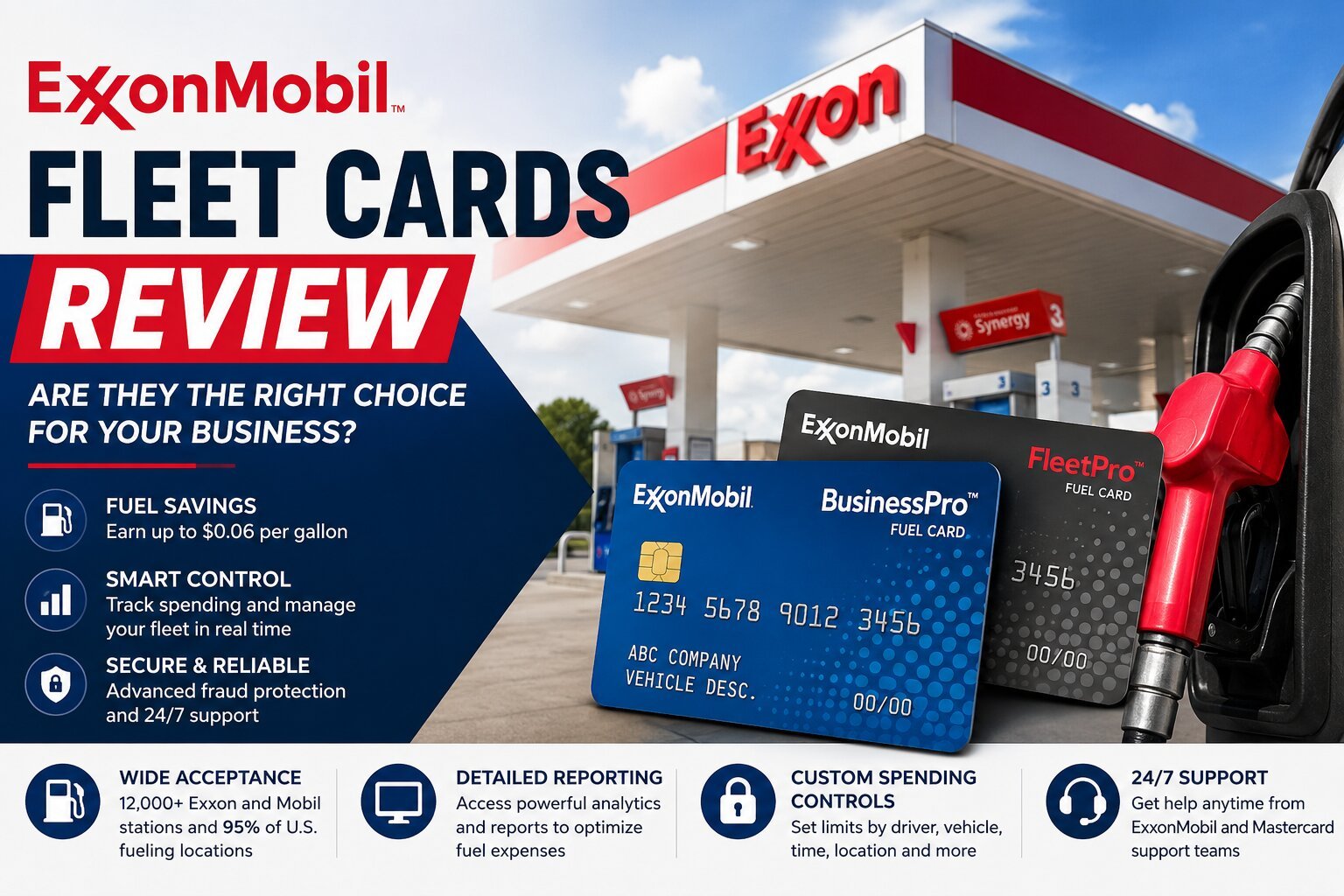
If you’re considering an ExxonMobil Fleet Cards to manage fuel expenses for your business, you’ll find two strong options designed for different types of fleets — the BusinessPro and the FleetPro.
The ExxonMobil BusinessPro Card is ideal for gas-powered fleets of any size, making it a smart solution for small to medium-sized businesses that want simple and effective fuel management. Meanwhile, the FleetPro Card is designed for diesel and mixed fleets, offering broader functionality and advanced tools that suit larger or more complex operations.
Additionally, both cards help businesses reduce fuel costs, monitor vehicle spending, and improve financial oversight. They also include advanced reporting tools, fraud protection, and customizable spending controls that allow fleet managers to track every purchase and reduce unauthorized transactions.
Whether your fleet operates locally or nationwide, ExxonMobil’s fuel card programs provide the flexibility and visibility needed to keep operations efficient and cost-effective.
If you’re still comparing options, you may also want to explore our complete guide to the best fuel cards of 2025 to see how ExxonMobil compares with other leading providers. Otherwise, continue reading to discover which ExxonMobil fleet card best fits your business needs.
Quick Answers
The ExxonMobil Fleet Cards offer flexible fuel management solutions for businesses of all sizes. The BusinessPro card is best for gasoline-powered fleets and provides up to $0.06 per gallon in rebates at Exxon and Mobil stations.
Meanwhile, the FleetPro card is designed for diesel and mixed fleets, offering customized pricing and broader fueling flexibility. Both cards include spending controls, real-time reporting, fraud protection, and online account management tools. Additionally, businesses can expand card acceptance to 95% of U.S. gas stations for a small fee. Overall, ExxonMobil fleet cards are a strong choice for companies seeking lower fuel costs, better expense tracking, and improved fleet efficiency.
In a Hurry? Here’s What You Need to Know About ExxonMobil Fleet Cards
If you don’t have time to read the full review, here are the key highlights of ExxonMobil’s fuel card options:
- ExxonMobil offers two primary fuel cards: the BusinessPro Fuel Card and the FleetPro Fuel Card, each tailored to different fleet sizes and operational needs.
- The BusinessPro Fuel Card is best suited for gas-powered fleets and allows businesses to earn up to $0.06 per gallon in rebates at Exxon and Mobil stations.
- Meanwhile, the FleetPro Fuel Card is built for mixed and diesel-powered fleets, providing customized pricing options and diesel-focused savings opportunities.
- In addition, both cards include advanced fleet tracking, data analytics, spending controls, and secure account management features to improve visibility and reduce unnecessary expenses.
ExxonMobil Fuel Card Options: Which One Fits Your Fleet?
ExxonMobil provides two primary fleet fuel card options — the BusinessPro Fuel Card and the FleetPro Fuel Card — with each one tailored to different business requirements. Therefore, the right choice depends on your fleet size, fuel type, and the level of savings or reporting functionality you need.
ExxonMobil BusinessPro Fuel Card
The BusinessPro Fuel Card is ideal for small to large gasoline-powered fleets. Specifically, it offers:
- Fuel rebates at Exxon and Mobil stations
- A wide fueling network for nationwide convenience
- Online account management tools for real-time tracking
- Detailed reporting features to monitor spending and optimize costs
As a result, this card works well for businesses seeking straightforward savings and data-driven fuel management without the complexity of handling multiple payment systems.
Next, let’s examine the key advantages and potential drawbacks of the BusinessPro Fuel Card.
Benefits of the ExxonMobil BusinessPro Fuel Card
The ExxonMobil BusinessPro Fuel Card delivers straightforward savings at the pump, with rebate levels increasing as fuel usage grows. Consequently, businesses can save up to $0.06 per gallon depending on their monthly fuel volume at Exxon and Mobil stations.
For example, if fuel costs average $4.00 per gallon, a $0.06 rebate equals roughly 1.5% savings per gallon — which can significantly reduce operating costs for fleets that fuel frequently.
BusinessPro Rebate Structure
| Monthly Gallons Purchased | Rebate Per Gallon |
|---|---|
| 1 – 500 gallons | $0.01 |
| 500 – 3,999 gallons | $0.03 |
| 4,000 – 6,999 gallons | $0.04 |
| 7,000 – 9,999 gallons | $0.05 |
| 10,000+ gallons | $0.06 |
Furthermore, the ExxonMobil BusinessPro Fuel Card combines flexibility, control, and security, making it an excellent option for small to mid-sized fleets.
Wide Usage Area
Primarily, the BusinessPro Fuel Card is accepted at Exxon and Mobil stations without additional costs. However, businesses can also expand acceptance to 95% of U.S. gas stations by paying a small network fee. As a result, drivers gain greater flexibility to refuel almost anywhere.
Automatic Fuel Expense Tracking
Through ExxonMobil’s online and mobile portals, businesses receive real-time visibility into fuel purchases. Consequently, fleet managers can eliminate paper receipts while improving spending oversight, driver monitoring, and budget management.
Top-Tier Security Features
In addition, ExxonMobil provides strong security protections, including end-to-end encryption, two-factor authentication, firewalls, and remote backups. Each card also supports secure pump PINs and customizable spending controls to help detect suspicious activity quickly.
24/7 Customer Service
Moreover, ExxonMobil offers round-the-clock customer support through phone and online channels. Whether you need help with billing, account management, or technical issues, assistance remains available whenever needed.
Comprehensive Spending Controls
The BusinessPro Fuel Card also gives businesses granular control over fleet spending. For instance, managers can track transactions by employee, vehicle, location, or time while setting custom purchase restrictions based on amount, fuel type, or authorized fueling hours.
Drawbacks and Costs of the ExxonMobil BusinessPro Fuel Card
Although the ExxonMobil BusinessPro Fuel Card delivers strong fuel rebates and advanced reporting tools, businesses should still consider the potential downsides and associated fees before applying.
Account Setup and Monthly Fees
One notable drawback is the added fee structure for expanded acceptance. For fleets with multiple drivers, setup and monthly charges can accumulate quickly, potentially offsetting savings for smaller businesses.
ExxonMobil BusinessPro Fuel Card: Costs and Fees Overview
Private Label Card (ExxonMobil-Only Use)
- Accepted at 12,000 Exxon and Mobil stations nationwide
- Free to open and use
- Eligible for the same rebate structure
- Best suited for fleets fueling primarily at Exxon and Mobil locations
Extended Network Option (95% U.S. Coverage)
- Expands acceptance to 95% of U.S. fuel stations
- Requires a $40 one-time setup fee per account
- Includes a $2 monthly fee per card
- Maintains the same rebate structure as the ExxonMobil-only version
Therefore, this option is ideal for fleets needing nationwide fueling flexibility.
ExxonMobil FleetPro Fuel Card Review
The ExxonMobil FleetPro Fuel Card is a premium fuel management solution created for businesses operating diesel or mixed fleets. In particular, it combines wide acceptance, flexible pricing, and advanced management tools to simplify fleet fueling.
Key Benefits of the ExxonMobil FleetPro Fuel Card
1. Customized Diesel Pricing and Volume Discounts
Unlike the BusinessPro card, the FleetPro card offers customized diesel pricing and volume-based discounts. As a result, large fleets can negotiate more competitive rates directly with ExxonMobil.
2. Driver Rewards Program
Additionally, drivers can earn points through the Exxon Mobil Rewards+ program on both fuel and in-store purchases. These rewards can later be redeemed for discounts, helping businesses save money while improving driver satisfaction.
3. Wide Acceptance Network
The FleetPro card is accepted at 12,000 Exxon and Mobil stations as well as more than 800 commercial fueling locations across the United States. Consequently, drivers benefit from excellent nationwide coverage.
4. Mastercard-Backed Reliability
Because the FleetPro card is backed by Mastercard, it also benefits from global acceptance and trusted payment security standards.
5. Advanced Security and Spending Controls
Furthermore, ExxonMobil includes advanced security measures such as encryption, two-factor authentication, and custom driver prompts. Fleet managers also gain access to detailed reporting tools and customizable spending restrictions.
6. 24/7 Customer Support
In addition, both ExxonMobil and Mastercard provide around-the-clock customer assistance for billing issues, technical support, or driver inquiries.
Drawbacks of the ExxonMobil FleetPro Fuel Card
While the FleetPro card offers strong functionality, businesses should also consider several potential disadvantages.
No Fixed Fuel Discount Structure
Unlike competitors that advertise guaranteed per-gallon rebates, the FleetPro card uses a customized pricing model. Therefore, discounts vary based on fleet size, fuel volume, and negotiated agreements with ExxonMobil.
As a result, smaller fleets may receive less attractive pricing compared to large-volume operators.
ExxonMobil FleetPro Fuel Card Costs and Fees
The FleetPro card follows a pricing structure similar to the BusinessPro card.
Private Label Version (Free Option)
- Limited to Exxon and Mobil stations
- No setup or monthly fees
- Best for fleets fueling primarily within the ExxonMobil network
Universal Acceptance Version
- Accepted at 95% of U.S. fuel stations
- Requires a $40 setup fee
- Includes a $2 monthly fee per card
- However, rebates apply only at ExxonMobil locations
How Do ExxonMobil’s Fuel Cards Compare With Competitors?
If you’re unsure whether ExxonMobil’s fleet cards are the best fit for your business, comparing them with competing providers can help simplify your decision.
ExxonMobil Fleet Cards vs. Edenred Essentials Fuel Card
Both ExxonMobil and Edenred offer strong fuel management solutions, although each serves different operational priorities.
1. Network and Acceptance
The Edenred Essentials Fuel Card, powered by Visa, provides broader acceptance than ExxonMobil’s cards. In fact, it can be used at fuel stations, EV charging points, maintenance shops, parking facilities, and car washes.
By comparison, ExxonMobil cards primarily focus on Exxon and Mobil locations, though expanded coverage is available for an additional fee.
2. Flexibility and Card Options
Edenred offers:
- Fuel Only plans
- Fuel & More plans covering tolls, maintenance, and EV charging
Meanwhile, ExxonMobil structures its cards around fleet fuel type:
- BusinessPro for gasoline fleets
- FleetPro for diesel or mixed fleets
Therefore, Edenred may offer greater flexibility for businesses integrating EVs into their operations.
3. Rebates and Savings
Edenred offers rebates ranging from $0.01 to $0.04 per gallon depending on fuel volume. On the other hand, ExxonMobil’s BusinessPro card provides rebates of up to $0.06 per gallon.
Meanwhile, FleetPro pricing varies based on negotiated agreements.
4. Security and Reporting
Fortunately, both providers include advanced reporting tools, spending controls, and fraud prevention systems that help businesses monitor fuel expenses efficiently.
Verdict: Which Is Better?
If your business requires broader acceptance and EV support, the Edenred Essentials Fuel Card may be the better fit.
However, if your fleet fuels primarily at Exxon or Mobil stations and values stronger gasoline rebates, ExxonMobil’s BusinessPro or FleetPro cards may deliver better long-term value.
ExxonMobil Fleet Cards vs. Comdata Fuel Card
Both ExxonMobil and Comdata are leading names in fleet management. Nevertheless, they target slightly different customer bases.
1. Card Options and Network Coverage
Comdata offers four primary fuel card products:
- Comdata Connect Card
- Comdata Fleet Card
- Comdata OnRoad Card
- Comdata Mastercard
These cards operate across both proprietary and Mastercard-backed networks, allowing fueling at more than 8,000 truck stops nationwide.
Meanwhile, ExxonMobil keeps things simpler with the BusinessPro and FleetPro cards, accepted at 12,000 Exxon and Mobil stations plus expanded nationwide coverage.
As a result, Comdata is generally more attractive for over-the-road trucking fleets.
2. Discounts and Savings Potential
Comdata stands out with discounts of up to $0.25 per gallon at partner truck stops. Additionally, purchases are typically processed at cash prices, which can save another $0.05–$0.10 per gallon.
By contrast, ExxonMobil focuses more on operational simplicity, reporting tools, and fraud prevention than on aggressive fuel discounts.
3. Fees and Setup Costs
Comdata charges:
- A $50 setup fee
- An $8 monthly fee per card
Although these fees are relatively high, the larger fuel discounts may justify the expense for high-mileage fleets.
In comparison, ExxonMobil remains more affordable for smaller businesses, charging only a $40 setup fee and $2 monthly per card for expanded acceptance.
4. Management Tools and Security
Both companies provide:
- Real-time transaction tracking
- Spending controls
- Fraud protection
- Detailed analytics
However, Comdata also integrates with logistics and IFTA reporting systems, making it particularly attractive for trucking operations.
Meanwhile, ExxonMobil’s user-friendly portal makes it ideal for local and regional fleets.
Verdict: Which One Should You Choose?
Choose Comdata if your trucking business prioritizes maximum fuel savings and nationwide truck-stop access.
On the other hand, choose ExxonMobil if you prefer lower fees, simpler account management, and strong digital reporting tools for local or regional fleet operations.
How We Reviewed ExxonMobil Fleet Cards
To evaluate ExxonMobil Fleet Cards fairly, we conducted an in-depth comparison of 13 leading fleet fuel cards in the U.S. market.
Our review focused on affordability, security, usability, reporting capabilities, and operational convenience.
Our Evaluation Framework
We analyzed five core categories and 13 subcategories, covering 43 total evaluation areas. Additionally, each category received a weighted score based on its importance to fleet operators.
The Five Core Categories
1. Security
We examined encryption standards, PIN protection, fraud alerts, and real-time monitoring tools to determine how effectively each card prevents misuse.
2. Customer Support
Next, we reviewed customer support availability, responsiveness, and support channels, including phone, email, and online resources.
3. Expense Management
We also assessed transaction monitoring, reporting features, accounting integrations, and spending controls to measure expense management efficiency.
4. Convenience
Furthermore, we evaluated station coverage, mobile app usability, and digital payment functionality to determine overall ease of use.
5. Card-Specific Features
Finally, we reviewed card fees, accepted fuel types, network flexibility, and additional purchasing capabilities.
Why This Review Matters
By following a structured testing framework, we ensure that our ExxonMobil Fleet Card review reflects real-world fleet performance and practical business value.
As a result, fleet managers can confidently compare ExxonMobil with competing providers and choose the card that best matches their operational needs.
Frequently Asked Questions (FAQs)
1. What Are the Different Types of Fuel Cards?
Fuel cards generally fall into three categories:
- Universal Fuel Cards: Accepted at a wide range of stations nationwide
- Branded Fuel Cards: Offer stronger rebates within a specific brand network
- Commercial or Trucking Fleet Cards: Built for heavy-duty diesel fleets and long-haul operations
Therefore, the best option depends on your fleet size, routes, and fueling preferences.
2. How Do I Choose the Best Fuel Card for My Business?
Choosing the right fuel card depends on several factors, including:
- Fleet size
- Fuel consumption
- Travel regions
- Vehicle type
- Desired savings
- Reporting requirements
Consequently, businesses should compare fees, rebates, network coverage, and management tools before deciding.
3. Can Fuel Cards Be Used for Non-Fuel Purchases?
That depends on the provider and card type.
Some fuel cards allow purchases for maintenance, tolls, parking, and vehicle services. However, other cards restrict spending strictly to fuel purchases in order to minimize misuse and improve expense control.