Author: asad

  • How Do Truck Dispatchers Find Loads?

    How Do Truck Dispatchers Find Loads?

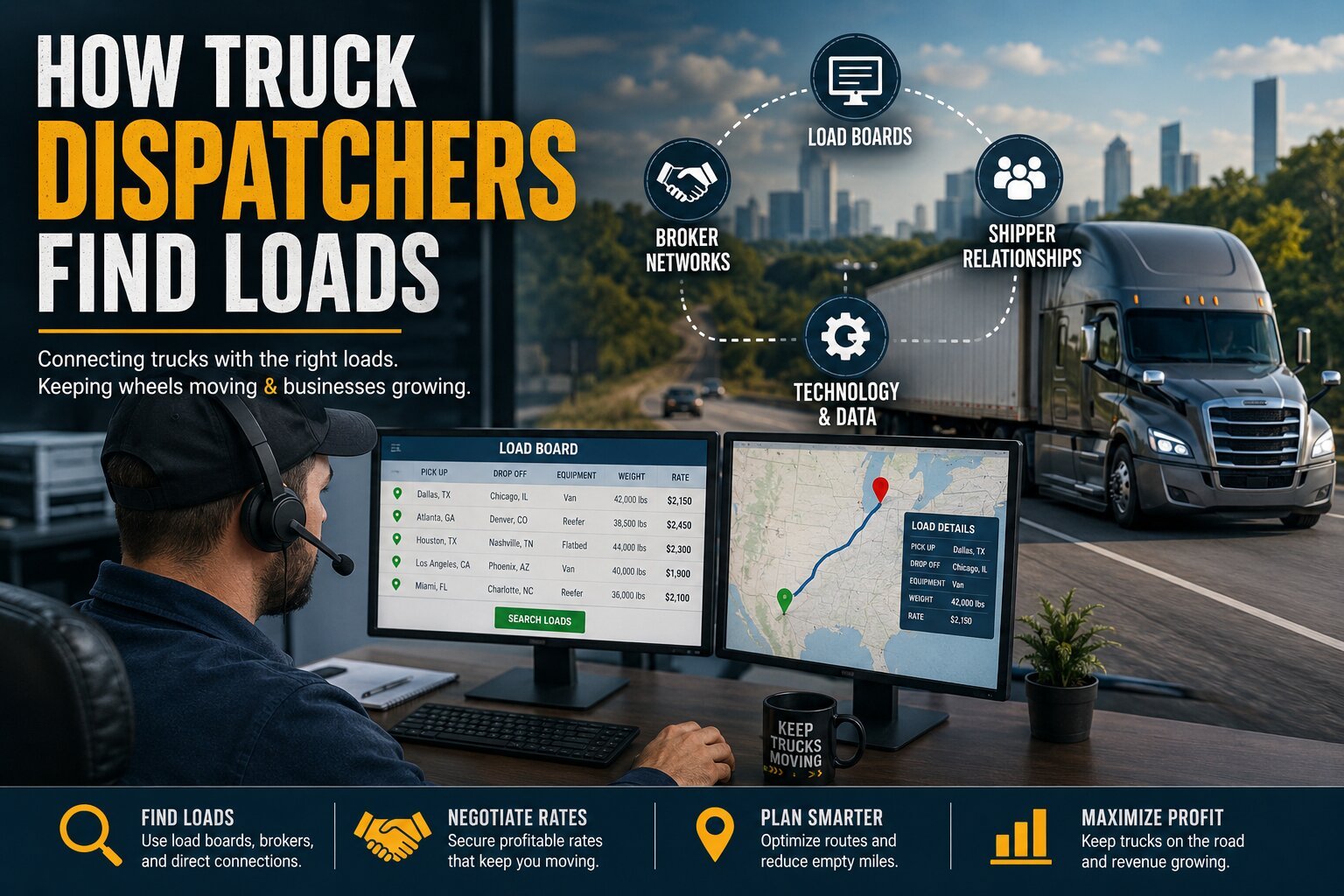
    In the fast-moving trucking industry, every mile matters. Drivers handle the road, while dispatchers manage the logistics behind the scenes. They connect carriers with shippers, coordinate routes, and keep schedules organized. As a result, trucks stay loaded and businesses stay profitable.

    Truck dispatchers do much more than assign loads. They research freight opportunities, negotiate rates, and solve delivery problems quickly. Moreover, they help reduce empty miles and improve overall efficiency. Without dispatchers, many trucking companies would struggle to maintain steady operations.

    Quick Answer

    Truck dispatchers find loads through load boards, freight brokers, and direct shipper relationships. They match trucks with shipments based on location, equipment, and availability. In addition, dispatchers negotiate rates to maximize profits and reduce downtime.

    Modern dispatchers also use software, ELD data, and freight apps for real-time updates. Furthermore, they analyze routes, manage paperwork, and maintain communication between drivers and clients. Their main goal is simple: keep trucks moving and revenue growing.

    How Truck Dispatching Really Works

    Truck dispatching works like a matchmaking system for freight transportation. Dispatchers connect drivers with shippers who need goods delivered. At the same time, they manage communication, schedules, and logistics.

    Their responsibilities usually include the following tasks:

    Keeping Track of Trucks

    Dispatchers monitor truck locations, capacities, and driver availability daily. Therefore, they can quickly assign the right truck to the right shipment.

    Finding Loads

    Dispatchers search for available freight using load boards, broker contacts, and freight platforms. Additionally, they contact existing clients for repeat business opportunities.

    Matching Trucks with Loads

    After finding a shipment, dispatchers select the best truck for the job. They consider equipment type, distance, timing, and cargo requirements.

    Negotiating Rates

    Dispatchers negotiate rates between carriers and shippers. As a result, both sides receive fair and profitable agreements.

    Managing Logistics

    Dispatchers oversee pickups, deliveries, paperwork, and route planning. Moreover, they solve unexpected issues before they become major problems.

    Smart Strategies Dispatchers Use to Find Loads

    Successful dispatchers rely on several strategies to secure profitable freight consistently. Each method helps trucks stay loaded and productive.

    Using Load Boards

    Load boards are online marketplaces for freight transportation. They connect shippers, brokers, and carriers in one place. Consequently, dispatchers can quickly search for available shipments.

    Most load boards allow filtering by location, equipment type, and destination. Therefore, dispatchers can find suitable loads faster and reduce downtime.

    Building Direct Shipper Relationships

    Strong shipper relationships create steady freight opportunities. Therefore, experienced dispatchers focus heavily on networking and communication.

    Reliable service also helps build trust with clients. Over time, loyal shippers often provide consistent and higher-paying loads.

    Working with Freight Brokers

    Freight brokers give dispatchers access to a larger pool of shipments. In addition, brokers help carriers find loads in unfamiliar markets.

    Strong broker partnerships can reduce empty miles significantly. As a result, trucking companies improve efficiency and increase revenue.

    Using Dispatch Software

    Modern dispatch software simplifies daily operations. These tools automate load matching, optimize routes, and provide real-time tracking.

    Furthermore, dispatch software improves communication between dispatchers and drivers. This leads to faster decisions and smoother deliveries.

    Finding Loads Through Freight Brokers

    Freight brokers play a major role in the trucking industry. They connect shippers with carriers and help dispatchers secure loads quickly.

    By working with brokers, dispatchers gain access to more freight opportunities. Moreover, brokers help reduce deadhead miles and improve scheduling efficiency.

    Brokers also assist with paperwork, coordination, and payment processing. Therefore, dispatchers can focus more on operations and customer service.

    Strong broker relationships often lead to consistent work opportunities. Consequently, carriers enjoy better stability and predictable revenue.

    Load Boards and Their Importance

    Load boards have become essential tools for dispatchers. They work as digital marketplaces where freight and trucks are posted daily.

    Dispatchers use these platforms to search for loads manually or automatically. In addition, load boards provide shipment details, rates, and pickup locations instantly.

    Many dispatchers combine load boards with personal connections. As a result, they secure loads faster and maintain better workflow efficiency.

    Popular load boards also offer mobile apps and tracking features. Therefore, dispatchers can manage freight operations from almost anywhere.

    How Technology is Changing Load Finding

    Technology continues to improve how dispatchers manage freight operations. Today, dispatchers make faster and smarter decisions using advanced tools.

    Electronic Logging Devices (ELDs)

    ELDs provide real-time information about truck locations and driver hours. Therefore, dispatchers can optimize routes and maintain legal compliance easily.

    These devices also improve scheduling accuracy. As a result, deliveries become more efficient and reliable.

    Freight Matching Apps

    Freight matching apps help dispatchers find loads quickly while traveling. Many apps include messaging, GPS tracking, and live rate updates.

    Consequently, dispatchers stay connected with drivers and clients at all times.

    Data Analytics

    Data analytics helps dispatchers identify trends and improve route planning. By analyzing historical data, they make smarter operational decisions.

    Additionally, analytics reduce fuel costs and improve delivery times. Therefore, trucking companies increase overall profitability.

    The Human Side of Dispatching

    Technology is important, but human skills still matter greatly in dispatching. Experienced dispatchers understand the industry and make informed decisions quickly.

    Building Strong Relationships

    Successful dispatchers build trust with shippers, brokers, and drivers. Strong relationships improve communication and create long-term business opportunities.

    Furthermore, reliable partnerships help secure steady freight during slow periods.

    Problem-Solving Skills

    Transportation issues happen regularly in trucking operations. Therefore, dispatchers must solve problems quickly and efficiently.

    Strong problem-solving skills help avoid delays and customer complaints. As a result, operations continue smoothly even during unexpected situations.

    Negotiation Skills

    Negotiation is another critical dispatcher skill. Dispatchers must balance fair rates for both carriers and shippers.

    Good negotiation improves profitability while maintaining positive relationships. Consequently, both parties benefit from long-term cooperation.

    Strengthening Industry Connections

    Networking is essential in the trucking industry. Dispatchers, brokers, shippers, and drivers all rely on strong professional relationships.

    Industry events, webinars, and social media create valuable networking opportunities. Additionally, these connections help dispatchers find more loads and grow their business.

    Freight brokers remain especially valuable industry partners. They assist with load finding, coordination, and paperwork management.

    Maintaining strong relationships ensures consistent freight opportunities. Therefore, dispatchers can keep trucks moving and operations profitable.

    Final Thoughts

    Truck dispatchers play a vital role in the transportation industry. They combine technology, strategy, and communication to keep freight moving efficiently.

    From load boards to broker relationships, dispatchers use many tools to secure profitable shipments. In addition, they solve problems, negotiate rates, and manage daily logistics.

    Their work keeps trucks loaded, reduces downtime, and supports business growth. Ultimately, skilled dispatchers are essential for successful trucking operations.

  • 24/7 Night Dispatch Services for U.S. Trucking Companies 

    24/7 Night Dispatch Services for U.S. Trucking Companies 

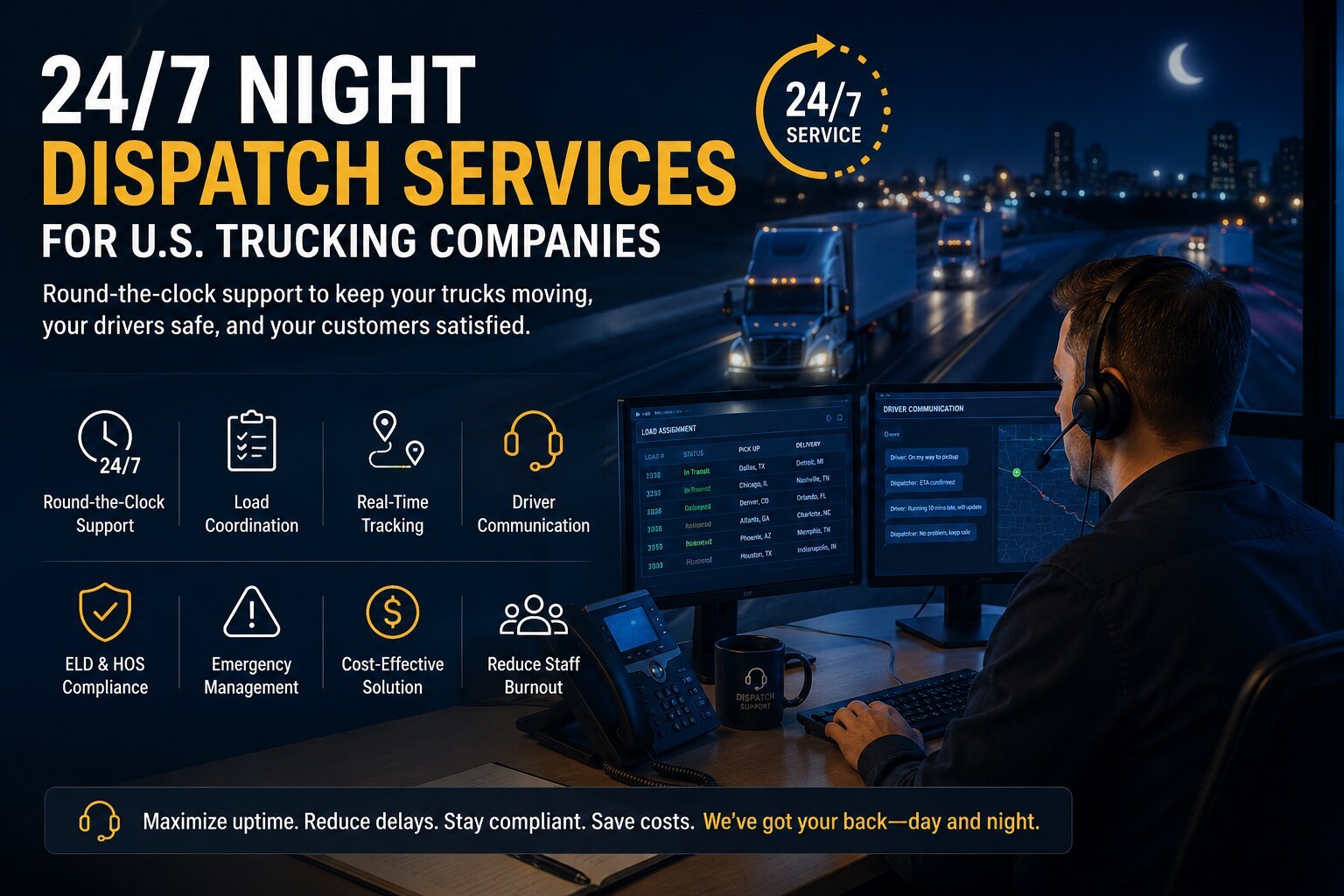
    Our night dispatch services ensure your trucks stay on the road around the clock. Designed for U.S. trucking companies, we handle load coordination, route planning, and communication during overnight hours—keeping your operations smooth, efficient, and fully supported even while others are off the clock. 

    Quick Answer

    Night dispatch services keep trucking operations running smoothly during overnight hours. They manage load coordination, driver communication, and real-time tracking. 

    This reduces missed loads, delays, and costly errors. Dispatchers handle emergencies, route changes, and compliance issues quickly. 

    Businesses benefit from 24/7 visibility and consistent updates to brokers. It also prevents staff burnout by removing after-hours workload. These services integrate with TMS and monitor ELD and HOS compliance. Companies save costs compared to hiring an in-house night team. Overall, night dispatch improves efficiency, uptime, and customer satisfaction. 

    The Risks of Operating Without Night Dispatch Coverage

    Running freight at night can be challenging and risky without proper support. Issues like missed loads, driver no-shows, and after-hours emergencies can quickly escalate when there’s no one monitoring operations.

    Without dedicated night dispatch services, small problems can turn into costly failures, harming customer relationships, jeopardizing compliance, and exhausting your team. If you’re managing freight without reliable after-hours dispatch support, these challenges are likely already affecting your business—and they’re costing you more than just sleep. 

    Avoid Missed Loads

    Missed loads can disrupt your schedule, reduce revenue, and frustrate clients. With professional Night dispatch services, every shipment is carefully coordinated, tracked, and managed to ensure timely pickups and deliveries, keeping your operations smooth and your customers satisfied.

    Emergency Support

    Emergencies don’t follow a schedule, which is why our Night Dispatch Services are designed to provide 24/7 support. From last-minute route changes to urgent load issues, our team responds quickly to keep your operations running smoothly and your drivers and shipments safe during overnight hours.

    Preventing Tracking Failures

    Without proper oversight, tracking failures can lead to missed updates, delayed deliveries, and unhappy customers. Our night dispatch services ensure every shipment is monitored in real time, keeping you informed and preventing costly errors even during overnight operations.

    Reducing Staff Burnout

    Managing freight around the clock can be exhausting for your team. Our Night Dispatch Services take the pressure off by handling after-hours load coordination and support, allowing your staff to rest, stay refreshed, and maintain productivity without risking burnout.

    How Our Night Dispatch Services Solve Your Challenges

    Our after-hours dispatch services are designed to address the problems that keep carriers and fleet managers up at night. From driver no-shows and missed ETAs to overnight compliance issues and dispatcher fatigue, we provide real-time support to ensure your loads stay on schedule, brokers get timely updates, and drivers never feel stranded.

    We seamlessly integrate with your TMS software, monitor ELD and HOS compliance overnight, and maintain live communication with shippers and receivers. Whether you’re an owner-operator, fleet manager, or part of a carrier dispatch team, our after-hours dispatch service offers 24/7 visibility, SLA protection, and cost-effective peace of mind—without the expense of hiring a full night shift.

    Maximize Uptime and Streamline Operations

    With our after-hours dispatch services, your shipments stay on the move thanks to real-time monitoring, quick problem-solving, and proactive rerouting. Overnight issues are handled immediately, ensuring nothing is overlooked while you rest. The outcome is fewer delays, satisfied customers, and a seamless start to each day.

    Maintain SLAs and Build Strong Broker Partnerships

    With our after-hours dispatch services, your clients receive continuous updates around the clock. We provide load visibility, prompt communication, and reliable follow-through, helping you consistently meet your SLAs. This level of dependability gives you a competitive edge over companies that operate only during standard business hours.

    Reduce Costs Without Compromising Quality

    Hiring an in-house night team can be costly and time-consuming. Our after-hours dispatch services provide experienced dispatchers at a fraction of the expense, delivering full coverage, compliance, and high-quality support. You enjoy all the benefits of a dedicated night shift without the overhead or operational headaches.

    Dependable Night Dispatch Services

    Managing a fleet overnight doesn’t have to lead to missed loads, driver stress, or sleepless nights. With our expert after-hours dispatch support, you gain complete visibility, real-time issue resolution, and peace of mind—all without the expense of maintaining an in-house night team.

  • Box Truck Factoring: Find the Right Program

    Box Truck Factoring: Find the Right Program

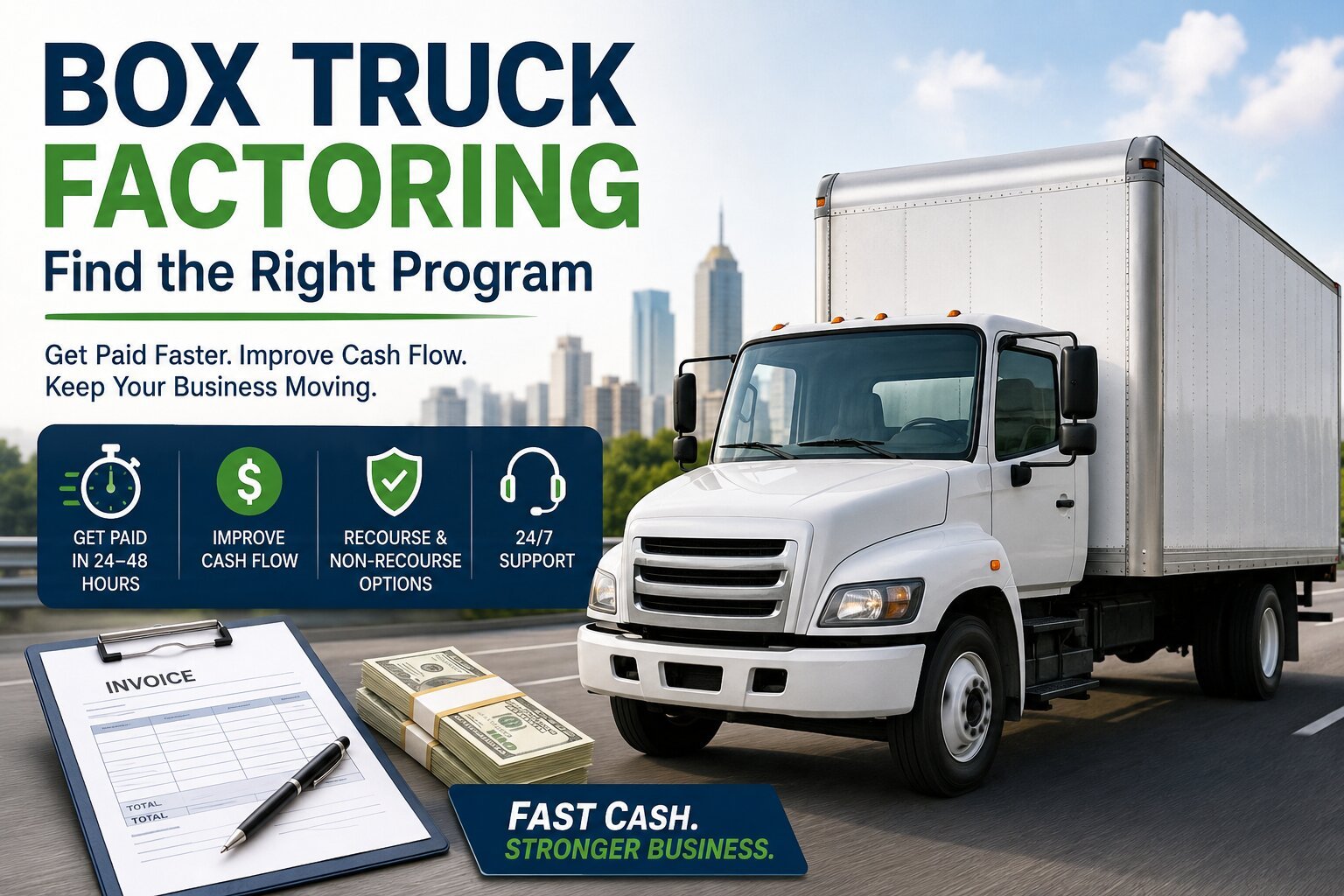
    Compare and choose from the top Box Truck factoring programs to find the one that fits your needs.

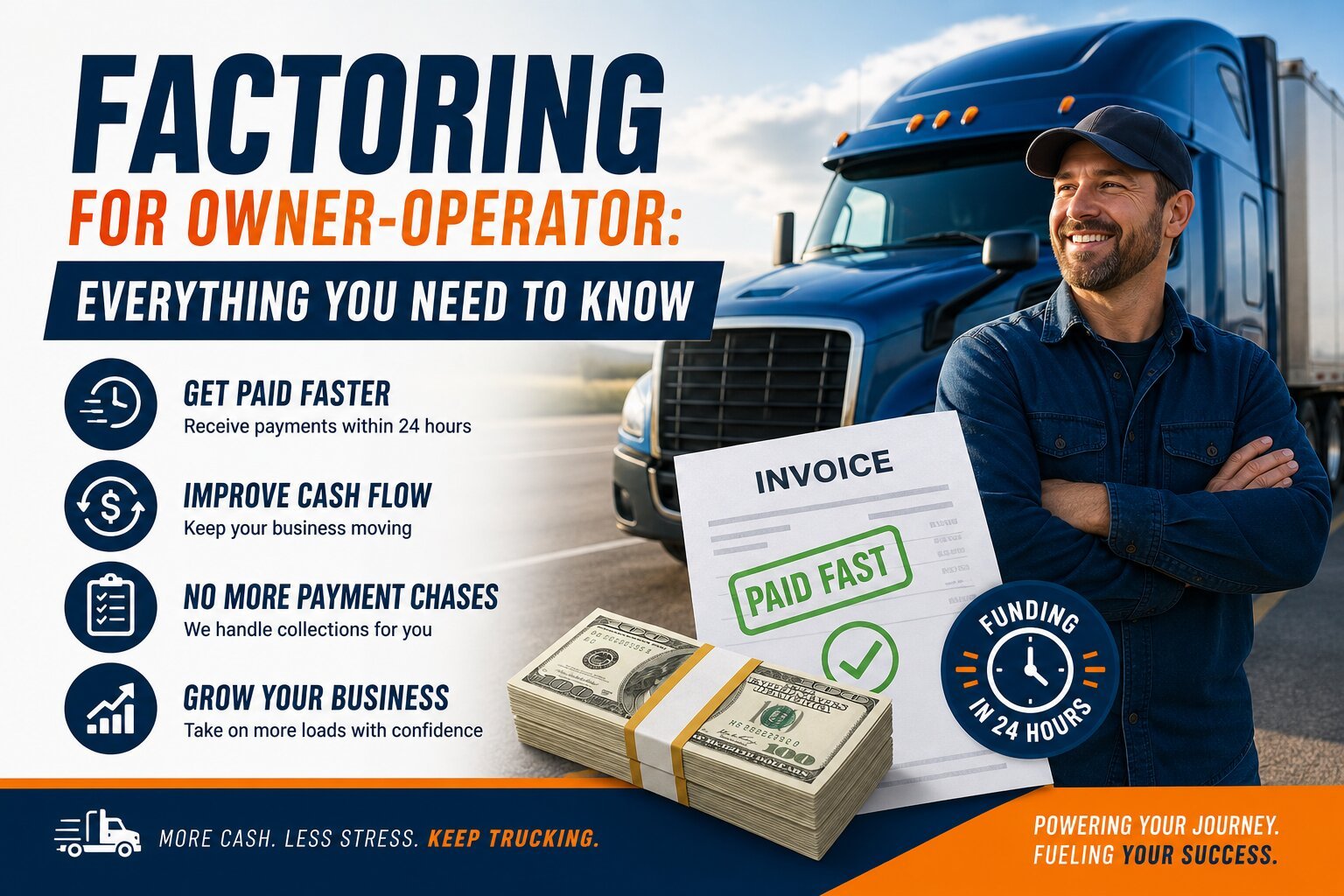
    Box Truck factoring allows an owner-operator or trucking company to sell unpaid freight invoices to a factoring company in exchange for a cash advance, helping keep your operations running smoothly.

    Quick Answer 

    Box truck factoring helps owner-operators get paid quickly for completed loads. Instead of waiting weeks, you receive cash within 24 to 48 hours. 

    This improves cash flow and keeps operations running smoothly. Factoring companies charge a small fee, usually between 1.5% and 5%. It helps cover fuel, maintenance, and daily expenses. 

    You can choose between recourse and non-recourse factoring options. Recourse is cheaper but carries more risk. Non-recourse offers protection if customers fail to pay. 

    Choosing the right company depends on rates, contract terms, and support. Overall, factoring is a fast and reliable solution for trucking businesses. 

    Key Features of Box Truck Factoring

    Compare and select the right Box Truck factoring plans from trusted companies that are safe for owner-operators.

    Get the best fit for your trucking business and generate factoring proposals and quotes in minutes, making it easier to choose the program that meets your needs.

    What Is Box Truck Factoring?

    Box truck factoring helps box truck drivers and owner-operators get paid quickly—usually within 24 to 48 hours after submitting a load invoice.

    To use factoring, simply pull a load, generate the necessary documents like a BOL or invoice, and submit them digitally through email, a website, or a mobile app.

    How Box Truck Factoring Improves Cash Flow

    Box truck operators often can’t wait 30–90 days for payment from brokers or shippers. Box truck factoring lets them submit invoices and get instant cash, with a factoring fee of 1.5% to 5% of the invoice value.

    This fast funding stabilizes business liquidity, helping operators cover driver salaries, maintenance, fuel, tires, food, accommodation, and other operating costs without stress.

    Why Box Truck Factoring Matters for Owner-Operators

    Box truck factoring is important because it gives truckers flexibility and quick access to cash by advancing funds against invoices for a small fee.

    Beyond providing liquidity, factoring companies also assist small and medium-sized operators with carrier paperwork and administrative tasks, making it easier to focus on running their business efficiently.

    How to Choose the Right Box Truck Factoring Company

    Selecting the right box truck factoring company requires careful consideration of several key factors:

    Factoring Rates: Check the percentage charged on your invoices.

    Contract Terms: Look for contract length, early exit penalties, and termination fees.

    Hidden Fees: Ask about any extra costs that could affect your cash flow.

    Additional Benefits: Consider perks like fuel cards, fuel advances, combo insurance, and other services.

    Factoring Limits: Know if there’s a minimum or maximum invoice amount you can factor.

    Customer Support: Ensure 24/7 support is available to help with factoring issues or emergencies like accidents, weather delays, or breakdowns.

    Reserves: Check if the company holds a reserve, as this reduces the cash you receive immediately after submitting invoices.

    By reviewing these aspects, you can choose a factoring company that meets your needs and keeps your box truck operations running smoothly.

    Cost of Box Truck Factoring

    Box truck factoring companies charge a percentage of your invoice, usually between 1.5% and 5% as a factoring fee.

    Some companies also hold a reserve, which is returned to your account once the shipper or customer pays the invoice, helping manage risk while providing quick access to cash.

    Recourse vs. Non-Recourse Box Truck Factoring

    When factoring with a box truck factoring company, you can choose between recourse and non-recourse programs.

    Recourse Factoring: You get immediate cash for your invoices, but if a broker or shipper fails to pay or goes bankrupt, you are responsible for the loss.

    Non-Recourse Factoring: The factoring company assumes the risk of non-payment due to customer insolvency or bankruptcy. This protects your trucking business, though it typically applies only in specific situations.

    Is Box Truck Factoring Worth It?

    Box truck factoring is worth it because it provides quick cash and liquidity, allowing truckers to cover operational, fuel, and maintenance costs as they arise.

    Without factoring, truckers typically have two alternatives: a business loan, which is slow and comes with interest, or QuickPay, which isn’t available with every broker. Factoring offers a faster, more reliable solution for managing cash flow.

    Merits and Demerits of Box Truck Factoring

    Merits: 

    • Provides an easy way to inject cash into your trucking business.
    • Startup-friendly for new trucking companies.
    • High factoring advances mean lower fees or commissions.
    • Works as both a short-term and long-term liquidity solution. 

    Demerits:

    • Invoices usually need to be paid within 90 days.
    • Requires quality customers with good credit histories.
    • You lose some control over accounts receivable.
    • You cannot use factored invoices as collateral for additional credit or loans.
  • A toBFuel Cards Review: Flex and Unlimited Options for Fleets

    A toBFuel Cards Review: Flex and Unlimited Options for Fleets

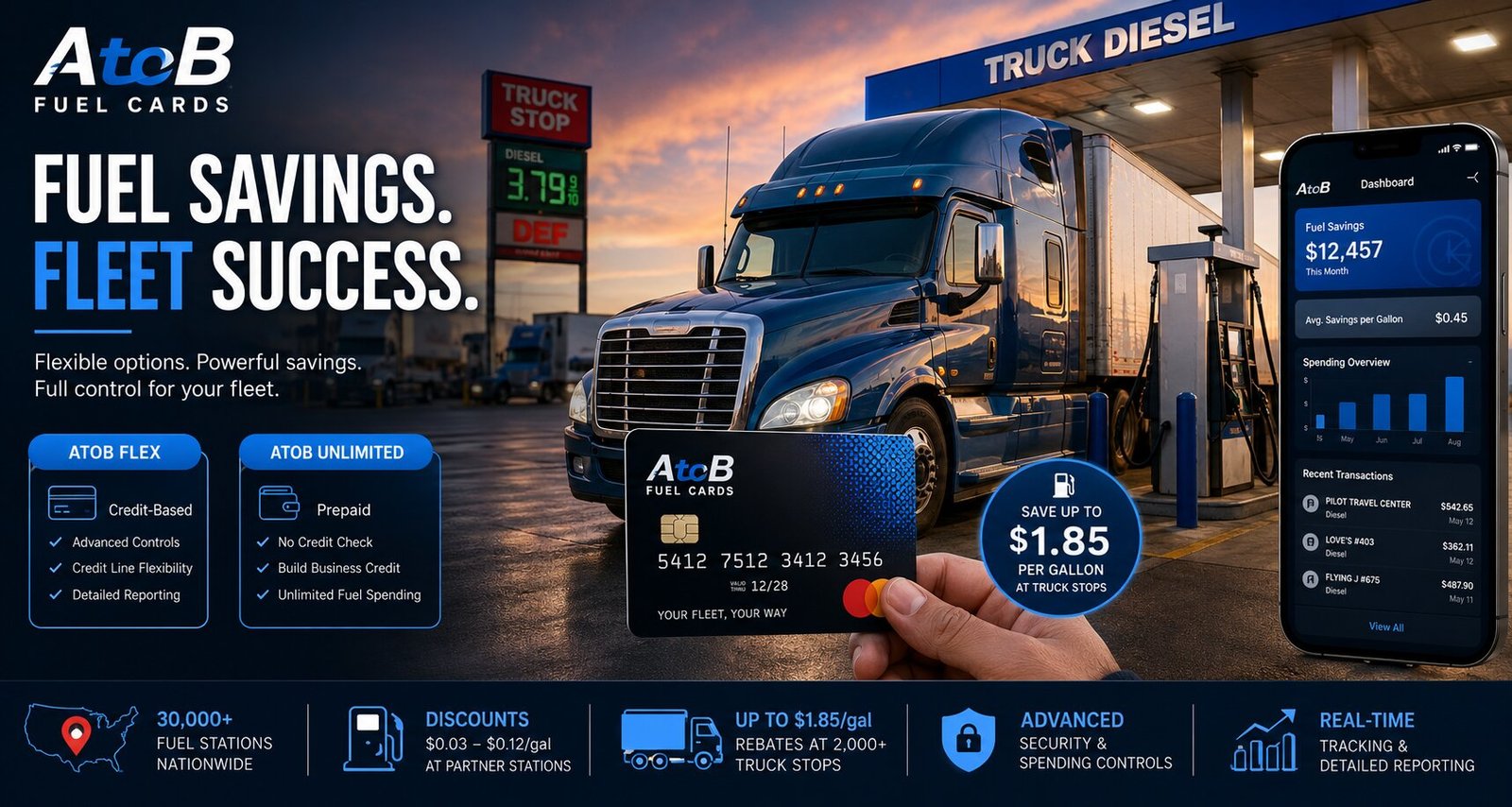
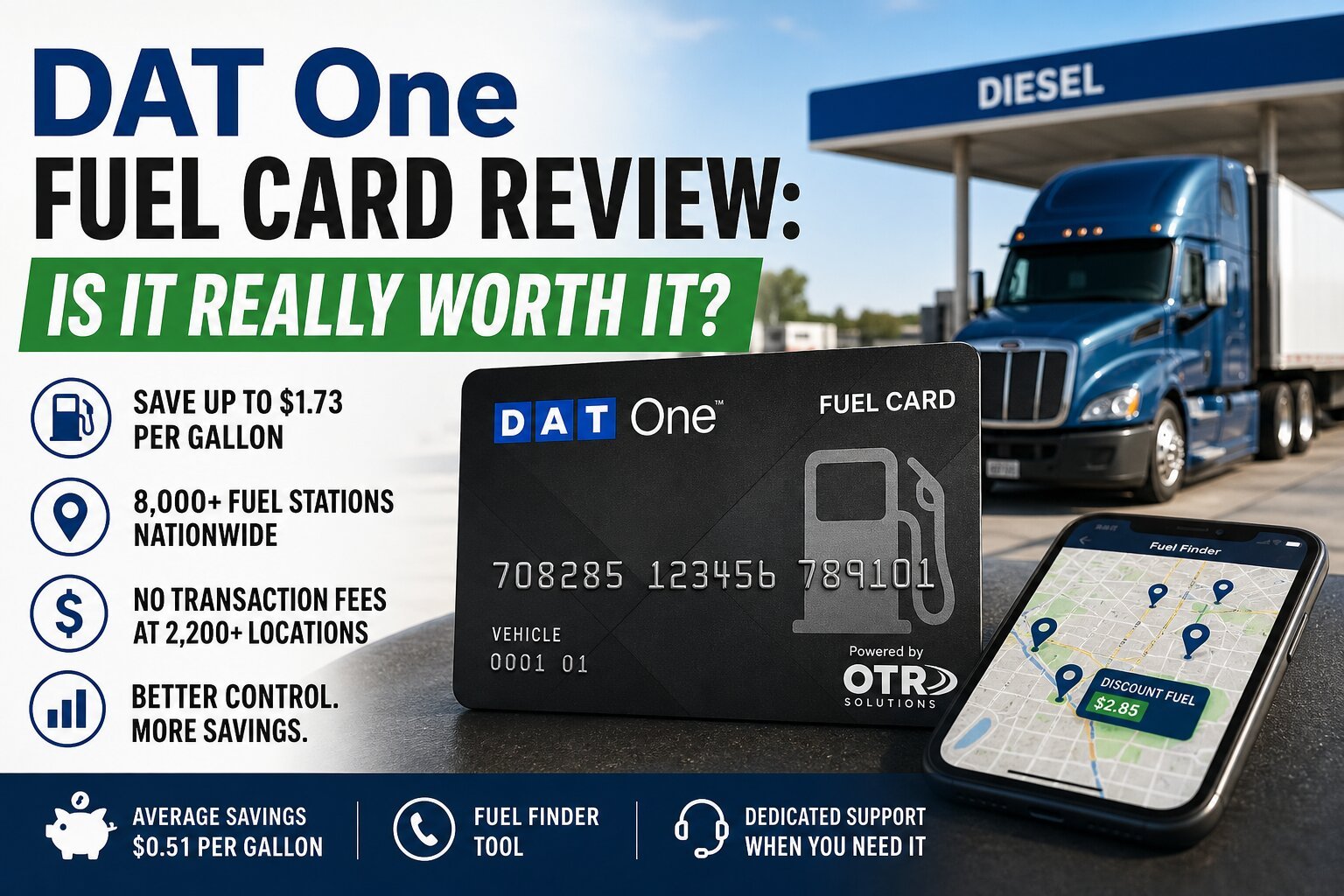
    AtoB offers two fuel card solutions tailored to different business needs: the credit-based AtoB Flex and the prepaid AtoB Unlimited.

    Both cards cost around $3 per card, per month and give access to a network of 30,000+ stations, with fuel discounts ranging from $0.03 to $0.12 per gallon at partner locations. Additionally, rebates at over 2,000 partner truck stops can reach up to $1.85 per gallon for truck diesel, averaging about $0.46 per gallon according to AtoB.

    In this review, we’ll explore:

    • Fees associated with each card 
    • Regional discount variations
    • Extra benefits and features

    This guide will help you decide whether AtoB Flex or AtoB Unlimited is the right fit for your fleet’s fuel management needs.

    Quick Answer 

    AtoB Fuel Cards offer flexible fuel savings for trucking fleets. You can choose between credit-based Flex or prepaid Unlimited options. Both provide access to over 30,000 fuel stations nationwide. Discounts average around $0.45 per gallon on diesel. Some truck stops offer savings up to $1.85 per gallon. Monthly fees are low, starting around $3 per card. AtoB Flex requires a credit check, while Unlimited does not. The cards include strong security controls and spending limits. Additional perks include non-fuel discounts and real-time tracking. Overall, AtoB is a cost-effective solution for managing fuel expenses. 

    AtoB Fuel Cards Review: Quick Overview

    AtoB Flex

    Card Type: Credit fuel card 

    Network: Accepted anywhere Mastercard is accepted

    Discounts: Average $0.45 off per gallon, up to $1.85 on truck diesel; $0.03–$0.12 per gallon on regular gas via the AtoB Discount Network

    Fees: $35 account setup; $15/month for 1–5 cards, $3/month for each additional card after five; optional AtoB Premium add-on at $3/month

    Security Controls: Advanced fraud prevention, secure card unlocking, telematics integration, customizable spending limits, and merchant whitelisting

    AtoB Unlimited

    Card Type: Prepaid fuel card

    Network: Accepted anywhere Mastercard is accepted

    Discounts: Same as AtoB Flex — average $0.45 per gallon, up to $1.85 on truck diesel; $0.03–$0.12 per gallon on regular gas

    Fees: $35 account setup; $3/month per active card; optional AtoB Premium add-on at $3/month

    Additional Benefits: Build small business credit and enjoy unlimited fuel spending

    Both AtoB cards provide strong discounts, flexible payment options, and security features, making them suitable for fleets of all sizes.

    What AtoB Fuel Cards Offer

    Whether you choose AtoB Flex, a credit fuel card with advanced fraud protection and customizable spending limits, or AtoB Unlimited, a prepaid card that helps build small business credit and removes spending limits, both provide tools designed for efficiency, control, and savings.

    Here’s a quick look at what each card brings to the table, starting with AtoB Flex:

    AtoB Flex

    Pricing: $15/month for the first 5 cards

    Pros:

    • Access to 30,000+ in-network fuel stations 
    • Average discounts of $0.45/gallon, with up to $2/gallon savings on truck diesel
    • Set daily or weekly spending limits, define operational hours, and whitelist merchants for authorized purchases only
    • Real-time reporting and telematics integration
    • 24/7 customer support

    Cons:

    • Base fee of $15/month for the first 1–5 cards can be higher than AtoB Unlimited if you use fewer cards
    • As a credit fuel card, approval requires credit checks, which may limit access for businesses with lower scores
    • Telematics integration may incur additional costs
    • Small discount on unleaded fuel ($0.05/gallon)
    Fee Type Cost
    Per Card $15/month for the first 5 cards (≈ $3/card/month); $3/month for each additional card
    Setup $35 one-time fee
    AtoB Premium (Optional Add-On) $3/account/month


    AtoB Unlimited

    Pricing: $3 per active card, per month

    Pros: 

    • Prefunded design makes it accessible regardless of credit score and helps build credit history with monthly reports to Experian
    • Access to 30,000+ in-network fuel stations
    • Average discounts of $0.46/gallon on diesel, up to $1.85/gallon on truck diesel
    • Real-time reporting and telematics integration
    • 24/7 customer support
    • AtoB Unlimited is ideal for fleets looking for flexibility, credit-building opportunities, and strong fuel discounts. 

    Cons:

    • Telematics integration may incur additional costs 
    • Small discount on unleaded fuel ($0.05/gallon)


    Fee Type Cost
    Per Card $3 per active card/month
    Setup $35 one-time fee
    AtoB Premium (Optional Add-On) $3 per account/month


    AtoB Fuel Cards Review: Pricing and Fees

    Both AtoB fuel cards offer competitive pricing suited to their specific models, though each has a distinct fee structure.

    AtoB Flex Pricing:

    Account Set-Up Fee: $35 one-time fee when you open your AtoB Flex account.

    Monthly Card Fees: $15 per month covers the first 1–5 cards. For fleets needing more than five cards, each additional card costs $3 per month.

    Optional AtoB Premium Add-On: For extra security and management features, you can add AtoB Premium for $3 per month at the account level.

    This pricing structure allows fleets to scale usage and choose optional features based on their needs. 

    AtoB Unlimited Pricing: 

    Account Set-Up Fee: $35 one-time fee when you create your AtoB Unlimited account. 

    Monthly Card Fee: $3 per active card per month. As a prefunded card, AtoB Unlimited offers a lower per-card fee compared to AtoB Flex.

    Optional AtoB Premium Add-On: You can choose Premium features for an additional $3 per month at the account level, similar to the Flex option.

    This structure keeps costs low while providing optional features for enhanced management and security.

    Does AtoB Have Any Hidden Fees?

    While AtoB’s basic per-card and setup fees are straightforward, there are some additional charges to be aware of — primarily for the AtoB Flex card:

    Late Payment Penalty (AtoB Flex only): If your statement isn’t paid in full by the due date, a penalty of up to 9% (or $99, whichever is higher) applies. If overdue more than 30 days, an extra 6% (or $99, whichever is higher) may be added.

    Credit Enablement Fees (AtoB Flex only): Customers using the Credit Enablement Program pay a one-time $75 setup fee. High-risk accounts may also incur a surcharge of up to $0.30 per gallon for a set period.

    Instant Access Fee (AtoB Flex only): A 1% fee is charged when funds are accessed immediately via debit card.

    These fees are listed in AtoB’s official schedule, but it’s important to consider them when calculating the total cost of using the Flex card. 

    Are AtoB Fuel Cards Good Value for Money?

    For fleets — particularly smaller or independent operators — AtoB Fuel Cards offer strong value. They combine substantial fuel savings, advanced management tools, and a flexible cost structure that can be tailored to your business needs.

    While certain extra fees may apply, the potential savings and operational efficiencies typically outweigh these costs, making AtoB a competitive choice in the fleet fuel card market.

    The exact savings can vary depending on your location, which we’ll break down in the next section. 

    AtoB Fuel Cards Review: Rebates and Discounts

    AtoB Fuel Cards use the AtoB Discount Network to provide fleets with substantial fuel savings across the U.S. The company publishes the exact rebates on its website, and depending on your region, you can receive variable per-gallon discounts at participating stations.

    This makes it easy for fleet owners to estimate potential savings and plan fuel costs more effectively.

    Fuel Rebates with AtoB

    Here’s a summary of the per-gallon rebate rates available through the AtoB Discount Network by region, including the average, lowest, and highest rebates:

    Region Average Rebate (¢/gallon) Lowest Rebate (¢/gallon) Highest Rebate (¢/gallon)
    West Coast ~6.7 5 10
    Rocky Mountains ~6.9 5 10
    Midwest ~7.1 4 12
    East Coast ~4.5 3 10
    Gulf Coast ~5.9 3 10


    Note:The values listed in the average rebate column are just averages. Some branded stations advertise “up to” amounts, and actual rebates at each station can fall anywhere between the lowest and highest figures for the region.

    As a result, real savings may vary depending on the specific station you use and local market conditions.

    How to Find AtoB Stations Near You

    AtoB offers access to over 30,000 fuel stations nationwide, and you can easily locate participating stations using the AtoB mobile app with its FuelMap feature. While a web-based tool would be a nice addition, the app works well for drivers on the go.

    Here’s how to get started:

    Download and Log In: Get the AtoB App from the App Store or Google Play, then log in with your AtoB account credentials. 

    Access FuelMap: Open the app and select the FuelMap feature. It uses GPS to detect your location automatically or lets you enter a specific location manually.

    Browse and Filter: The FuelMap shows nearby stations that accept AtoB Fuel Cards, including available discounts. You can filter results by fuel type or discount level, helping you find stations with the highest savings, a feature not all fuel card apps provide.

    Truck Stop Rebate Rates with AtoB

    One of the biggest advantages of AtoB Fuel Cards is the high rebates at truck stops. Selected locations offer up to $1.85 per gallon on truck diesel, while the nationwide average rebate at truck stops is around $0.46 per gallon — significantly higher than standard fuel card rebates at AtoB and many competitors.

    Unlike regular fuel stations, AtoB does not provide exact rebate amounts for each partner truck stop. However, it does list all partner truck stop locations by region across the U.S., allowing fleet owners to find participating stations.

    Other Discounts with AtoB

    In addition to fuel savings, AtoB Fuel Cards offer extra perks through its partner network, providing value beyond the pump:

    Non-Fuel Discounts:

    • 5% cash-back on certain non-fuel purchases
    • 10%–35% off on various products and services


    Truck Comfort and Maintenance Savings:

    • 30% off select truck comfort products to enhance driver satisfaction 
    • $250 off your AtoB Fuel Statement when using TruckSuite for vehicle warranty
    • $30 off your first rental vehicle booking through AtoB partnerships

    These additional discounts help fleets save on operational and maintenance costs while improving driver experience.

    Additional Partner Benefits with AtoB

    Toll Management: Enjoy one month of free toll management services, helping streamline route planning and reduce incidental expenses.

    Partner Network Discounts: AtoB’s extensive partner network offers savings on tires, vehicle accessories, maintenance services, and more. 

    By combining fuel rebates with these non-fuel discounts, fleets can maximize savings and improve cost efficiency across multiple areas of operations.

    AtoB Fuel Cards Review: Controls and Security

    AtoB Fuel Cards include a strong set of security and control features to protect your fleet’s fuel spending while giving detailed oversight of each transaction. These features apply to both AtoB Flex and AtoB Unlimited, with additional enhancements available through the optional AtoB Premium add-on.

    Advanced Security Features: 

    One-Click Card Deactivation: Instantly disable a card via the AtoB platform or mobile app if it is lost, stolen, or shows suspicious activity.

    Secure Card Unlock: With the Premium add-on, cards stay locked until a driver verifies their identity via SMS or the AtoB Driver app.

    Fuel Level Reporting: Monitors fuel levels to ensure purchases do not exceed a vehicle’s tank capacity and flags potential misuse.

    Alerts and Blocking: Receive notifications for fuel card activity via app, SMS, or email. Transactions can be automatically blocked if the driver is away from the vehicle, the vehicle isn’t near a pump, or the tank level exceeds a set threshold (default 95%).

    These controls help fleet managers reduce fraud, prevent overspending, and maintain full visibility over fuel usage.

    How to Apply for an AtoB Fuel Card

    Applying for an AtoB Fuel Card—whether you choose the AtoB Flex or AtoB Unlimited—is a quick and straightforward process. You can complete your application in just a few minutes by following these steps: 

    Visit the AtoB website or mobile app: Choose the fuel card product that best suits your needs — either AtoB Flex or AtoB Unlimited.

    Complete the online application form: Provide your business details, including:

    • First and last name
    • Business cell number
    • Business email address
    • Number of vehicles in your fleet
    • Weekly fuel and maintenance spend
    • Fleet type

    Agree to terms: Carefully review and accept the AtoB Platform Agreement and Privacy Policy before submission.

    Submit your application: The online process takes roughly five minutes to complete.

    Follow up with your account manager: After submission, an AtoB representative will reach out to guide you through the final setup and request any additional documentation if needed.

    Tip: Having your fleet details and financial information ready beforehand can make the application process even faster. 

    Requirements for Getting an AtoB Fuel Card

    To qualify for an AtoB Fuel Card, applicants must provide essential business and fleet details during the application process, including:

    • First and last name 
    • Business cell number
    • Business email address
    • Number of vehicles in operation
    • Weekly fuel and maintenance spend
    • Fleet type

    However, approval depends on the type of card you apply for:

    AtoB Flex (Credit Fuel Card):

    • Requires a credit check during the approval process.
    • If your business does not meet the standard credit requirements, you may be eligible through the Credit Enablement Program, which helps lower-credit applicants qualify.

    AtoB Unlimited (Prefunded Fuel Card):

    • No credit check required, making it accessible for businesses of all credit levels.

    In some cases, proof of business revenue may also be requested.

    ✅ Important: By submitting your application, you agree to the AtoB Platform Agreement and Privacy Policy—so it’s recommended to review both documents thoroughly before signing up. 

    How AtoB Compares to Other Fuel Card Providers

    When comparing AtoB Fuel Cards to competing fleet fuel card programs, several major factors help define how it stacks up in the market. These include:

    Acceptance: AtoB cards are accepted anywhere Mastercard is recognized, giving them broad usability across 30,000+ in-network stations and countless other locations. 

    Rebates and Discounts: With potential savings up to $1.85 per gallon at select truck stops and average discounts of $0.45 per gallon, AtoB delivers highly competitive rebates compared to many rivals.

    Pricing and Fees: AtoB maintains transparent pricing with flexible options — a credit-based Flex card for larger fleets and a prefunded Unlimited card for smaller operators or those with lower credit scores.

    We’ll explore a detailed comparison shortly, but at a high level, AtoB ranks among the top options for fleets seeking nationwide coverage, strong discounts, and advanced spending controls.


    Provider Card Fees Savings & Discounts Network Key Features
    AtoB Unlimited $3/card/month$35 one-time setup fee $0.03–$0.12/gal off gas (partner stations)Avg $0.46/gal discount at truck stops (up to $1.85/gal) Accepted anywhere Mastercard is accepted30,000+ stations, including 2,000+ truck stops 5%–35% discounts on non-fuel purchasesCustom alerts and spending controlsFuel station locator app with route mapping
    Coast Card $4/active card/monthNo setup fees $0.04–$0.10/gal off gas (partner stations)$0.01/gal at other stations Accepted anywhere Visa is accepted34,000+ stations in discount network 1% cashback on non-fuel purchases2%–40% off maintenance and suppliesReal-time alerts and spending limits
    WEX Fleet Card $4/card/month$40 setup fee Up to $0.15/gal at WEX EDGE stationsUp to $0.03/gal elsewhere Accepted at 95% of US gas stations (≈185,000)4,500+ EDGE stations 24/7 US-based supportDiscounts on accessories and hotelsUsable for maintenance and cleaning
    Edenred Essentials $3/card/month$50 late payment feeOther fees apply $0.01–$0.04/gal rebate (based on usage) Accepted anywhere Visa is accepted Costco membership perksEV charging supportApp available in English and Spanish
    ExxonMobil BusinessPro Universal Card $2/card/month$40 setup feeOther fees apply Up to $0.06/gal off (based on usage) Accepted at 95% of US gas stations Earn ExxonMobil Rewards+ PointsStation locator & contactless pay-at-pump24/7 customer service
    Comdata Fleet Card $8/card/month$50 one-time setup fee $0.07–$0.25/gal off (varies by station) 15,000+ locations nationwide Discounts on tires & hotelsRFID tags for touch-free fuelingApp highlights top savings stations


    Acceptance and Network Coverage

    AtoB Fuel Cards operate on the Mastercard network, meaning they are accepted virtually anywhere Mastercard is processed. This provides nationwide flexibility and ensures drivers can fuel up without worrying about network restrictions.

    In comparison, competitors like WEX also offer broad coverage, with acceptance at up to 95% of US gas stations. However, AtoB’s universal Mastercard acceptance gives it a slight edge for fleets that run across multiple states or regions with varied fuel station availability.

    On the other hand, more specialized cards such as Comdata or Shell Fleet Cards tend to have smaller, brand-focused networks, which can limit fueling options outside their partner locations.

    Overall, AtoB’s Mastercard-backed design makes it one of the most universally accepted fuel cards in the industry.

    Discount Networks and Rebate Rates

    AtoB’s Discount Network offers a strong advantage for fleets looking to save on fuel costs. With over 30,000 participating stations nationwide, AtoB provides rebates that typically range from $0.03 to $0.12 per gallon, depending on the station brand and location. These savings can add up quickly for high-mileage operators.

    When compared to other major fleet card providers, AtoB’s rebate structure stands out:

    • WEX fuel cards generally offer smaller rebates, averaging $0.01–$0.03 per gallon, depending on fuel volume.
    • Comdata can reach rebates of up to $0.25 per gallon, though these higher rates are usually reserved for large-volume fleets or specific merchants.
    • Shell and ExxonMobil fleet cards typically average around $0.06 per gallon, putting them on par with AtoB’s middle-range discounts.
    • It’s worth noting that rebate potential varies by region. For instance, AtoB’s East Coast coverage averages about $0.045 per gallon, which is slightly weaker compared to Shell’s $0.06 per gallon for fleets purchasing over 10,000 gallons monthly.

    Overall, AtoB’s rebate network is highly competitive—especially for small and mid-sized fleets—though the value depends on your routes and local station partnerships. Checking nearby station discounts before committing is the best way to gauge your true savings potential. 

    Pricing, Fees, and Value

    AtoB provides two main fuel card options — the AtoB Flex (credit-based) and the AtoB Unlimited (prefunded) — both priced competitively in the fleet card market. When managed efficiently, both cards come out to around $3 per card, per month, aligning with standard industry pricing.

    This rate matches the Edenred Essentials Card and is only slightly higher than alternatives like the WEX Fleet Card or ExxonMobil BusinessPro Universal Card, which average $2 per card, per month. Compared to premium cards such as the Coast Card ($4/card/month) or Comdata Fleet Card ($8/card/month), AtoB offers excellent affordability without compromising on features or network reach.

    For small trucking companies or independent operators, AtoB strikes a solid balance between cost efficiency and functionality. However, for ultra-budget fleets with limited fuel needs, options like the Shell Business Card may be more cost-effective — though they’re limited to Shell-branded stations only, reducing flexibility on the road.

    In summary, AtoB’s pricing is fair, transparent, and well-aligned with its broad acceptance and rebate potential, making it one of the better value-for-money choices in the fuel card market.
  • Apex Factoring Review: Is It the Right Choice for Your Business?

    Apex Factoring Review: Is It the Right Choice for Your Business?

    Apex Capital remains one of the most recognized freight factoring companies in the trucking industry. Many carriers and freight businesses choose Apex because it delivers fast payments, flexible factoring rates, and reliable customer support tailored to different operational needs.

    In simple terms, Apex helps trucking companies turn unpaid invoices into immediate working capital. Instead of waiting weeks for brokers or shippers to pay, carriers can access cash advances quickly and maintain steady cash flow.

    As a result, trucking businesses can cover fuel costs, payroll, repairs, and other operating expenses without financial delays. Additionally, quick access to funds allows carriers to accept more loads and grow their operations faster.

    Although Apex has earned a strong reputation across the freight industry, you should still evaluate its pricing structure, contract terms, and features before making a final decision.

    Below, you’ll find a detailed breakdown of Apex Factoring’s services, costs, advantages, and potential drawbacks.

    Quick Answers

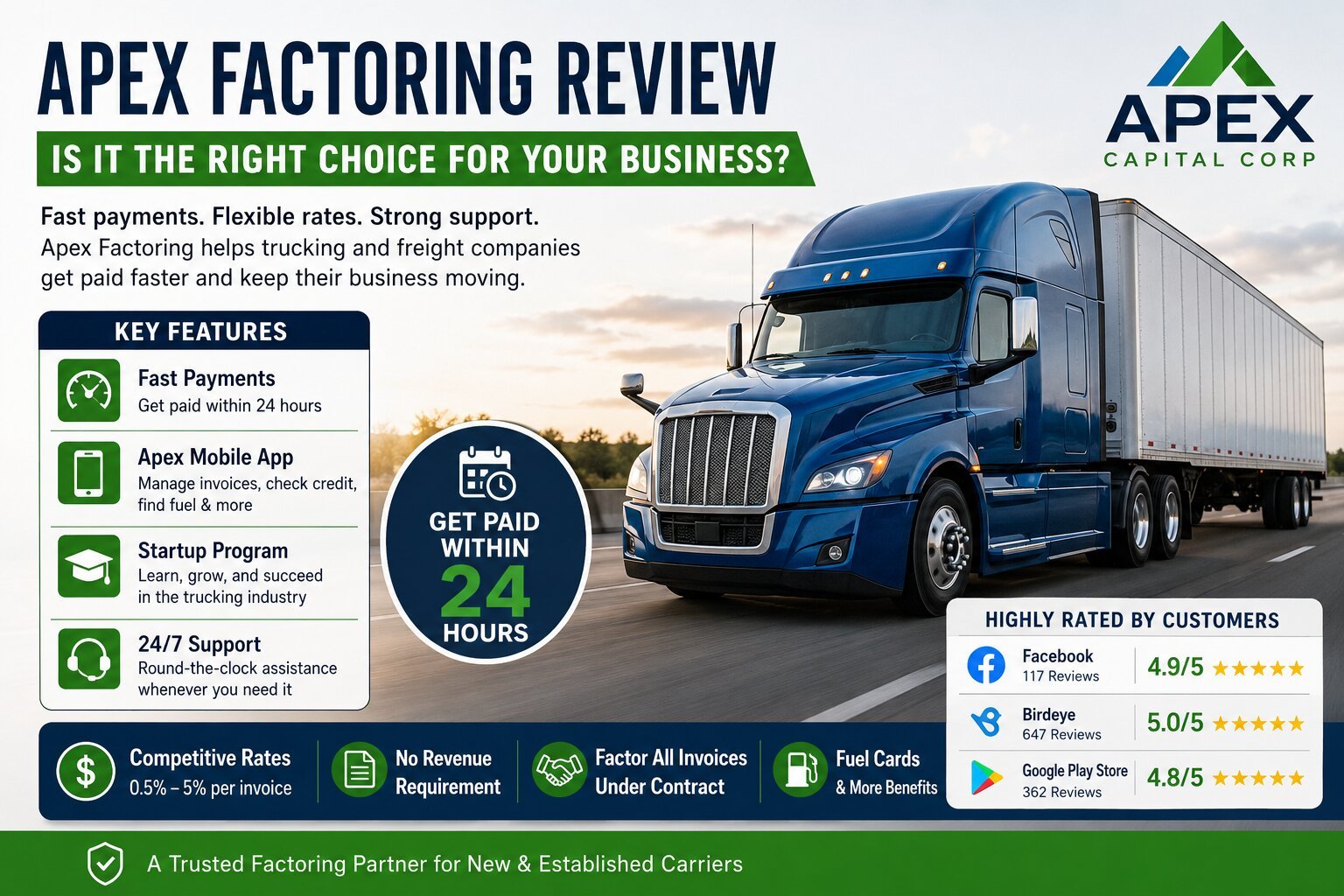
    Apex Factoring helps trucking companies receive faster payments for unpaid freight invoices. In most cases, the company provides funding within 24 hours, allowing carriers to improve cash flow and maintain smooth operations.

    In addition, Apex offers a feature-rich mobile app that simplifies invoice management, fuel tracking, and customer credit checks. New trucking companies can also benefit from the Apex Startup Program, which guides entrepreneurs through the process of launching and managing a successful carrier business.

    Unlike some competitors, Apex does not require a high revenue threshold to qualify. Factoring rates generally range from 0.5% to 5% per invoice, although the company does not publicly display exact pricing.

    However, Apex requires clients to factor all invoices under its contract terms, which may limit flexibility for larger fleets. Even so, many customers consistently praise the company for its fast funding, dependable service, and responsive support team.

    Overall, Apex stands out as a strong factoring solution for both new and established trucking businesses.

    Pros and Cons of Apex Factoring

    ✅ Pros

    • Offers 24/7 payment processing for faster access to working capital
    • Includes round-the-clock roadside assistance for added driver support
    • Provides a Startup Program specifically designed for new trucking businesses
    • Features an easy-to-use mobile app for invoice and payment management
    • Assigns a dedicated account executive to support your business directly

    ❌ Cons

    • Does not publicly disclose pricing, so you must request a custom quote
    • Requires clients to factor all invoices, reducing operational flexibility

    Why Choose Apex Factoring?

    Now that you understand the pros and cons, let’s explore the key features that make Apex Factoring a popular choice among trucking and freight companies.

    Fast Payments Within 24 Hours

    Speed remains one of the biggest reasons carriers use freight factoring, and Apex performs exceptionally well in this area.

    With same-day or next-day funding, businesses can receive payments in less than 24 hours after submitting invoices. Consequently, trucking companies can immediately cover operational costs such as fuel, maintenance, insurance, and driver wages.

    Even better, Apex often provides expedited funding without charging additional processing fees, which gives it a competitive advantage over many other factoring providers.

    Apex Mobile App

    The Apex mobile app receives consistently positive reviews because it offers several practical tools for truck drivers and fleet operators.

    Using the app, you can:

    • Upload load paperwork directly from your smartphone through the Apex client portal (AMP)
    • Create and submit invoices in minutes
    • Check customer credit scores before accepting loads
    • Locate the lowest fuel prices nationwide with the Apex Fuel Finder
    • Monitor fuel card transactions and savings in real time
    • Send paperwork directly from the road to your office

    Furthermore, the app includes several additional features that help trucking companies save time, improve route planning, and increase profitability.

    Apex Startup Program

    The Apex Startup Program specifically targets new trucking entrepreneurs who need guidance during the early stages of business development.

    Although established carriers may not need this feature, new owner-operators can gain significant value from the program.

    For example, Apex teaches new business owners how to manage trucking operations, understand industry terminology, organize paperwork, and improve financial planning. Additionally, the program prepares new carriers for factoring services and fuel card partnerships, helping them build a stronger operational foundation.

    As a result, new trucking companies can launch with greater confidence and fewer financial obstacles.


    How Much Does Apex Freight Factoring Cost?

    Like most freight factoring companies, Apex charges a factoring fee based on the value of each invoice. Typically, rates range between 0.5% and 5%.

    However, several factors influence the final rate, including:

    • Invoice volume
    • Broker payment history
    • Customer creditworthiness
    • Overall business risk

    Depending on these factors, Apex may offer either flat-rate or variable-rate pricing structures.

    Although variable pricing can create some uncertainty, this approach remains standard throughout the factoring industry. Therefore, the best way to determine your actual costs is to request a personalized quote directly from Apex.

    Is Apex Factoring Right for Your Business?

    If You’re Just Starting Out

    Apex serves as an excellent option for new trucking entrepreneurs because it does not impose strict revenue requirements.

    More importantly, the Apex Startup Program provides educational resources and operational guidance that help new carriers launch and grow successfully.

    Therefore, if you’re entering the trucking industry for the first time, Apex can function as both a financial partner and a business mentor.

    If You’re a Driver with New Authority

    Drivers operating under new authority often face cash flow challenges while building relationships with brokers and customers.

    Fortunately, Apex helps simplify the learning process by offering factoring support, fuel programs, and educational tools. As a result, newer carriers can focus more on securing loads and expanding their operations instead of worrying about delayed payments.

    If Your Freight Business Is Already Established

    Although Apex strongly appeals to startups and owner-operators, it also works well for established freight businesses.

    In fact, many long-term customers report using Apex services for several years — and sometimes even decades — because of the company’s reliable funding process and strong customer service.

    However, Apex does require clients to factor all invoices under contract. Consequently, larger fleets may find this arrangement somewhat restrictive, especially if they prefer working with multiple factoring companies simultaneously.

    What Customers Are Saying About Apex Factoring

    Customer reviews for Apex remain overwhelmingly positive across several major review platforms.

    On Facebook, Apex holds an impressive 4.9/5 rating from more than 117 reviews. Many customers specifically praise the company’s fast payments, professional staff, and responsive service.

    Meanwhile, on Birdeye, Apex maintains a near-perfect 5/5 rating from 647 reviews. Very few users report negative experiences, which reflects strong overall customer satisfaction.

    Additionally, the Apex mobile app enjoys a 4.8/5 rating on the Google Play Store. Users frequently mention the app’s convenience, ease of use, and practical business tools.

    Together, these reviews reinforce Apex’s reputation as one of the most trusted freight factoring providers in the trucking industry.

    Frequently Asked Questions About Apex Factoring

    What Is Apex’s Factoring Fee?

    Apex uses either flat or variable factoring rates depending on invoice size, payment terms, broker reliability, and overall account risk.

    In some cases, smaller invoices or slower-paying customers may result in slightly higher fees. Additionally, the company may charge minor fees for specific payment methods or extended payment periods.

    However, most customers report that Apex’s pricing remains competitive within the freight factoring industry.

    What Does Apex Capital Do?

    Apex Capital provides several financial services for trucking businesses, including freight invoice factoring, fuel cards, and startup support programs.

    Through invoice factoring, Apex purchases unpaid freight invoices and advances most of the invoice value upfront. Then, the company collects payment directly from the customer later.

    Typically, Apex charges around 2% of the invoice amount for this service.

    Is Apex Capital Legit?

    Yes, Apex Capital is a legitimate and highly respected factoring company.

    The company holds accreditation with the Better Business Bureau and maintains excellent customer ratings across multiple review platforms. Furthermore, many trucking professionals recognize Apex as one of the industry’s most trusted factoring providers.

    In fact, the company has even earned the nickname “America’s Favorite Factor.”

    Is Apex a Factoring Company?

    Yes, Apex primarily operates as a freight factoring company. However, it also offers additional trucking-related financial services, including fuel cards, operational support, and educational programs for new trucking business owners.

    Because of these additional resources, Apex provides more than just invoice factoring — it delivers a broader support system for trucking companies aiming to grow efficiently.

  • 10-4 by WEX App Review: Smart Diesel Savings Without Credit Checks

    10-4 by WEX App Review: Smart Diesel Savings Without Credit Checks

    Running a trucking business takes constant planning. Meanwhile, diesel prices continue to reduce profits for many small fleets. That’s where the 10-4 by WEX app helps. Instead of using complicated fuel programs, truckers can save on fuel quickly and easily. Additionally, the app removes credit checks and transaction fees.

    What Is 10-4 by WEX?

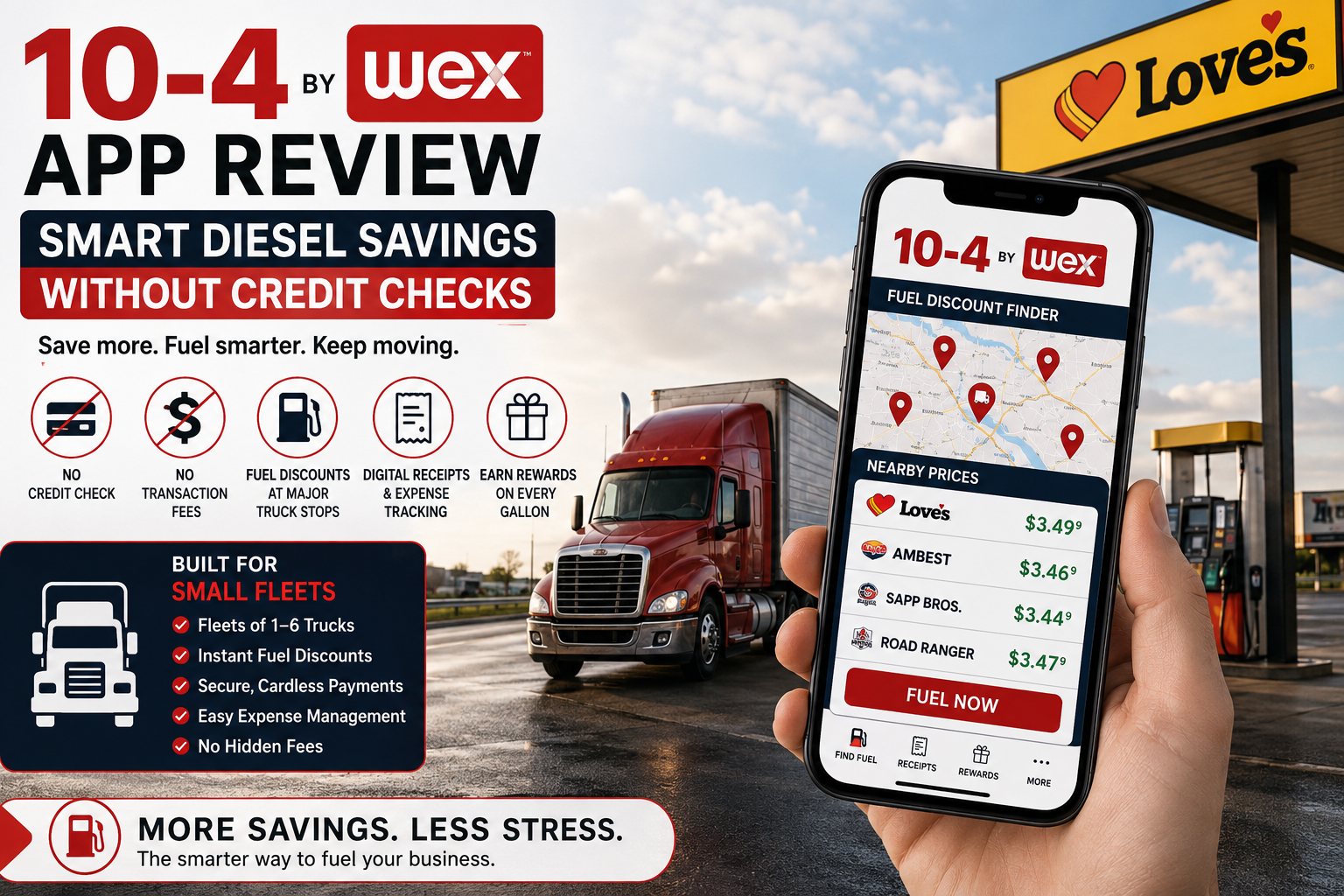
    The 10-4 app from WEX works as a diesel discount platform for owner-operators and small fleets. Specifically, it gives drivers instant fuel discounts at partner truck stops. At the same time, it helps businesses manage fuel expenses more efficiently.

    Unlike many fuel card programs, the app skips credit checks completely. As a result, drivers can download the app, connect a payment method, and start saving within minutes.

    If you want a simple way to lower fuel costs, the 10-4 app offers a fast solution. Instead of filling out paperwork, drivers can fuel up, pay through the app, and save immediately. Most importantly, the process includes no hidden charges.

    Quick Answers

    The 10-4 by WEX app helps truckers reduce diesel expenses quickly. In addition, the app skips credit checks and long approval steps. Drivers can start using it within minutes after downloading it.

    The platform displays discounted diesel prices at nearby truck stops. Furthermore, it supports secure cardless payments for extra protection. Small fleets benefit the most because of the app’s easy setup.

    The app also avoids transaction fees, which helps users keep more savings. Likewise, built-in digital receipts simplify expense tracking. Even small discounts per gallon can create major yearly savings over time.

    Who Can Benefit from the 10-4 by WEX App?

    The 10-4 by WEX app targets small trucking companies and independent drivers. In particular, it helps them save money on diesel without complicated paperwork. Fleets with one to six trucks gain the most value. After all, many traditional fuel card providers ignore smaller operations.

    The app stands out because of its speed and simplicity. For example, drivers do not face credit checks, approval delays, or setup complications. Instead, users simply download the app, add a payment method, and start saving immediately.

    Truckers who dislike traditional fuel card restrictions often prefer 10-4 by WEX. Additionally, the app automatically displays discounted diesel prices at participating truck stops. Because of that convenience, drivers save both time and money.

    Top Features of the 10-4 by WEX App

    The 10-4 by WEX app includes several useful tools. Overall, these features simplify fuel management for truckers and small fleets.

    No Credit Checks

    Many fuel cards require strong credit scores and detailed applications. However, the 10-4 app removes those barriers completely. As a result, drivers can sign up quickly and begin saving right away.

    Fuel Discount Finder

    The app helps users locate lower diesel prices nearby or along planned routes. Moreover, it supports major truck stop chains like Love’s, Sapp Bros., AMBEST, and Road Ranger. Therefore, drivers gain access to more fuel-saving opportunities.

    Digital Receipts and Expense Tracking

    Every fuel purchase automatically generates a digital receipt inside the app. Consequently, drivers can monitor expenses and organize transactions easily. The app also allows users to export reports whenever needed.

    Rewards Program

    The platform rewards users with points for diesel purchases. In addition, drivers can earn bonus points through referrals. Over time, those rewards create even more savings opportunities.

    Secure Cardless Payments

    Card skimming and payment fraud continue to create problems at truck stops. Fortunately, the 10-4 app reduces those risks through secure cardless transactions. Instead of swiping physical cards, drivers complete payments directly inside the app.

    Overall, the app combines fuel discounts, payment security, rewards, and expense tracking. As a result, everything works inside one convenient platform.

    How Much Can You Really Save with the 10-4 by WEX App?

    Most truckers ask the same question first. Naturally, they want to know how much money the app can actually save.

    The answer depends on fuel locations and weekly mileage. Still, drivers receive exclusive diesel discounts at truck stops like Love’s, AMBEST, Sapp Bros., and Road Ranger. Even small discounts per gallon can produce large yearly savings.

    For example, a trucker purchasing 200 gallons each week could save hundreds or thousands of dollars annually. Consequently, those savings create extra room for maintenance, equipment upgrades, or operating costs.

    The app also helps drivers compare nearby diesel prices. Because of that feature, truckers avoid unnecessary overspending during trips. Over time, these savings strengthen profit margins and improve business efficiency.

    10-4 by WEX vs. Traditional Fuel Cards

    The differences between the 10-4 by WEX app and traditional fuel cards become obvious quickly. In particular, small fleets and independent operators benefit the most.

    Easier Approval Process

    Traditional fuel cards often require strong credit histories and lengthy applications. In contrast, the 10-4 app removes those obstacles completely. Therefore, drivers can join immediately and start saving.

    No Transaction Fees

    Many fuel card companies charge transaction fees. Over time, those extra charges slowly reduce fuel savings. However, the 10-4 app avoids those costs entirely. As a result, truckers keep more of their money.

    Flexible for Small Fleets

    Traditional providers sometimes impose inactivity fees or minimum usage rules. On the other hand, the 10-4 app focuses on flexibility and transparency. Because of that approach, the app works better for smaller operations.

    Compared to programs like AtoB or Comdata, 10-4 by WEX offers a simpler solution. Additionally, it provides more affordable fuel savings for independent drivers.

    Who Is the 10-4 by WEX App Best For?

    The app works best for owner-operators, independent truckers, and fleets with one to six trucks.

    Fuel expenses create one of the biggest financial challenges in trucking. Fortunately, the diesel discounts available through 10-4 by WEX help smaller businesses lower operating costs. At the same time, drivers avoid complicated fuel card systems.

    The app also suits drivers who want easier expense management. For instance, digital receipts, automated tracking, and simple payments reduce paperwork. In addition, these features save valuable time.

    Truckers who want a stress-free fuel solution will likely find strong value in this app. Most importantly, the platform avoids credit checks and hidden fees completely.

    What Are Truckers Saying About the 10-4 by WEX App?

    Early feedback from truckers has remained very positive. In fact, many drivers tested the app during the Mid-America Trucking Show.

    Vince from Paw Creek Trucking said:

    “I really like what you’re doing. I want you to bring this app to the market and be successful because that helps me be successful.”

    Hec from Hiltabrand Express shared:

    “Your app is tied to other things that are going to help me get better discounts because WEX is reputable.”

    Most drivers praise the app for its simplicity and fuel discounts. Furthermore, many users appreciate the faster payment process and time savings.

    Pros and Cons: Is the 10-4 by WEX App Worth It?

    Like every fuel-saving tool, the 10-4 app offers advantages and a few limitations.

    Pros

    • Diesel discounts help small trucking businesses reduce fuel expenses.
    • The app requires no credit checks or long approval processes.
    • Secure cardless payments lower fraud risks at truck stops.
    • Digital receipts and expense tracking simplify fuel management.
    • Most drivers can start using the app within minutes.

    Cons

    • Some areas still have limited participating truck stops.
    • Larger fleets may require a more advanced WEX fuel solution.

    Final Verdict

    The 10-4 by WEX app gives small trucking companies an easy way to lower diesel expenses. Likewise, independent drivers can benefit from its simple system.

    The app removes credit checks, transaction fees, and complicated setup requirements. At the same time, it delivers practical fuel discounts and secure payments. Additionally, it keeps expense tracking organized.

    For owner-operators and small fleets, the app provides a convenient fuel management solution. As a result, businesses save both time and money.

    Should You Try the 10-4 by WEX App?

    If you operate a small trucking company or drive independently, the 10-4 by WEX app deserves serious consideration.

    The app offers real fuel savings without hidden fees or difficult applications. Furthermore, drivers can download the app, connect a payment method, and start saving almost immediately.

    Its combination of diesel discounts, secure payments, and simple expense tracking makes it highly practical. Therefore, small trucking businesses can reduce fuel costs without extra stress.

    If you want additional fuel-saving options, you can also explore alternatives like the TCS Fuel Card or the WEX Fleet One EDGE Card.

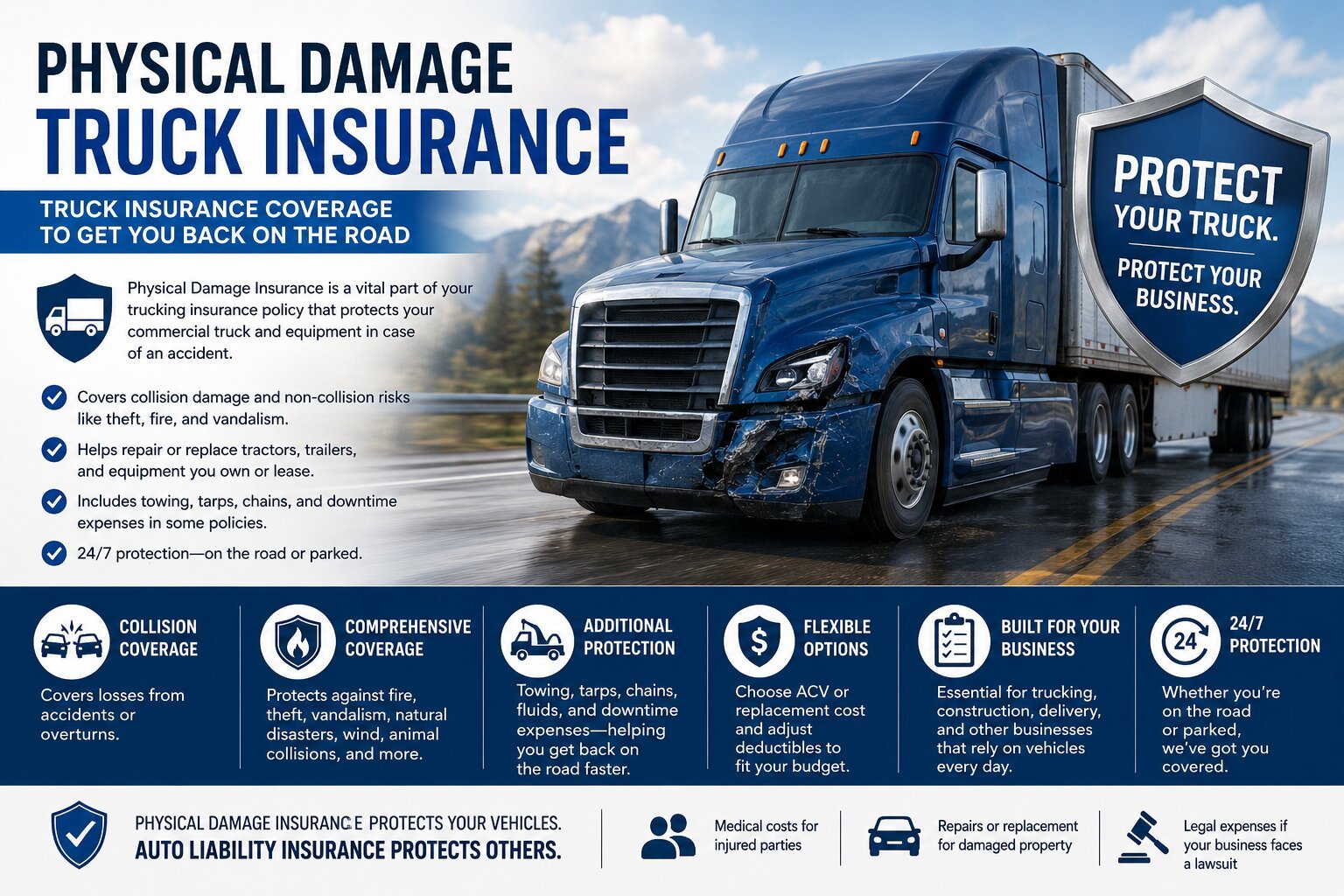
  • Physical Damage Truck Insurance

    Physical Damage Truck Insurance

    Truck Insurance Coverage to Get You Back on the Road

    Physical Damage Insurance is a vital part of your trucking insurance policy that protects your commercial truck and equipment in case of an accident.

    This coverage helps pay to repair or replace tractors, trailers, and equipment that you own or lease if they’re damaged in a crash. It provides 24/7 protection, ensuring your truck stays covered whether it’s on the road or parked.

    Quick Answers

    Physical Damage Truck Insurance protects your truck and equipment from accident-related losses.
    It covers collision damage and non-collision risks like theft, fire, and vandalism.
    It helps repair or replace tractors, trailers, and equipment you own or lease.
    Coverage also includes towing, tarps, chains, and downtime expenses in some policies.
    It does not cover medical bills or damage to other vehicles or property.
    Those costs are handled by commercial auto liability insurance.
    Business owners can choose Actual Cash Value or replacement cost coverage options.
    You can also adjust deductibles to reduce premiums and manage costs.
    This insurance is essential for trucking, construction, and delivery businesses.
    It keeps your operations running with minimal downtime after accidents.

    What’s Covered by Physical Damage Insurance

    When your truck is involved in an accident or suffers equipment loss (excluding mechanical breakdown), Physical Damage Insurance provides two main types of protection:

    • Collision Coverage: Covers losses from accidents or overturns. 
    • Comprehensive Coverage: Covers non-collision damages such as fire, theft, vandalism, natural disasters, wind damage, animal collisions, glass breakage, and more.
    • Physical Damage Insurance from Great West also includes additional protection for accident-related expenses, such as:
    • Repair or replacement of your truck and equipment
    • Towing expenses
    • Damaged tarps, chains, and binders on owned trailers
    • Payments for specific fluids
    • Downtime coverage
    • Single Deductible endorsement

    This coverage ensures your truck is repaired or replaced quickly—getting you back on the road with minimal downtime.

    Fire and Theft with Combined Additional Coverage (CAC)

    Fire and Theft with Combined Additional Coverage (CAC) is a type of physical damage insurance that protects your truck and equipment from specific, named risks.

    This policy combines fire and theft protection with coverage for other listed perils, offering a more affordable alternative to full comprehensive coverage.

    Also known as limited comprehensive insurance or specified perils insurance, CAC only covers losses caused by the specific events named in the policy—giving policyholders targeted protection at a lower cost. 

    Who Needs Physical Damage Coverage?

    Every small business owner should consider adding physical damage coverage to their auto insurance policy to protect against costly repairs or replacement after an accident.

    Even if your business only operates one or two vehicles, an unexpected loss can have a serious financial impact—both from repair costs and lost income while your vehicle is out of service.

    Some industries face a higher risk of vehicle damage than others, including: 

    • Construction and Building Contractors: Job sites are busy environments with constant movement of people and equipment, increasing the likelihood of vehicle damage during hauling or supply runs.
    • Trucking: Trucking and towing operators spend extensive hours on the road, making them vulnerable to accidents, theft, and vandalism. A damaged truck can halt operations and cause major revenue loss.
    • Landscaping: Lawn care and tree service businesses face exposure to hazards such as falling limbs, storms, and fires that can damage vehicles or equipment.
    • Retailers: Florists, grocers, and other retail businesses rely on vehicles for deliveries and supply runs. Any downtime due to accidents or repairs can disrupt operations and lead to income loss.

    In short: If your business depends on vehicles for daily operations, physical damage coverage is essential to keeping your business moving. 

    Customize Auto Coverage to Fit Your Business

    When purchasing commercial auto insurance, you can tailor your policy to match your company’s unique risks and needs.

    If your business owns multiple vehicles, you have the flexibility to decide which ones should have physical damage coverage. For instance, you might choose higher protection for newer or more valuable vehicles, while opting for limited or no coverage on older ones.

    Some business owners prefer to insure newer vehicles against physical damage while self-insuring older vehicles by setting aside reserve funds for potential repairs or replacement.

    You can also choose specified perils coverage instead of comprehensive coverage to lower premiums. For example, if theft and vandalism are your main concerns—but fire or hail damage is unlikely—you can insure specifically against those risks to save on costs.

    When it comes to vehicle value, you have two options:

    Actual Cash Value (ACV): Covers the current market value of your vehicle, factoring in depreciation.

    Replacement Cost: Pays to replace your vehicle with a new one of similar type, minus your deductible.

    To further manage expenses, consider opting for a higher deductible. This approach reduces your premium while keeping your insurance intact for major losses—allowing you to pay smaller repair costs out of pocket. 

    What Does Physical Damage Insurance Not Cover?

    While physical damage insurance is vital for protecting your company’s vehicles, it doesn’t cover every type of loss. There are several important exclusions to keep in mind. This coverage does not include:

    • Medical expenses for anyone injured in an accident 
    • Damage to another person’s vehicle or property
    • Legal fees, judgments, or settlements related to an accident
    • These types of expenses are typically covered under your commercial auto liability insurance, not your physical damage policy.

    If your vehicle is involved in an accident that causes bodily injury or property damage to others, auto liability insurance will help pay for:

    • Medical costs for injured parties 
    • Repairs or replacement for damaged property
    • Legal expenses if your business faces a lawsuit

    In short, physical damage insurance protects your own vehicles, while auto liability insurance protects your business from third-party claims.

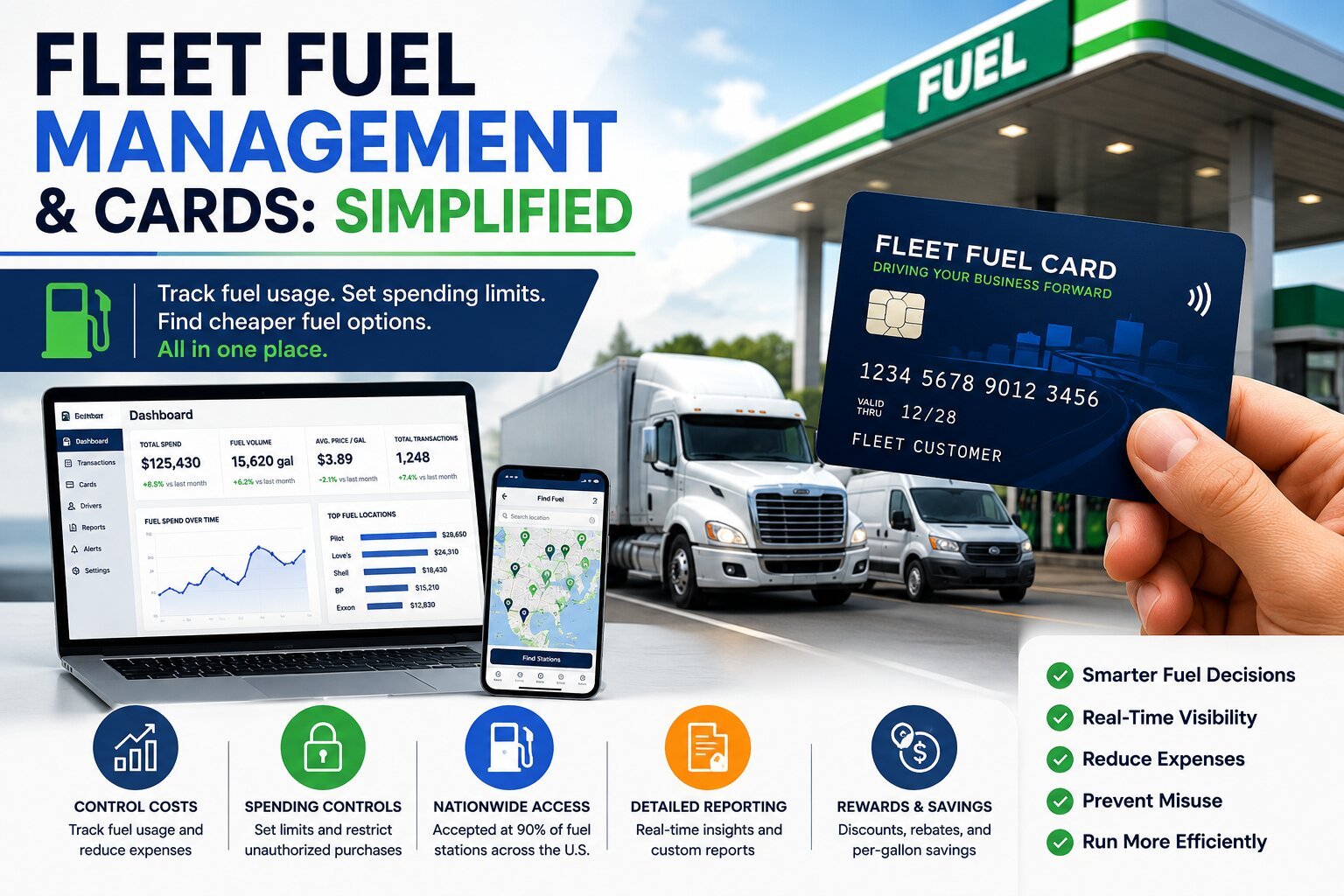
  • Fleet Fuel Management and Cards : Simplified

    Fleet Fuel Management and Cards : Simplified

    Keep track of fuel usage, set spending limits, and help your drivers find cheaper fuel options — all in one place. A good fuel management program with fuel cards gives you convenience on the road and control over your costs. These cards also make it easy to monitor and manage every fuel purchase, helping your business save money and run more efficiently. 

    Quick Answers 

    Fleet fuel cards help businesses track fuel spending and control costs efficiently.

    They allow drivers to purchase fuel while giving managers full visibility of transactions.

    Most cards include spending limits, purchase restrictions, and detailed reporting tools.

    Open-loop cards offer flexibility, while closed-loop cards provide tighter control.

    Many providers also offer discounts, rewards, and fuel rebates to reduce expenses.

    Advanced systems help identify fuel trends and improve overall fleet efficiency.

    Choosing the right card depends on your fleet size, routes, and budget needs.

    A good fuel card simplifies operations, prevents misuse, and supports smarter financial decisions. 

    Key Features of Fleet Fuel Cards

    Fleet and fuel cards are known by many names — fuel cards, gas cards, fleet credit cards, or even corporate fuel cards. No matter what you call them, they serve the same purpose: allowing your drivers to buy fuel and related services while on the road.

    Choosing the right card depends on what your business needs. Look for one that offers useful tools and features to keep your fleet running smoothly. Here are some of the most important features to consider.

    Smart Fleet Fuel Management

    You can’t control fuel prices, but you can control how much your fleet spends on them. A fuel management system helps cut costs by tracking usage and improving how your company buys fuel. With custom reports and insights, you can spot trends, manage spending, and make smarter fuel decisions for your business. 

    Reduce Fleet Fuel Expenses

    Cut your fuel costs by up to 10% with a smart fleet fuel management system. Set purchase limits, control the type of fuel your drivers buy, and easily find the cheapest fueling locations. You can also get help choosing the right-sized vehicles for your business, reducing unnecessary fuel use and boosting overall efficiency. 

    Fueling Made Easy for Drivers

    The Enterprise fuel card makes life simpler for drivers, working just like a regular credit card. It’s accepted at 90% of fuel stations across the U.S., and with the eFleets Mobile App, drivers can easily find nearby locations where the card is accepted.

    Monitor Fuel Card Activity

    Keep your fuel spending secure with detailed reports on every gas card transaction and driver ID. You can easily track who’s using the card and when — plus, set it up to allow fuel purchases only, preventing unauthorized spending.

    Why Fleet Fuel Cards Matter in 2025

    Fleet fuel cards are a great asset for any business — big or small. The right card can help you save on fuel costs, track expenses, and manage your vehicles more efficiently.

    With so many options available, choosing the best one for your business can be challenging.

    In this guide, we’ll explore some of the top fleet and fuel cards for 2025 to help you find the perfect fit for your company and drivers. 

    1) Open-Loop Access

    One of the most valuable features to look for in a fleet fuel card is whether it offers open-loop access.

    An open-loop card works like a regular credit card, allowing drivers to buy fuel and other items anywhere major networks like Visa are accepted. In contrast, closed-loop cards limit purchases to certain fuel brands or locations, which can make fueling up more difficult and time-consuming.

    With an open-loop fuel card, drivers have the freedom to stop where it’s most convenient — choosing stations with the best prices along their route. This flexibility saves both time and money while helping drivers make smarter decisions for your business.

    2) Spending Controls

    Strong spending controls are a key feature of any reliable fuel card, giving managers and business owners better control over expenses.

    The best cards let you:

    • Restrict purchases to fuel only 
    • Set spending limits by day or time 
    • Cap transaction amounts
    • Add extra expense categories like parking or maintenance

    Some advanced cards even adjust limits based on the vehicle’s location, fuel tank size, or route. These tools make it easier to prevent unauthorized or personal spending and keep your fuel budget under control.

    3) Rewards and Savings

    A great benefit of many fuel cards is the rewards they offer. These perks can help your business save more over time.

    Depending on the provider, you might get:

    • Sign-up bonuses 
    • Referral rewards 
    • Discounts with partner companies 
    • Per-gallon fuel savings (be sure to check for limits or caps)

    Choosing a card with a good rewards program can turn everyday fuel purchases into extra savings for your fleet. 

    4) Fees and Hidden Charges

    Unexpected fees can eat into your savings fast, so it’s important to understand all the costs tied to your fuel card. Watch out for hidden fees such as:

    • Transaction or service fees 
    • Out-of-network or per-gallon charges 
    • Electronic or check payment fees 
    • Phone payment or setup charges 
    • Late payment or high credit risk fees 
    • Monthly subscription or program maintenance costs

    Before choosing a card, make sure it doesn’t add extra fees for routine business activities. The right fuel card should help you save money — not create new expenses.

    Top 14 Fleet and Fuel Cards for 2025

    Looking for the best fleet and fuel cards for your business in 2025? Here’s a guide to the top options and their key features that can help your fleet save money, simplify fuel management, and operate more efficiently.

    1) Coast

    The Coast fuel card offers a wide range of features designed to support fleets of all sizes. It’s flexible, secure, and built to simplify fuel management while saving money.

    Here’s what makes Coast stand out: 

    • Works anywhere Visa is accepted across the U.S. 
    • No personal guarantee required
    • Real-time spending visibility
    • Automatic fuel data tracking
    • Customizable spending controls
    • 100% U.S.-based customer support
    • Easy-to-use online dashboard
    • Advanced security with a $25,000 fuel fraud guarantee (when using enhanced security tools)
    • Protection against unauthorized purchases
    • Up to 10¢ per gallon discounts at 30,000+ stations
    • Integrates with fleet software like telematics and management systems
    • Option to enable additional spending categories

    Overall, Coast combines flexibility, control, and strong security — making it a top choice for modern fleet operations. 

    2) WEX

    WEX provides a range of fuel card options built to fit fleets of all sizes. Their cards are known for flexibility, useful reporting tools, and strong spending control features.

    Here’s what WEX offers: 

    • Customizable reporting and insights 
    • Easy-to-set spending limits and controls
    • A large network of accepted fuel stations
    • Option to carry a balance (with applicable interest)
    • Per-gallon fuel rebates
    • No annual or setup fees
    • Automatic accounting integration
    • User-friendly online and mobile management tools

    WEX cards make it easy to track spending, simplify accounting, and keep your fleet running efficiently. 

    3) Comdata

    The Comdata fleet card is built to help businesses manage fuel costs with powerful tools and detailed insights. It’s ideal for fleets that value control, transparency, and data-driven decision-making.

    Key features include:

    • Per-gallon fuel discounts (based on fueling locations)
    • Advanced analytics for tracking and reporting
    • Monthly per-card fee and setup charge
    • Fuel price comparison by location
    • Online account management for easy access
    • Customizable purchase controls
    • Built-in fuel tax management tools

    Comdata gives you the flexibility to manage fuel spending efficiently while gaining clear visibility into your fleet’s expenses. 

    4) Fuelman

    Fuelman is a versatile fleet card designed to help businesses save on fuel and manage expenses efficiently.

    Its key features include:

    • Competitive fuel pricing
    • Broad network of accepted fuel stations
    • Online account management for easy oversight
    • Tools for tracking and managing fuel usage
    • Fleet savings programs to cut costs
    • Tax reporting support
    • Per-gallon discounts at select locations
    • Monthly fee per card

    Fuelman provides both convenience and cost-saving benefits, making it a solid choice for fleets looking to streamline fuel management. 

    5) EFS

    The EFS fuel card offers a range of tools to help fleets manage fuel costs and keep vehicles running smoothly.

    Key features include:

    • Customizable spending limits
    • Discounts on fuel purchases
    • Accepted at a large network of fueling locations
    • Rebates and rewards programs
    • Online management tools
    • Vehicle maintenance support
    • Roadside assistance

    EFS combines cost savings with practical fleet management features, making it a convenient choice for businesses on the move. 

    6) BP

    The BP fuel card is a branded option that lets drivers purchase fuel at BP and Amoco stations, both locally and nationwide.

    Key features include: 

    • Set spending limits for each card
    • Individual card controls for better tracking
    • Closed-loop system for restricted use
    • Advanced security, including driver ID and odometer verification
    • Quick card deactivation if needed
    • Monthly card fee
    • Option to carry a balance (interest may apply)

    The BP card provides secure, controlled access to fuel while keeping fleet spending manageable. 

    7) Voyager

    The Voyager fleet card is a versatile, multi-brand option that works at many fueling locations nationwide.

    Key features include:

    • Discounts at participating stations 
    • Broad network of accepted fuel locations
    • Online account management for easy tracking
    • Fleet management tools for better oversight
    • Fuel savings programs to help reduce costs

    Voyager makes fueling convenient while providing tools to manage spending and optimize fleet operations. 

    8) Shell

    The Shell fleet card is a branded option that lets drivers purchase fuel at Shell stations locally and nationwide.

    Key features include:

    • Per-gallon discounts depending on fuel volume
    • No monthly or annual fees
    • Driver and time-based restrictions
    • Manager-controlled spending limits
    • Access to vehicle maintenance and roadside assistance
    • Integration with participating Jiffy Lube locations

    The Shell card provides both savings and convenience while giving managers control over fleet fuel use. 

    9) Chevron

    The Chevron fleet card is a branded option that works at Chevron stations and other participating locations nationwide.

    Key features include: 

    • Multiple card types to fit different needs
    • Purchase controls to manage spending
    • Real-time transaction tracking
    • Detailed reporting tools
    • Customizable restrictions for cards or drivers
    • Late fees for balance carry-over
    • Fuel rebates
    • Per-gallon discounts

    Chevron combines convenience, flexibility, and cost-saving features to help fleets manage fuel efficiently. 

    10) ExxonMobil

    The ExxonMobil fleet card is a branded option for businesses with vehicles traveling locally or across multiple regions.

    Key features include:

    • Tier-based rebate program
    • Per-gallon cash back on fuel
    • Real-time alerts for transactions
    • Customizable spending limits
    • Setup fee and monthly card fee
    • Reporting tools for easy tracking

    ExxonMobil helps fleets save on fuel while providing control and visibility over spending. 

    11) Sunoco

    The Sunoco fuel card is a practical choice for business fleets looking for convenience and savings.

    Key features include: 

    • Access to Sunoco’s nationwide station network
    • No setup, card, or annual fees
    • Per-gallon fuel rebates
    • Special offers and promotions
    • Employee spending limits
    • Real-time alerts on transactions
    • Online and mobile account access
    • Reporting tools for tracking and management

    Sunoco provides both cost savings and easy management for fleet operations. 

    12) Pacific Pride

    The Pacific Pride fleet card offers features designed to give businesses control, security, and insight into fuel spending.

    Key features include:

    • Transaction limits to manage spending
    • Security codes for controlled access
    • Online reporting for easy tracking
    • Electronic receipt collection
    • Vehicle maintenance tracking
    • Itemized billing for detailed expense management

    Pacific Pride helps fleets stay organized while maintaining control over fuel and maintenance costs.

    13) Circle K

    The Circle K fuel card is a good option for fleets with access to local Circle K stations.

    Key features include:

    • No monthly fees
    • Tracking and reporting tools
    • Spending controls
    • Per-gallon fuel savings
    • Fuel-only purchase option
    • Closed-loop system
    • Online and mobile account access
    • Flexible payment terms

    14) Axle

    The Axle fleet card works within the Pilot/Flying J network, offering convenience and cost-saving benefits for fleets.

    Key features include:

    • No transaction, account management, or monthly/annual fees
    • Customizable spending controls
    • Advanced security features
    • Cost-saving rewards
    • Flexible payment options
    • Dedicated customer service

    Both Circle K and Axle cards provide tools and benefits to help fleets manage fuel efficiently and save on expenses. 

    Choosing the Right Fuel Card for Your Business

    Fleet fuel cards are a valuable tool for businesses of any size. For example, the Coast fleet and fuel card helps you save on fuel, track spending, and manage your fleet more efficiently.

    With Coast’s online dashboard, you can monitor expenses, view detailed purchase information, and control all card activity.

    Whether you operate five vehicles or 500, locally or nationwide, Coast gives you the tools to manage your fleet with ease and precision.


  • DAT One Fuel Card Review: Is It Really Worth It?

    DAT One Fuel Card Review: Is It Really Worth It?

    Fuel is one of the biggest and most unpredictable expenses for trucking businesses. With diesel prices constantly changing, many truckers rely on fuel cards to control costs and manage expenses more efficiently. One card that’s gaining attention in the industry is the DAT One Fuel Card.

    But before signing up, it’s important to know what you’re actually getting. Fuel discounts are great, but factors like credit requirements, payment terms, fees, and network coverage can make a big difference in how much you truly save.

    In this guide, we’ll break down everything you need to know about the DAT One Fuel Card—how it works, where you can use it, what kind of savings it offers, and whether it’s a good fit for your operation.

    I’ve taken a close look at DAT One’s discount programs, payment options, and hidden costs to give you a clear picture of the real benefits this card provides for truckers and small fleet owners.

    Quick Answers

    The DAT One Fuel Card is a prepaid fuel card designed for truckers, allowing you to load funds and avoid credit checks or interest. It can be used at over 8,000 fuel stations, with discounts available at more than 2,200 in-network locations. On average, users save around $0.51 per gallon, with potential savings reaching up to $1.73 at select stops. 

    Unlike traditional credit cards, it offers better cost control with no debt and no transaction fees at in-network stations. This makes it a strong option for owner-operators and small fleet owners who want to reduce fuel expenses, manage cash flow efficiently, and simplify fuel tracking without dealing with hidden fees or complex billing systems. 

    What Is the DAT One Fuel Card?

    The DAT One Fuel Card, powered by OTR Solutions, is a prepaid fuel program built specifically for trucking businesses. Instead of working like a traditional credit card, it lets you load funds directly and use them at thousands of fuel stations across the country.

    Here’s what makes it different: 

    • It works like a debit card, so there’s no credit check or interest to worry about.
    • You can use it at over 8,000 fuel locations, including major stops like TA Petro, Speedway, and AMBEST.
    • It offers exclusive discounts at more than 2,200 in-network stations, with savings that average $0.51 per gallon and can go up to $1.73 per gallon at select locations.
    • There are no transaction fees when fueling at in-network stops, helping you keep more of your savings. 
    • Plus, the card is backed by OTR Solutions’ support team, who can help you manage your account and get the most out of your card.
      Overall, the DAT One Fuel Card makes fuel management simple and cost-effective for both owner-operators and small fleet owners.

    Why Fuel Costs Matter So Much in Trucking

    Fuel is one of the biggest expenses in trucking — it can make up 20–30% of your total operating costs. Without a solid plan to manage these costs, even a busy trucking business can see profits vanish quickly.

    Here’s an example:
    If your truck burns about 1,200 gallons of diesel each month, saving just $0.51 per gallon means you keep over $600 in your pocket. For small fleets running multiple trucks, those savings can easily multiply into thousands of dollars every month.

    Still, many truckers pay full price at the pump and miss out on easy savings. Manually tracking receipts, fuel prices, and surcharges takes time and leaves room for mistakes.

    That’s where fuel cards come in. They help simplify expense management while giving you automatic discounts at fuel stations.

    The DAT One Fuel Card stands out by offering built-in savings, no transaction fees at in-network stations, and easy fuel tracking—all designed to help truckers cut costs and keep their business profitable.

    Key Features of the DAT One Fuel Card

    Big Savings on Fuel

    The DAT One Fuel Card offers some of the strongest fuel discounts available in the trucking industry. On average, users save about $0.51 per gallon, which can add up to hundreds of dollars in monthly savings.

    At select in-network stations—including major names like TA Petro, Speedway, and AMBEST—the savings can reach as high as $1.73 per gallon. That makes this card one of the most competitive fuel-saving options out there.

    For owner-operators and small fleet owners, these savings can go straight back into your business—helping cover maintenance, driver pay, or future growth.

    The Fuel Finder Tool

    The Fuel Finder tool is one of the standout features of the DAT One Fuel Card. Available in the OTR Solutions mobile app, this free tool is a must-have for truckers looking to save on fuel costs. 

    It allows drivers to locate discounted fuel stops along their routes, ensuring they can maximize savings without detouring unnecessarily.

    What’s even more helpful is the real-time route optimization feature. It doesn’t just show fuel prices; it also considers your location and planned route to identify the best fueling stations with the greatest discounts. 

    This ensures that you save time and money with every trip, making the Fuel Finder tool an essential asset for owner-operators and small fleets alike.

    Zero Transaction Fees at 2,200+ Locations

    Unlike many fleet fuel cards for small businesses, the DAT One Fuel Card charges no transaction fees at in-network locations. Whether you’re stopping at TA Petro or Speedway, you won’t be hit with extra charges for swiping your card.

    This transparency is a huge advantage over traditional fuel credit cards, which often sneak in fees that eat into your savings.

    Simple Fund Management

    Managing your fuel money is straightforward with the DAT One Fuel Card. Since it’s a prepaid card, there’s no credit check required. You can load funds instantly using a debit or credit card, making it quick and hassle-free.

    If you factor with OTR Solutions, you can even request fuel advances on active loads, ensuring your drivers always have the funds they need on the road.

    Reliable Support from OTR Solutions

    One of the standout benefits of the DAT One Fuel Card is the dedicated customer support offered by OTR Solutions. Their bilingual support team helps with everything—from setting up your card to resolving any issues that might come up.

    Having direct access to knowledgeable representatives means you’re never stuck dealing with problems alone. This hands-on support is especially valuable for owner-operators who depend on quick and reliable service to keep their operations running smoothly.

    Who Is the DAT One Fuel Card Best For?

    The DAT One Fuel Card is a great fit for owner-operators and small trucking businesses looking to cut down on fuel costs and simplify expense tracking.

    If you’re running a one-truck operation or managing a small fleet, fuel expenses can quickly eat into your profits. With average savings of $0.51 per gallon, you could save over $600 per month per truck—money that can go toward maintenance, driver pay, or business growth.

    Larger fleets can benefit too. The card includes centralized management tools that let you: 

    • Load funds in advance for each truck or driver
    • Track spending in real time through the DAT One app 
    • Use the Fuel Finder tool to plan routes and locate the best fuel prices along the way

    This card is especially useful for long-haul carriers, regional delivery fleets, and specialized haulers like flatbed or refrigerated carriers—where fuel costs play a major role in profit margins.

    DAT One Fuel Card vs. Other Fleet Cards

    What sets the DAT One Fuel Card apart from other fuel cards is its focus on small fleets and owner-operators. Many fuel card programs are designed for large trucking companies, but DAT One understands that smaller operations need flexible, easy-to-manage solutions.

    One of its biggest advantages is the integration with OTR Solutions’ factoring services. This setup allows you to manage both fuel expenses and factoring in one place, without juggling multiple accounts or payment systems.

    The result? Less paperwork, faster access to funds, and more time to focus on driving and growing your business.

    Frequently Asked Questions About the DAT One Fuel Card

    Where can I use the DAT One Fuel Card? 

    You can use the card at over 8,000 fuel stations nationwide, including major brands like TA Petro, Speedway, and AMBEST. At more than 2,200 in-network locations, you’ll also enjoy exclusive fuel discounts. 

    How much can I save?

    On average, DAT One users save about $0.51 per gallon, which can add up to over $600 in savings per truck each month. At select in-network stops, discounts can go as high as $1.73 per gallon. 

    Is it better than a credit card?

    Yes — the prepaid design means no credit checks, no debt, and no interest fees. It also provides clear spending control and no transaction fees at in-network stations—advantages that traditional credit cards can’t offer.

    Is the DAT One Fuel Card Worth It?

    If you’re an owner-operator or run a small trucking fleet, the DAT One Fuel Card is definitely worth considering. It combines strong fuel discounts with easy expense management tools, helping you cut costs and simplify your day-to-day operations.

    That said, it’s important to think about your specific business needs before signing up. If most of your routes are local or tied to certain fuel stations, make sure those stops are part of the DAT One network to get the best savings.

    You should also be comfortable with the prepaid system, as it requires loading funds in advance. This setup can actually help with budgeting, but it’s best to see how it fits your cash flow before committing.

    Overall, for most small fleet owners and independent truckers, the DAT One Fuel Card offers solid value. The fuel savings alone make it worth trying, and the management features can help keep your operation organized and efficient. While no fuel card is perfect, DAT One stands out for its transparency, focus on smaller businesses, and real-world savings potential.

  • Factoring For Owner‑Operator: Everything You Need To Know

    Factoring For Owner‑Operator: Everything You Need To Know

    Understanding Factoring in Trucking

    Factoring, also called truck factoring, is a simple way for owner-operators to turn unpaid invoices into quick cash. Instead of waiting 30 to 90 days for shippers or brokers to pay, you can sell your invoices to a factoring company for an immediate advance. The factoring company buys your invoices at a small discount and gives you most of the money upfront — usually within 24 hours.

    This instant cash can help cover fuel, maintenance, repairs, or even buy new equipment without waiting for delayed payments. It keeps your trucking business moving and your drivers on the road.

    Quick Answers

    Truck factoring helps owner-operators turn unpaid invoices into fast cash. Instead of waiting 30–90 days, you get 80–95% of your invoice within 24–48 hours. This improves cash flow and keeps your trucks moving.

    Factoring companies handle payment collection, so you don’t chase brokers or shippers. Fees usually range from 2.5% to 3.5% for small carriers.

    You can choose recourse (lower fees, more risk) or non-recourse (higher fees, less risk). Compared to QuickPay, factoring offers faster funding, better support, and extra services.

    Overall, factoring gives trucking businesses steady cash flow, less stress, and more time to focus on hauling and growth.

    How Does It Work?

    Here’s how factoring works in simple steps:

    • You complete a load and send the invoice to your factoring company.
    • The factoring company pays you a large percentage of that invoice (usually 80–95%) right away.
    • Once your customer pays, the factoring company sends you the remaining balance minus their small fee.
    • It’s an easy way to improve cash flow and avoid the stress of waiting for payments.

    What to Keep in Mind

    Before signing a factoring agreement, make sure to: 

    • Choose a trusted factoring company with clear terms and good reviews.
    • Compare rates and fees to avoid hidden costs.
    • Ask about funding speed — some companies pay within hours, others take a few days.

    Factoring can be a smart move for trucking businesses, especially for new owner-operators who need steady cash flow to stay on the road.

    The Benefits of Truck Factoring for Owner-Operators

    Running a trucking business isn’t easy. Long hours, high fuel costs, and constant maintenance can quickly eat into your profits. For many owner-operators, keeping cash flowing while waiting for brokers or shippers to pay can be a real challenge. That’s where truck factoring comes in — it helps you get paid faster and keep your business running strong.

    With factoring services, you don’t have to wait weeks or months for payment. Instead, you get most of your invoice amount right after delivery. This quick access to cash means you can cover your daily expenses, handle repairs, and take on more loads without worrying about slow-paying customers.

    In short, truck factoring gives owner-operators the financial freedom and stability they need to stay on the road and grow their business.

    How Factoring Improves Your Cash Flow

    Keeping your trucking business running takes constant cash for fuel, maintenance, and driver expenses. Factoring helps you get that money fast instead of waiting weeks for brokers or shippers to pay. With quick funding, you can easily cover your daily costs and keep your trucks moving without financial stress.

    Fast Payments When You Need Them

    One of the biggest advantages of truck factoring is speed. Instead of waiting 30 to 60 days for customer payments, factoring companies usually pay within 24 to 48 hours after you submit your invoices. This means you can stay focused on hauling loads and growing your business — not chasing payments.

    No More Chasing Payments

    When you factor your invoices, you don’t have to worry about collecting payments from brokers or shippers. Once you sell your invoices, the factoring company takes care of all collections. This saves you time, reduces stress, and lets you focus on what really matters — hauling loads safely and keeping your trucks on the road.

    Helps You Build Business Credit

    Using factoring services can also help improve your business credit history. By managing your cash flow better and making regular payments on time, you show lenders that your trucking business is reliable. Over time, this builds a stronger credit profile, making it easier to qualify for loans or equipment financing in the future.

    Common Questions About Truck Factoring

    If you’ve heard about truck factoring but aren’t exactly sure how it works, you’re not alone. Many owner-operators have questions about how this financing option can help their business. Below are some quick answers to help you understand the basics and see if factoring is the right fit for you.

    For more details, you can always check out our full FAQ page on our website. 

    How Much Does Factoring Cost?

    When you work with a factoring company, you’ll pay a small discount fee — also called a factoring rate — based on the total value of the invoices you sell. This fee covers the cost of getting your cash upfront and the services the factoring company provides.

    The exact rate depends on factors like your business size, type of program, and monthly invoice volume. On average, larger fleets may pay around 1%, while most owner-operators and smaller carriers usually pay between 2.5% and 3.5%.

    What’s the Difference Between Recourse and Non-Recourse Factoring?

    When you sell your invoices to a factoring company, you can choose between recourse and non-recourse factoring. The difference lies in who takes the risk if a customer doesn’t pay.

    In a non-recourse factoring agreement, the factoring company takes on the credit risk. That means if your customer fails to pay the invoice due to insolvency or bankruptcy, the factoring company absorbs the loss — not you.

    In recourse factoring, however, you’re responsible for repaying the advance if your customer doesn’t pay. While it carries more risk for the trucking company, it usually comes with lower fees and better rates.

    Why Choose Factoring Over QuickPay?

    Some brokers offer QuickPay as a way for truckers to get paid faster, but it’s still not as quick or flexible as factoring. With QuickPay, payments can take up to five days, while factoring companies often pay within 24 hours. Even though the rates may look similar, factoring gives you much more value and support for your business.

    With factoring, you get an organized, all-in-one system that can handle your back-office work, provide fuel cards, and sometimes even help you find loads. QuickPay, on the other hand, doesn’t offer those extras. Simply put, factoring gives owner-operators more control, faster payments, and better long-term benefits than relying on QuickPay.