Box Truck Income Strategies: Building a Consistent Revenue System for Owner-Operators
For many box truck owners, building a stable income begins with understanding the strategic importance of how to make money with a box truck in the modern logistics industry. Over time, this vehicle has become a core asset in transporting products, supplies, goods, and equipment across evolving distribution networks.
As an owner-operator, I have observed that when vehicle utilization is optimized, it consistently increases earnings, improves revenue flow, and strengthens long-term financial growth. Therefore, success depends on active operations, smart niche selection, and efficient daily execution.
Moreover, most operators depend on logistics networks, supply chain systems, and structured road transport routes to secure consistent freight. Ultimately, the industry rewards reliability, efficiency, and strategic decision-making.
Quick Answers
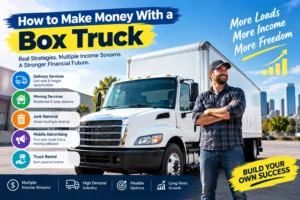
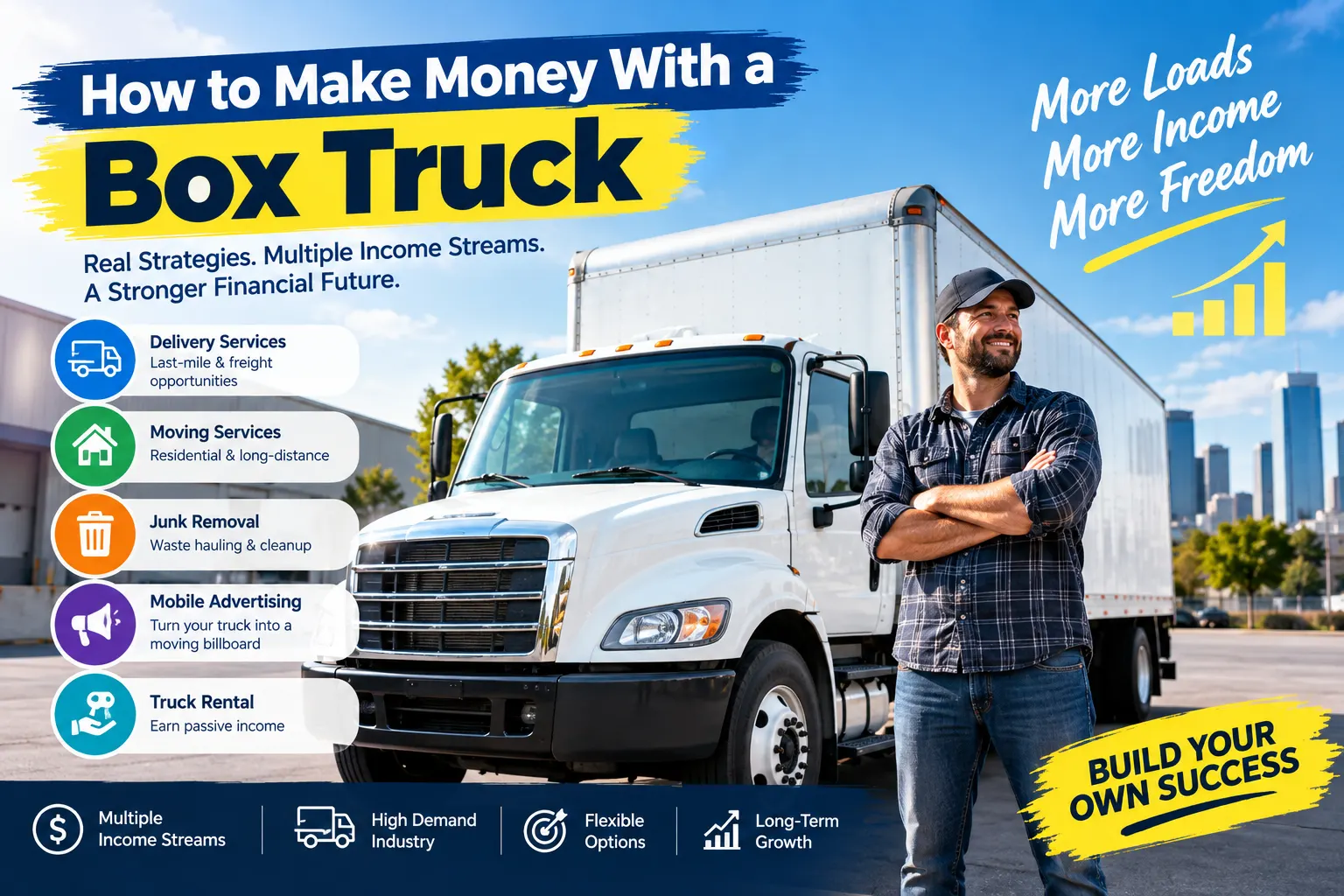
A box truck generates income through multiple high-demand service models within the logistics sector. In particular, owners earn through:
- Delivery services
- Moving services
- Junk removal operations
- Mobile advertising
- Truck rental opportunities
In addition, many operators collaborate with established delivery networks and last-mile carriers to maintain steady freight flow and consistent weekly earnings.
Although income varies depending on location, workload, and business model, active owner-operators typically earn around $2,000+ per week. Consequently, success depends on maximizing vehicle usage, selecting profitable niches, and building reliable partnerships.
Why Box Trucks Remain a Strong Business Asset
1. Delivery Services and Last-Mile Opportunities
Box truck owners build dependable income streams by participating in last-mile delivery services. In fact, the logistics industry heavily relies on these vehicles to move goods efficiently through complex supply chains.
Every day, millions of packages move through road transport systems; therefore, box trucks play a vital role in freight, cargo, and distribution operations.
Furthermore, operators who consistently maximize vehicle utilization in hauling and load transportation achieve more stable revenue and long-term profitability.
Additionally, large delivery networks offer structured systems where drivers receive assigned routes and deliver packages on schedule. As a result, independent contractors can maintain ownership of their trucks while still benefiting from steady demand and scalable income opportunities.
2. Moving Services and Residential Transport
Box truck owners also generate consistent income by offering residential moving services. Since relocation depends heavily on road transport, box trucks naturally support this growing demand.
For example, operators transport furniture, appliances, and household goods across both local and long-distance routes. Consequently, efficient handling of cargo and timely delivery builds trust and repeat business.
Moreover, many owner-operators expand their services by offering full-service moving solutions rather than basic transportation. As a result, they increase revenue per job and strengthen long-term business stability.
3. Junk Removal and Waste Hauling
In addition, box truck operators earn steady income through junk removal and waste hauling services. This sector plays a crucial role in urban cleanup and property management.
Each year, millions of tons of waste are transported through structured logistics systems; therefore, box trucks remain essential for efficient hauling operations.
Typically, operators handle loading, transporting, and disposing of unwanted materials such as furniture and appliances. Consequently, this hands-on service model creates reliable cash flow and continuous demand.
Furthermore, by offering complete hauling solutions, operators strengthen their position in the logistics network and expand their earning potential.
4. Advertising and Mobile Billboard Income
Another income stream comes from advertising. Box truck owners can convert their vehicles into mobile billboards, thereby generating additional revenue while driving.
As trucks move through busy routes, they gain high visibility across multiple locations. Therefore, businesses pay to display advertisements on these moving platforms.
Additionally, operators often combine advertising with delivery and freight services to maximize total income. Although advertising alone may not replace primary revenue, it significantly enhances overall profitability when used strategically.
5. Truck Rental and Passive Income
Furthermore, box truck owners can generate passive income by renting out their vehicles during downtime. This approach ensures that the asset continues producing revenue even when not in active use.
Other drivers or small operators frequently rent trucks for short-term delivery and transport needs. As a result, this creates a secondary income stream for owners.
However, proper agreements and structured rental systems are essential to protect assets and ensure smooth operations. Ultimately, this model converts idle time into productive earnings.
Earnings Potential and Real-World Insights
Box truck operators can achieve strong income levels when actively engaged in logistics operations. Since these vehicles support continuous freight movement, they remain highly valuable assets.
Industry estimates indicate that active operators can earn approximately $2,201 per week, depending on workload and market conditions.
In order to maximize earnings, successful operators typically:
- Stay consistently active in delivery networks
- Combine multiple service offerings
- Optimize load capacity and scheduling
- Build long-term client relationships
However, one of the biggest challenges remains securing consistent freight. Therefore, joining reliable logistics networks becomes essential for maintaining stable income.
Ownership vs Working Under a Company
Ownership provides operators with full control over pricing, scheduling, and business strategy. Consequently, independent owners can diversify income streams across multiple service areas.
In contrast, company-based drivers follow structured schedules but often experience limited earning flexibility.
Additionally, ownership allows operators to:
- Expand service categories
- Select higher-paying routes
- Scale operations independently
- Build long-term business equity
As a result, ownership offers greater financial control and long-term growth potential.
Final Thoughts and Growth Opportunities
Ultimately, box truck owners build sustainable income by staying active within logistics, transportation, and delivery ecosystems. These vehicles continue to serve as essential assets in modern supply chains.
Long-term success depends on consistent vehicle utilization, strategic partnerships, and income diversification. Moreover, operators who remain engaged in structured logistics networks experience more stable earnings and scalable growth.
Therefore, by combining multiple income streams and maintaining operational consistency, box truck owners can significantly strengthen their financial stability and business expansion potential.
We invite you to apply today.