Category: Insurance

  • Sentry Insurance for Owner-Operators

    Sentry Insurance for Owner-Operators

    Best For: Sentry Insurance for Owner-Operators is Best for Single Truck Owners and Operators

    Quick Answers

    Sentry Insurance is a strong choice for single truck owner-operators seeking personalized commercial trucking coverage. The company offers customizable policies, including primary liability, physical damage, cargo insurance, comprehensive and collision, and non-trucking liability. Unlike many larger insurers, Sentry manages claims through its own in-house trucking specialists, helping speed up the process and provide expert support. Available in all 50 states through a network of local agencies, Sentry focuses on one-on-one service rather than online automation. Although it does not provide instant online quotes, its A+ AM Best rating and low complaint record make it a reliable option for independent truckers looking for tailored coverage and dedicated claims assistance.

    Sentry Insurance Overview:

    Sentry Insurance stands out for offering tailored commercial trucking insurance solutions. Their team provides free, expert consultations and personalized service designed specifically for single truck owner-operators.

    While Sentry is a relatively small commercial truck insurance provider, they operate through a strong network of 65 agencies serving all 50 U.S. states.

    Coverage Options:
    Sentry offers flexible policies suitable for both large fleets and individual owner-operators. They currently insure over 37,000 truckers nationwide, providing coverage options such as:

    • Primary liability 
    • Comprehensive and collision coverage
    • Physical damage protection
    • Motor truck cargo insurance
    • Non-trucking liability (for personal use)

    One key advantage is that Sentry handles all claims in-house with a dedicated team of adjusters who specialize in trucking-related claims—ensuring fast, knowledgeable support when it matters most. 

    Unique Features of Sentry Insurance

    • Custom-built policies designed for small owner-operators
    • Pan-American coverage options 
    • Exceptional in-person service and expert consultation tailored for independent truckers 

    Pros:

    • Flexible and customizable coverage options 
    • Available in all 50 U.S. states
    • Specializes in insurance for owner-operators, including personal use liability coverage 

    Cons:

    • Limited information available online 
    • No online quote system — must contact an agent for pricing 
    • Requires working with a local agent 
    • Smaller insurance provider compared to major national carriers 

    Sentry Insurance Policy Delivery and Claims Process

    Personalized Policy Delivery:

    Sentry takes a hands-on approach to providing commercial trucking insurance for small owner-operators and independent truckers. Their process focuses on understanding your specific business needs to deliver a policy that’s perfectly tailored to your operation. 

    Expert Claims Handling:

    Sentry’s in-house claims team consists of specialists who truly understand the trucking industry and the unique challenges small operators face. They also employ certified Directors of Safety with 15–20 years of professional experience, ensuring claims are handled efficiently and knowledgeably.

    This high level of industry expertise and personal support makes Sentry one of the best insurance options for small trucking businesses and owner-operators. 

    Ease of Filing and Support:

    Claims can be filed easily over the phone, and you can track your claim status online with no complications. 

    Reputation and Ratings:

    Sentry holds an A+ rating from AM Best and maintains a below-average number of consumer complaints, as reported by the NAIC, reinforcing its reliability and customer trust.

  • LuckyTruck Insurance

    LuckyTruck Insurance

    Finding the right insurance for your trucking business can be stressful. I’ve seen many truckers struggle with this, including friends in the industry. That’s where LuckyTruck Insurance comes in, offering instant quotes and coverage options tailored to your fleet.

    I researched their services, spoke with truckers who use them, and explored what makes LuckyTruck different. The goal is to give you a clear picture so you can make an informed decision without wasting time.

    In this guide, you’ll learn why LuckyTruck might be a good fit for your business and how it compares to other trucking insurance providers.

    Quick Answers 

    LuckyTruck Insurance is a digital trucking insurance platform that helps owner-operators and fleet owners compare quotes from multiple insurance providers in one place. It offers coverage options such as auto liability, physical damage, cargo insurance, general liability, non-trucking liability, and occupational accident insurance.

    The platform is known for its instant quotes, online policy management, and personalized agent support. Truckers can compare policies quickly, save quotes for later, and purchase coverage online without extensive paperwork.

    While pricing varies based on driving history, cargo type, and fleet size, many users appreciate the convenience and speed of the quote process. LuckyTruck is a practical option for trucking businesses seeking affordable coverage and a streamlined insurance-buying experience.

    LuckyTruck Insurance: Making Truck Coverage Simple

    LuckyTruck is a digital platform designed to make getting trucking insurance quick and easy. Instead of filling out multiple forms or contacting different providers, you enter your details once and compare quotes from top insurers in one place.

    Whether you need commercial trucking insurance, non-trucking liability, or occupational accident coverage, LuckyTruck has options tailored for truckers and freight companies. This makes it easier to find affordable policies that fit your business needs.

    One of the platform’s biggest advantages is real-time quotes—no waiting for days. Just a few clicks, and you can have the right policy in place. LuckyTruck takes the stress out of insurance so you can focus on running your fleet, knowing your coverage is taken care of.

    Types of Insurance Offered by LuckyTruck

    LuckyTruck offers a variety of coverage options designed specifically for trucking businesses, helping protect both your fleet and operations:

    Auto Liability Insurance: Covers financial losses if you’re at fault in an accident, including property damage, medical expenses, and legal fees.

    Physical Damage Insurance: Pays to repair or replace your trucks after accidents, vandalism, or natural disasters.

    Motor Truck Cargo Insurance: Protects your cargo from loss or damage during transport, including accidents or theft.

    General Liability Insurance: Covers claims of property damage or bodily injury caused by your business, often required by brokers and shippers.

    Non-Trucking Liability Insurance: Provides coverage when drivers use their trucks for personal purposes.

    Workers’ Comp & Occupational Accident Insurance: Covers medical costs and lost wages for injuries on the job or during non-business activities.

    LuckyTruck also offers extra services like warranties, fuel cards, and legal assistance, making it a complete solution for trucking insurance.

    Key Features of LuckyTruck Insurance

    LuckyTruck offers several features that make it a strong choice for truckers and freight companies:

    Instant Quotes from Top Carriers: Get immediate quotes from leading trucking insurance providers. This saves time and makes it easy to compare options, whether you’re looking for affordable coverage or comprehensive protection.

    Personalized Agent Support: LuckyTruck pairs you with experienced commercial truck insurance agents who understand the trucking industry. You can get guidance anytime, whether you need non-trucking liability, occupational accident coverage, or other policies tailored to your business.

    Save Quotes for Later: Not ready to buy? LuckyTruck lets you save your quotes so you can return later and compare options at your own pace. This way, you can make a thoughtful decision without feeling rushed.

    Secure, Digital-First Platform: Manage policies, update vehicle details, and make payments entirely online. The digital-first approach streamlines the process, reduces paperwork, and makes managing your commercial trucking insurance much easier.

    By offering quick comparisons and a fully digital experience, LuckyTruck simplifies what can often be a long, complicated process with traditional insurance providers.

    How to Get Started with LuckyTruck Insurance

    Getting started with LuckyTruck is quick and hassle-free. Here’s the process:

    Create an Account: Sign up on the LuckyTruck platform. The login is simple, and once you’re in, you can start adding your fleet, driver, and cargo information.

    Add Your Details: Enter key information such as the number of trucks, types of goods you haul, and driver details. This ensures you get accurate instant quotes.

    Compare Quotes: LuckyTruck provides instant trucking insurance quotes from top providers. You can easily compare policies side by side to find the best fit for your business.

    Select and Purchase: Once you choose a policy, you can complete the purchase entirely online—no lengthy paperwork required.

    The mobile-friendly platform also allows you to access saved quotes and manage your policy anytime, giving you flexibility as your fleet grows.

    What Truckers Are Saying: Customer Reviews

    Truckers who use LuckyTruck insurance often praise the platform for its ease of use compared to traditional insurance providers. Many appreciate being able to get instant commercial truck insurance quotes without the usual paperwork and delays.

    One thing that stands out in reviews is the speed and accuracy of quotes. Drivers say they can compare prices and choose the right coverage much faster than with other providers. The commercial truck insurance agents also receive high marks for offering helpful, personalized advice.

    Some users noted that coverage for newer drivers or special cargo can be slightly more expensive, but overall, most agree that the convenience, speed, and solid customer support make LuckyTruck a great option for trucking businesses.

    Is LuckyTruck Insurance Right for Your Trucking Business?

    LuckyTruck simplifies getting commercial trucking insurance with instant quotes, personalized support, and flexible coverage options.

    Whether you’re an owner-operator or running a small fleet, the platform makes it easy to compare policies and find coverage that matches your business needs.

    If you want affordable trucking insurance and a fast, hassle-free process, LuckyTruck is worth checking out.

  • Liberty Mutual Trucking Insurance

    Liberty Mutual Trucking Insurance

    Thinking about Liberty Mutual Trucking Insurance for your trucking business? This guide breaks down their coverage, pricing, pros, and cons so you can see if it’s right for your fleet.

    Quick Answers

    Liberty Mutual trucking insurance is a strong option for small and growing fleets that need flexible coverage, safety tools, and fast claims support. It offers liability, physical damage, uninsured motorist coverage, telematics, and risk management programs tailored for trucking businesses.

    The company stands out for its trusted reputation, nationwide repair network, and proactive safety resources. However, premiums may be higher than some niche insurers, and first-time buyers may find the policy options complex. It works best for fleet owners who value long-term reliability, claims efficiency, and scalable protection for different truck types and business sizes.

    Why Choosing the Right Trucking Insurance Matters

    Truck accidents cost businesses billions every year—over $20 billion in settlements alone. For small trucking companies, even one accident can be financially devastating. That’s why having solid insurance is crucial to protect your business and keep your trucks on the road.

    Liberty Mutual: A Trusted Name in Trucking

    Liberty Mutual has been around since 1912 and is well-known in the trucking insurance world. They offer policies tailored for trucking companies, from small fleets to larger operations. But does their reputation translate into real value for your business?

    What You’ll Learn in This Review

    I’ve reviewed their coverage options and spoken with fleet owners who use Liberty Mutual. In this guide, you’ll discover:

    • The types of coverage they offer
    • What makes them different from other trucking insurers
    • Typical costs and fees

    If you’re looking for reliable trucking insurance that can protect your fleet and give peace of mind, this guide will help you make an informed choice. 

    Insurance Designed for Small and Growing Fleets

    Liberty Mutual stands out because it offers flexible insurance options that work well for small trucking startups as well as growing fleets. They focus on helping businesses scale while addressing their specific needs.

    Tools to Keep Your Fleet Safe

    One of their strengths is expertise in risk management and safety programs. Liberty Mutual provides resources to help you:

    • Hire qualified drivers
    • Create effective fleet safety policies
    • Handle common issues like distracted driving

    These programs not only make your fleet safer but can also help reduce insurance costs over time.

    Understanding Small Fleet Challenges

    What I appreciate most is how Liberty Mutual recognizes the everyday challenges small fleets face—like high repair costs, crowded roads, and driver shortages. They offer practical guidance to manage these problems, making them a supportive partner for fleet managers.

    Wide-Ranging Coverage for Every Fleet

    Liberty Mutual offers insurance options that cover almost every scenario your fleet might face. Their policies include: 

    Liability Protection: Covers costs if your trucks cause property damage or injure someone.  

    Physical Damage: Pays for repairs to your vehicles after an accident.

    Uninsured/Underinsured Motorist Coverage: Protects your fleet if another driver doesn’t have enough insurance. 

    Flexible Options for Mixed Fleets

    This range of coverage is especially useful for businesses with different types of vehicles—box trucks, cargo vans, or refrigerated trucks. Whether you’re delivering furniture or fresh produce, Liberty Mutual has policies to fit your fleet’s needs.

    Comparing Options

    Their tailored plans are great for new trucking businesses or those needing flexible solutions. However, some competitors might offer simpler plans or more competitive pricing, so it’s smart to compare options before deciding.

    A Trusted Name in Trucking Insurance

    Liberty Mutual is a Fortune 100 company with decades of experience in insurance. This kind of credibility matters, especially for small businesses navigating the tricky world of commercial coverage.

    Peace of Mind for Small Fleets

    Working with a well-known, reliable provider gives fleet owners confidence. When your business is on the line, it’s reassuring to know you’re not taking risks with an unknown insurer.

    Key Features of Liberty Mutual Commercial Insurance

    Solutions to Keep Fleets Running Smoothly

    Liberty Mutual focuses on helping fleets of all sizes operate safely and efficiently. They use tools like telematics to track driver behavior, spotting risky habits such as speeding or hard braking. This data can help small fleets reduce accidents and save on costs.

    Promoting Safe Driving

    They also provide guidance for creating distracted driving policies, which is crucial on today’s busy roads. By helping companies implement these safety measures, Liberty Mutual can reduce accidents, claims, and insurance premiums.

    Supporting Smart Hiring

    Finding skilled drivers is a challenge for small fleets. Liberty Mutual offers resources to screen candidates and set up training programs, helping businesses avoid costly mistakes and keep operations running smoothly. 

    Specialized Claims Support

    Fast and Efficient Claims Handling

    Accidents happen, and when they do, you need an insurer who can act quickly. Liberty Mutual stands out with a specialized claims team that makes the process smoother and faster. They offer virtual appraisals for quicker repair estimates and a nationwide repair network to get your vehicles back on the road as soon as possible.

    Expertise in Complex Cases

    Their claims professionals understand both commercial and personal auto coverage, so they can handle everything from minor fender benders to major accidents involving medical bills or legal costs. This expertise gives fleet operators confidence that their claims are in capable hands.

    Risk Management and Prevention Tools

    Helping Fleets Stay Safe

    Liberty Mutual doesn’t just handle claims—they also help prevent accidents before they happen. Their SafetyNet platform offers tools, training, and resources designed to reduce risks and keep drivers safe. From webinars to on-site consultations, they provide multiple ways to improve fleet safety.

    Proactive Support for Small Businesses

    For small fleets, staying compliant and managing risks can be challenging. Liberty Mutual’s proactive approach makes it easier to stay ahead of potential issues and avoid costly problems.

    Customized Risk Solutions

    They also offer tailored risk control services to fit your fleet’s specific needs. For example, if your trucks operate in areas with severe weather, Liberty Mutual can help you create a plan to protect your vehicles and minimize downtime.

    Liberty Mutual Trucking Insurance Costs and Pricing

    What Influences Your Insurance Rates?

    Several factors determine fleet insurance costs:

    Type of vehicles: Larger trucks or specialty vehicles usually have higher premiums due to repair expenses. 

    Driver records: Safe drivers with clean histories can lower your rates, while accidents or violations increase them.

    Coverage level: Comprehensive policies—including liability, physical damage, and uninsured motorist protection—cost more but offer greater peace of mind.

    Business age: New fleets or startups may face slightly higher initial premiums because insurers see them as higher risk.

    Understanding these factors can help you budget better and find ways to reduce premiums over time.

    How Liberty Mutual Trucking Insurance Helps Control Costs

    Liberty Mutual offers tools and programs to help small businesses manage expenses:

    Telematics: Track driver behavior to improve safety, reduce accidents, and lower premiums. 

    Safety discounts: Policies that prevent distracted driving and other safety initiatives can earn savings.

    Bundled coverage: Combining general liability, property, and vehicle insurance can cut costs compared to buying separate policies. 

    Pros and Cons of Liberty Mutual Trucking Insurance

    Pros: Why Liberty Mutual Stands Out

    Trusted Reputation: As a Fortune 100 company, Liberty Mutual brings decades of experience and credibility, giving fleet owners peace of mind. 

    Efficient Claims and Risk Tools: Features like virtual appraisals and a nationwide repair network reduce vehicle downtime. 

    Proactive Safety Support: The SafetyNet platform provides resources to manage risks and help small fleets grow responsibly. 

    Cons: What to Keep in Mind

    Higher Pricing: Liberty Mutual’s rates may be higher than some smaller or niche insurers, particularly for very small fleets or startups. 

    Complex Policies: First-time buyers might find their coverage options overwhelming. While their team is helpful, the process could be simplified for newcomers.

  • OOIDA Commercial Truck Insurance

    OOIDA Commercial Truck Insurance

    Discover OOIDA Commercial Truck Insurance, designed specifically for owner-operators. This coverage offers flexible options, cost-effective solutions, and discount opportunities, along with expert-backed claims support to help keep your business protected on the road. 

    Quick Answer

    OOIDA Commercial Truck Insurance is designed for owner-operators and small trucking fleets. It offers flexible coverage options, competitive pricing, and trucking-focused support backed by decades of industry advocacy. Coverage includes Primary Liability, Physical Damage, Motor Truck Cargo, Bobtail, and Non-Trucking Liability insurance. OOIDA also provides discounts for safe drivers, flexible payment plans, and non-commissioned agents who help truckers choose the right protection without upselling. It’s especially popular among independent truckers looking for reliable coverage from a company that understands the trucking industry.

    Why OOIDA Commercial Truck Insurance Deserves a Closer Look

    OOIDA represents over 150,000 truckers across the U.S. and Canada, with the motto: “One Voice For Truckers Everywhere.” Founded in 1973, the organization has grown from a small advocacy group into a major provider of trucking insurance.

    But does their deep industry connection make them the right choice for your coverage needs?

    Independent truckers often look for three key things in an insurance provider: fair rates, comprehensive coverage, and an understanding of the trucking industry. That’s why it’s important to examine what OOIDA truly offers.

    In this guide, we’ll explore OOIDA’s insurance programs, share insights from actual owner-operators, and evaluate whether their rates and services are competitive.

    If you’re tired of overpaying for insurance or working with companies that don’t understand trucking, this guide will help you decide if OOIDA is the right fit for your business. 

    What Makes OOIDA Commercial Truck Insurance Stand Out?

    A History Rooted in Advocacy for Truckers

    OOIDA was founded in 1973 with a mission that goes beyond selling insurance. For decades, they have fought for truckers’ rights, advocating for fair treatment and ensuring that industry regulations support independent operators.

    They’ve taken a stand on key issues like highway safety and equitable policies, demonstrating a strong commitment to improving the trucking industry for everyone.

    OOIDA’s Government Affairs office in Washington, D.C., works tirelessly to make sure truckers’ voices are heard. From testifying in hearings and lobbying for fair legislation to fighting against unfavorable regulations, OOIDA consistently supports independent truckers.

    This long-standing advocacy not only keeps members informed about industry changes but also gives truckers a voice in shaping policies, helping them navigate the challenges of the trucking business more effectively. 

    Insurance Solutions Designed for Independent Truckers

    OOIDA offers insurance plans tailored specifically for independent owner-operators and small fleets. Their flexible options are designed to support truckers at every stage, whether you’re just starting out or expanding your operations.

    These plans are especially valuable for new authorities and CDL drivers, who might face higher premiums with other providers. OOIDA understands the challenges of starting a trucking business and strives to offer affordable, reliable coverage that meets both legal and industry requirements.

    Unique Features of OOIDA Commercial Truck Insurance

    One of the key advantages of OOIDA insurance is their team of non-commissioned agents. Because these agents don’t earn commissions, their focus is entirely on finding coverage that fits your specific needs, helping you pay only for what’s necessary.

    OOIDA’s trucker-led board and grassroots structure ensure that decisions are made with real truckers in mind. Unlike corporate-driven insurance companies, OOIDA is member-focused and truly understands the challenges and realities of life on the road.

    Comprehensive Coverage Options for Owner-Operators

    OOIDA provides a variety of insurance options specifically designed to protect owner-operators:

    Primary Liability: Meets your legal obligations by covering bodily injury and property damage caused to others. Coverage limits range from $750,000 to $1 million.

    General Liability: Protects your business from claims related to premises, operations, and advertising.

    Motor Truck Cargo: Covers goods in transit, including debris removal and refrigeration breakdown.

    Passenger Accident Coverage: Offers accidental death and medical expense coverage for authorized passengers. 

    These options ensure that owner-operators have comprehensive protection for both their business and personal operations on the road.

    Leased Owner-Operator Coverage

    OOIDA offers specialized insurance options for leased owner-operators, providing protection whether you’re on the road for work or personal use:

    Non-Trucking Liability (NTL): Covers you when driving for personal reasons outside of motor carrier operations.

    Bobtail Liability: Protects you while operating without a trailer attached.

    Physical Damage: Covers loss or damage to your truck due to fire, theft, or collision.

    These coverages give leased operators flexibility and comprehensive protection, ensuring peace of mind no matter your hauling situation. 

    Additional Coverage for Specialized Needs

    OOIDA offers optional coverages to help truckers manage specific risks on the road:

    Roadside Breakdown: Covers towing and labor costs if your truck becomes stranded.

    Towing and Cleanup: Assists with debris removal and accident site cleanup.

    Rental Reimbursement: Pays for a rental vehicle while your truck is being repaired.

    Gap Coverage: Protects you if your loan payoff exceeds the truck’s market value in a total loss situation.

    Optional Downtime Coverage: Provides financial support during repair periods after a covered loss.

    These additional options give independent operators peace of mind, ensuring you’re prepared for any unexpected challenges on the road.

    OOIDA Commercial Truck Insurance Costs and Discounts

    What Influences OOIDA Insurance Costs

    The cost of OOIDA insurance depends on several key factors:

    Truck Type: Larger vehicles, such as tractor-trailers or specialized trucks, generally have higher premiums due to repair and liability risks.

    Driving History: A clean record can help lower your rates, while accidents or violations may increase costs.

    Coverage Options: The type and amount of coverage you select directly impact your premium.

    New CDL drivers and independent operators may initially face higher rates because they are considered higher risk.

    Despite this, OOIDA works to keep its policies competitive, offering tailored solutions that balance affordability with comprehensive coverage for owner-operators.

    How OOIDA Helps Lower Insurance Costs

    OOIDA offers several ways to make insurance more affordable for truckers:

    Monthly Installment Plans: Unlike many providers, OOIDA doesn’t charge extra financing fees, helping you manage your budget more easily.

    Safe Driving Discounts: Truckers who maintain a clean driving record can qualify for reduced premiums.

    Policy Bundling: Combining coverages, such as Primary Liability and Physical Damage, can lower overall costs.

    These savings, combined with OOIDA’s transparent pricing, make their insurance options particularly attractive for owner-operators.

    Pros and Cons of OOIDA Commercial Truck Insurance

    Pros: Why OOIDA Could Be a Great Choice

    Advocacy-Driven Support: OOIDA actively represents truckers’ interests, improving regulations and promoting safer highways. Choosing OOIDA means supporting an organization that truly understands and fights for independent operators.

    Non-Commissioned Agents: Their agents focus solely on your needs, providing transparent guidance without upselling unnecessary coverage.

    Specialized Coverage: OOIDA offers options like Passenger Accident Coverage and Gap Coverage, which are ideal for small fleets and independent operators seeking personalized protection.

    Cons: Where OOIDA May Fall Short

    State Limitations: Some coverage options may not be available in all states due to regulatory differences, which could limit your choices.

    Pricing for New Drivers: While OOIDA’s rates are competitive, new drivers may find other providers offering lower initial premiums. However, these cheaper options often come with fewer features and less personalized service.

    OOIDA Claims Process and Customer Support

    Filing a Claim with OOIDA

    Filing a claim is designed to be simple and straightforward. You’ll need:

    • Policy details 
    • Date and time of the incident
    • Supporting documents, such as photos or police reports

    OOIDA’s team brings years of expertise, guiding you through the process efficiently and helping minimize downtime for your business.

    Customer Service Highlights

    OOIDA’s non-commissioned agents focus entirely on your needs, providing honest, tailored advice rather than upselling. This approach is a major advantage for truckers seeking reliable support.

    Some customers have mentioned that response times can be slower during peak hours, but overall, OOIDA’s professionalism and expertise make them a dependable choice for owner-operators.


  • Motor Truck Cargo Insurance

    Motor Truck Cargo Insurance

    Motor Truck Cargo (MTC) insurance protects your shipments in case of accidents, fire, or theft. It’s often required by law and by clients before signing contracts.

    Quick Answers

    Motor Truck Cargo Insurance protects trucking businesses against cargo loss or damage caused by theft, accidents, fire, or other covered risks during transit. It covers freight while loading, transporting, and unloading goods. This insurance is commonly required by shippers, brokers, and federal regulations for certain carriers. Coverage may also include cleanup costs, legal expenses, and refrigeration breakdowns for perishable items. Costs vary based on cargo type, truck value, driving history, operating area, and policy limits. Businesses using dump trucks, box trucks, refrigerated trucks, vans, or car haulers can benefit from this protection. Motor Truck Cargo Insurance helps reduce financial risk, ensures contract compliance, and keeps trucking operations secure and reliable.

    What Is Motor Truck Cargo Insurance?

    Also called commercial freight insurance or cargo truck insurance, MTC is designed for trucking and transportation businesses. It’s a type of inland marine insurance that covers your cargo during loading, transit, and unloading.

    Who Needs It?

    This insurance is suitable for a wide range of vehicles and businesses, such as:

    • Dump trucks delivering gravel to construction sites 
    • Box trucks moving household goods
    • Car haulers transporting new vehicles
    • Refrigerated trucks delivering groceries
    • Vans delivering flowers or other products 

    What Does It Cover?

    Motor truck cargo insurance protects against stolen, damaged, or destroyed cargo. For example, a dump truck accident could spill gravel, or valuables could be stolen from a parked truck.

    It can also cover related expenses like cleanup costs from spills or legal defense costs arising from cargo disputes, giving trucking businesses peace of mind while transporting goods. 

    What Does Motor Truck Cargo Insurance Cover?

    Motor truck cargo insurance protects your shipments from loading to delivery and also covers legal liability if a client sues for lost or damaged cargo.

    It can help cover losses related to:

    • Accidents during loading or unloading that damage cargo 
    • Cleanup or removal expenses if cargo is accidentally spilled
    • Lawsuits from clients claiming lost or undelivered items
    • Lost profits from undelivered freight (if your policy includes earned freight coverage)

    Most policies cover incidents like fire, theft, accidents, and natural disasters. Some can also cover equipment failures, such as a refrigeration breakdown that ruins perishable goods.

    Your policy limits determine how much you can be reimbursed, so higher-value shipments require higher limits. Keeping accurate records of cargo and its value is essential for filing claims successfully.

    Types of Motor Truck Cargo Insurance

    There are two main types of cargo insurance:

    • Open Perils Coverage: Protects against all risks except those specifically excluded in the policy. 
    • Named Perils Coverage: Only protects against specific risks listed in the policy.

    Since open perils coverage provides broader protection, it usually costs more than named perils coverage. 

    How Much Does Cargo Insurance Cost for Trucking?

    On average, cargo insurance costs about $129 per month for trucking companies that purchase coverage through providers like Insureon.

    The exact price depends on several factors, including:

    • Type of trucking business and its specific risks
    • Vehicles owned and their value 
    • Cargo transported and its value 
    • Operating area or region
    • Annual business revenue
    • Employee driving records
    • Policy limits and deductibles
    • Claims history

    Understanding these factors can help you budget for cargo insurance and choose a policy that provides the right protection at a fair cost. 

    Who Needs Motor Truck Cargo Insurance?

    Any trucking business that transports shipments should have cargo insurance to ensure financial protection and peace of mind.

    Key reasons to invest in this coverage include:

    Required by Law: The FMCSA mandates cargo insurance for motor carriers and freight forwarders transporting household goods.

    Client and Shipper Requirements: Many contracts with clients or shippers require proof of cargo coverage to ensure their shipments are protected.

    Financial Protection: Without cargo insurance, your business could face out-of-pocket costs for lost shipments, legal disputes, or cleanup after a spill.

    Support for Small Businesses: Small fleets often lack the resources to cover expensive losses, making cargo insurance especially important for companies of all sizes. 

    Cargo insurance helps trucking businesses stay compliant and secure while minimizing financial risks on the road.

    Do Private Carriers Need Motor Truck Cargo Insurance?

    Yes — private carriers should also have motor truck cargo insurance. Even if you only transport your own goods, you’re still subject to similar regulations as common carriers that haul freight for others.

    In many cases, cargo insurance is also required to sign contracts with shippers or brokers, even if the law doesn’t mandate it.

    Simply put, cargo insurance is an essential part of running a trucking business. At the very least, your policy should cover the full value of your cargo in case of theft, accidents, or total loss.  

    What Are the Exclusions for Motor Truck Cargo Insurance?

    While motor truck cargo insurance offers broad protection, it doesn’t cover every possible event that could cause damage or loss. Typically, extreme risks, negligence, or uninsurable causes are excluded from standard policies.

    Common exclusions include:

    • Intentional or dishonest acts 
    • Inherent vice (natural spoilage or deterioration of perishable goods) 
    • Market delays or loss of value over time 
    • Normal wear and tear 
    • Acts of war or terrorism

    Additionally, you may need a special endorsement for high-value or risky cargo, such as jewelry, artwork, live animals, pharmaceuticals, or hazardous materials. Some types of vehicles — including garbage trucks, limousines, or ice cream trucks — may also be ineligible for coverage under standard cargo insurance policies.

    What Is the Difference Between Motor Truck Cargo and Cargo Legal Liability Insurance?

    While motor truck cargo insurance and cargo legal liability insurance both protect against losses involving transported goods, they differ in how and when they apply.

    Here’s the key distinction:

    • Motor Truck Cargo Insurance covers direct property losses — for example, if your cargo is damaged in a collision, fire, or theft, regardless of who’s at fault.
    • Cargo Legal Liability Insurance covers your legal responsibility when a client sues your business for lost, damaged, or destroyed goods under your care, custody, or control. This type of policy requires proof of negligence before coverage applies.

    These liability responsibilities are typically outlined in the bill of lading, which lists the goods being transported and their destination. 

    Other Key Policies for Trucking Companies

    To build a comprehensive risk management plan, trucking businesses should consider adding these essential insurance coverages:

    Commercial Auto Insurance: Covers accidents involving company-owned trucks, including property damage, injuries, and legal expenses. This coverage is required in most states for business-owned vehicles.

    General Liability Insurance: Protects against common third-party accidents, such as a client slipping at your office or yard. It’s also often required for commercial leases.

    Workers’ Compensation Insurance: Provides medical benefits and wage replacement for employees injured on the job. Mandatory in most states for businesses with staff.

    Business Owner’s Policy (BOP): Combines general liability and commercial property insurance into a single, affordable package for small or low-risk trucking companies.

    Cyber Insurance: Helps protect against data breaches, cyberattacks, and identity theft. Recommended for trucking businesses that handle customer or payment information online.

  • Progressive Small Fleet Insurance for Trucks

    Progressive Small Fleet Insurance for Trucks

    Progressive Small Fleet Insurance for Trucks has officially expanded its commercial coverage to include small truck fleets, marking a major step for trucking businesses looking for flexible, reliable insurance solutions. The program helps fleets with 10–40 trucks access simplified underwriting, broad coverage options, and competitive discounts designed for growing trucking companies.

    Quick Answers

    Progressive Small Fleet Insurance helps trucking companies with 10–40 trucks get flexible commercial coverage with simplified underwriting. Fleet owners can expand up to 60 vehicles while remaining eligible for the program. Progressive covers semi-trucks, box trucks, cargo vans, and sprinter vans. Unlike many insurers, Progressive does not require IFTA records or financial statements for unlimited radius operations. Instead, businesses only need 3 years of loss runs, mileage estimates, and annual receipts. Coverage options include commercial auto liability, physical damage, non-trucking liability, cargo insurance, and reefer breakdown protection. Progressive also offers discounts through EFT payments, paid-in-full options, and the Smart Haul® program.

    What Is Progressive Small Fleet for Trucks?

    The term small fleet refers to the number of vehicles in your business—not the type of trucks you operate.

    With the new Progressive Small Fleet program, policies can now be written for trucking companies that manage between 10 and 40 existing units.

    If you already have a Progressive Commercial Auto Policy with 1–9 units, your account automatically transitions into a fleet policy once you reach your 10th vehicle.

    You can continue expanding your fleet up to 60 vehicles and still remain eligible for Progressive’s Small Fleet Policy program.

    Eligible Vehicle Types:

    Progressive’s Small Fleet Insurance is versatile and accommodates a wide range of commercial vehicles, including:

    • Large semi-trucks
    • Straight box trucks
    • Cargo vans
    • Sprinter vans

    How Progressive Small Fleet Insurance Simplifies the Process

    Most traditional truck insurance providers make it challenging for small fleet owners to get covered — requiring heavy documentation such as International Fuel Tax Agreement (IFTA) records and detailed business financial histories, which can be time-consuming and invasive.

    Progressive takes a more streamlined, driver-friendly approach with its Small Fleet Policy by simplifying the underwriting process.

    Here’s What Makes It Easier

    ✅ No IFTA or Financial Records Required

    When your requested driving radius is unlimited, Progressive does not require IFTA filings or financial statements — a major relief for busy fleet owners.

    ✅ Simplified Underwriting Requirements

    Instead of extensive paperwork, Progressive only asks for:

    • 3 years of loss run history 
    • Future estimates of total miles
    • 3 years of annual receipts

    Progressive Small Fleet Insurance for Trucks Coverages

    Progressive’s Small Fleet Policy provides a range of essential and optional coverages designed to protect small trucking businesses of all sizes.

    Core Coverages Include:

    Commercial Auto Liability – Covers bodily injury and property damage caused by your vehicles while on the road.
    Non-Trucking Liability – Protects your trucks when they’re being used for non-business purposes.
    Physical Damage – Covers repairs or replacement of your trucks and equipment after an accident, theft, or other covered event.

    Optional Coverages (Available by State):

    Motor Truck Cargo Insurance – Protects the freight or goods being transported.
    Reefer Breakdown Coverage – Covers perishable cargo losses due to mechanical or temperature control failures in refrigerated trucks.

    Progressive Discounts and Savings:

    Progressive also offers some of the best discount programs in the trucking industry, helping fleet owners reduce costs without sacrificing coverage quality: 

    EFT or Paid-in-Full Discounts – Save money by paying your premium upfront or via electronic funds transfer. 

    Smart Haul® Program – Earn additional discounts by sharing your ELD data, which rewards safe and efficient driving.

    Who Offers the Best Commercial Truck Insurance?

    When it comes to commercial truck insurance, Progressive stands out as the #1 Commercial Auto Insurer in the United States. The company continues to expand its coverage offerings, especially for small and mid-sized fleets, beyond traditional single-truck operations.

    Why Progressive Leads the Market:

    Industry Leadership – Progressive has earned its position as the top commercial auto insurer by consistently providing tailored coverage options for truckers, from owner-operators to small fleets.

    Advanced Technology & Efficiency – Progressive gives preferred Truck Insurance Brokers direct control over quoting and servicing Small Fleet policies. 

    Quotes are submitted directly to Underwriting, eliminating the need for a middleman or General Agent.

    Agents can track quotes in real-time, reducing delays and improving response times for trucking businesses. 

    Exclusive Roadside Assistance Program – Progressive is one of the few insurers offering its own Heavy Truck Roadside Assistance Program, ensuring drivers get help fast when breakdowns happen on the road.

    Progressive Insures Small Truck Fleets by Reviewing Loss Runs First

    Before Progressive issues a Small Truck Fleet insurance policy, they focus on Loss Runs — a key factor in the approval process. This requirement isn’t unique to Progressive; all major truck insurance companies rely on loss run history to evaluate risk and pricing.

    If you’re planning to request a Progressive Small Fleet proposal, make sure you’re prepared with your last 3 years of loss runs. Progressive even allows mid-term proposals, making it easier for growing fleets to adjust coverage as needed.

    4 Essential Loss Run Tips to Get Approved Faster

    ✅ Match the Name on the Quote

    Ensure all loss runs include the insured’s name exactly as it appears on the quote request.

    ✅Keep It Recent
    Loss runs must be within 75 days of the requested policy effective date.

    ✅ Provide 3 Full Years of History
    Submit three complete years of loss history before the submission date.
    For mid-term quotes, this may include up to four prior policies. 

    ✅Include Detailed Information
    Loss runs must show the coverage line, amounts paid, and amounts reserved for each claim.
    Be ready to discuss these details with your CIS truck insurance specialist, who serves as your advocate during the process.

  • Hotshot Truck Insurance 

    Hotshot Truck Insurance 

    What Is Hotshot Truck Insurance?

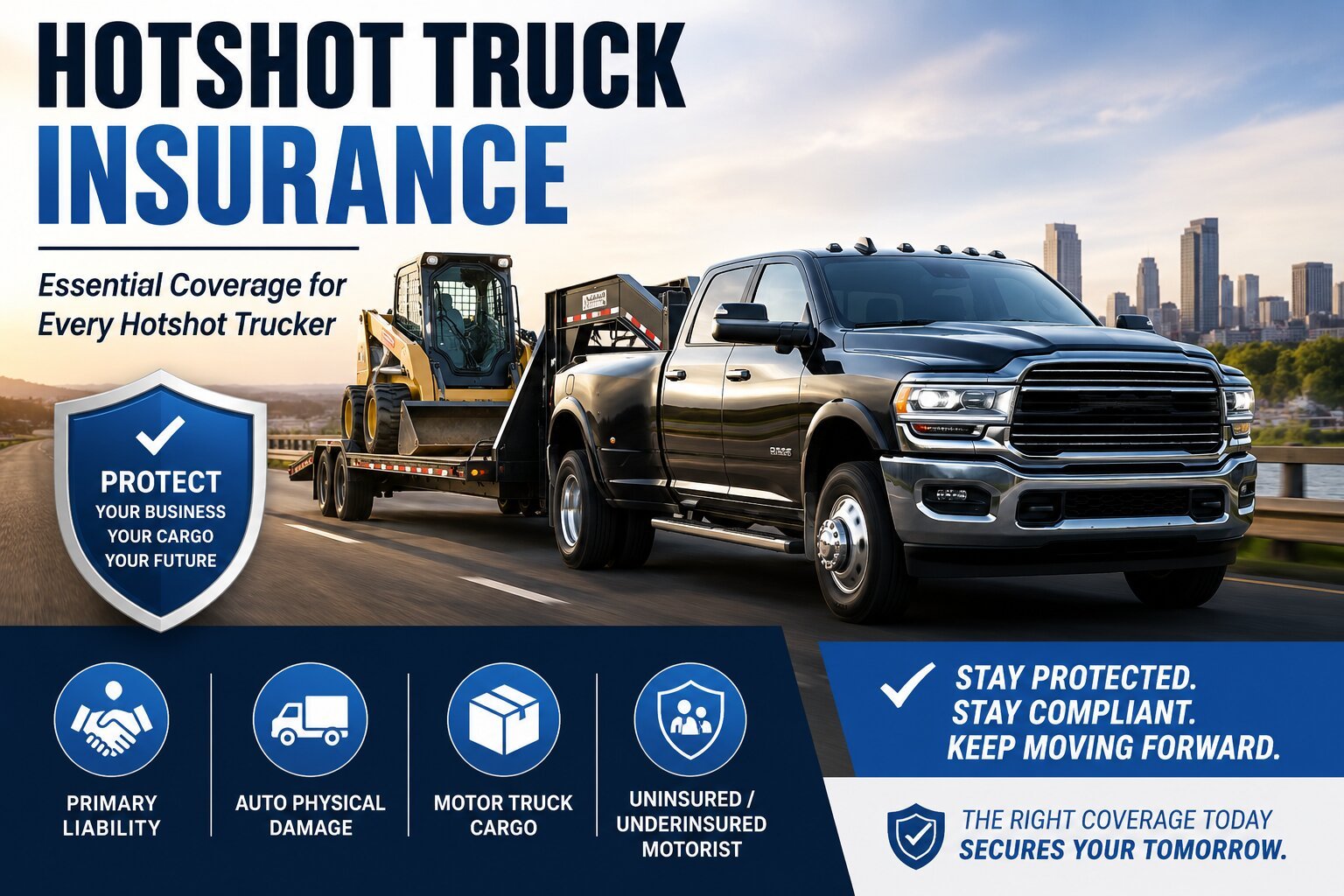
    Hotshot Truck insurance is designed for drivers who haul time-sensitive loads using medium-duty pickup trucks or similar vehicles rather than large commercial rigs. These drivers, often called hotshot truckers, transport smaller loads quickly from one location to another.

    Typically, hotshot truckers use non-commercial vehicles such as duallies or medium-duty pickup trucks to pull gooseneck, dovetail, or flatbed trailers.

    Because of the fast-paced, time-critical nature of their work, hotshot trucking operations require specialized insurance to protect against potential risks on the road — covering the vehicle, trailer, cargo, and liability exposures. 

    Quick Answers

    Hotshot truck insurance protects drivers who haul time-sensitive loads using pickup trucks, duallies, or medium-duty trucks with trailers. It covers liability, cargo, physical damage, and other road risks.

    Most hotshot truckers need primary liability coverage, while cargo and physical damage insurance are strongly recommended. Insurance costs vary based on cargo type, truck size, operating radius, and whether you haul for personal or commercial purposes. Personal-use coverage may cost around $1,500 annually, while for-hire hotshot operations often pay $7,500 or more per year. Drivers operating over 26,000 lbs GVWR or crossing state lines may also need FMCSA filings and MC Authority compliance.

    What Can Hotshot Truckers Haul?

    Hotshot truckers have the flexibility to transport a wide variety of commodities depending on the type of trailer they use and their hauling capacity.

    Most hotshot truckers typically move general freight, but they are also known for transporting flatbed loads such as:

    • Building materials 
    • Light machinery and equipment 
    • Pipes and lumber 
    • Automobiles and other vehicles

    Because of this versatility, hotshot trucking is an attractive option for newcomers to the trucking industry. It offers a lower entry cost, faster turnaround times, and the ability to haul different types of loads without operating a full-sized commercial truck. 

    Do Hotshot Truckers Need State Filings?

    In most cases, hotshot truckers using a dually or medium-duty pickup do not need state or federal filings — unless certain conditions apply.

    You’ll need filings only if: 

    • Your vehicle has a gross vehicle weight rating (GVWR) above 26,000 lbs, or
    • You cross state lines as part of your operations.

    If either applies, you’ll likely need to meet FMCSA filing requirements and obtain proper authority and insurance documentation to stay compliant.

    Essential Insurance Coverages for Hotshot Trucks

    Hotshot trucking operations require specific insurance policies to stay protected on the road. Here’s what you need and want for complete coverage:

    ✅ Primary Liability – Required by law, this covers bodily injury and property damage caused to others in an accident.

    Optional but Recommended Coverages:

    Auto Physical Damage – Covers repair or replacement costs for your truck and trailer in case of an accident, theft, or vandalism.

    Motor Truck Cargo – Protects the freight you’re hauling from damage, loss, or theft.

    Uninsured/Underinsured Motorist – Covers injuries or damages if you’re hit by a driver with little or no insurance.

    These coverages together provide a solid protection plan for any hotshot trucker

    Hotshot Truck Insurance Limits and Costs

    Required Insurance Limits:

    Hotshot truckers typically carry their state’s required minimum coverage unless a shipper or broker contract specifies higher limits. 

    State Requirement: Most states require Primary Liability coverage of $750,000 Combined Single Limit (CSL) for vehicles over 26,000 lbs. 

    Shipper Requirement: Many shippers and brokers expect $1,000,000 CSL, even if the vehicle weighs less than 26,000 lbs. 

    Hotshot Insurance Cost Breakdown:

    The cost of hotshot insurance depends on what you haul and whether it’s for personal or commercial purposes.

    • For personal use (hauling your own equipment): Around $1,500 per year.
    • For hire (hauling for clients): Roughly $7,500 per year. 
    • When speaking with an insurance agent, clearly explain: 
    • What kind of cargo you’re hauling 
    • Whether you’re using a trailer
    • If the hauling is for your own business or for-hire transport

    If you have MC Authority, you must maintain at least $750,000 in liability coverage, though most shippers prefer carriers with $1,000,000 for better protection and credibility.

  • Flatbed Insurance 2026: Choosing the Right Policy

    Flatbed Insurance 2026: Choosing the Right Policy

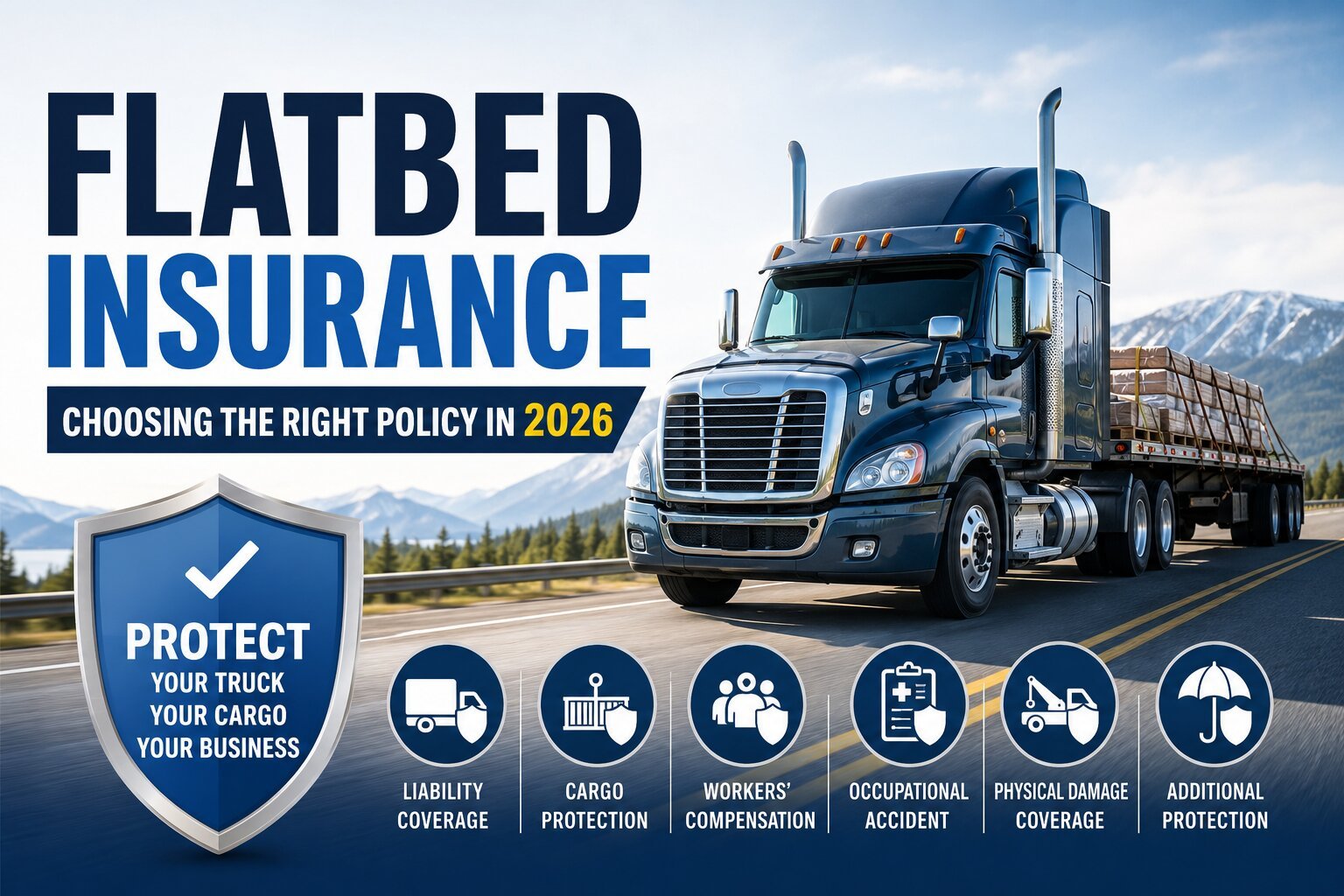
    Flatbed insurance 2026 is designed to protect your truck, drivers, cargo, and business from accidents, damages, and other risks. It acts as a financial and legal safety net for your trucking operation.

    Quick Answer

    Flatbed insurance 2026 protects trucks, trailers, cargo, drivers, and businesses from financial losses caused by accidents, theft, damage, or legal claims. Coverage may include liability, physical damage, cargo insurance, workers’ compensation, occupational accident insurance, and bobtail insurance. Costs typically range from $3,000–$10,000 annually, depending on cargo type, truck value, driving history, coverage limits, and operating radius. Flatbed operators must also meet federal insurance requirements set by regulators. Comparing quotes, increasing deductibles, maintaining clean driving records, and choosing only necessary coverage can help reduce premiums while keeping your business protected.

    Seven Key Benefits of Flatbed Insurance

    • Property Damage Protection: Covers damage to your truck and trailers.
    • Bodily Injury Protection: Provides coverage if anyone is injured in an accident.
    • Trailer Damage Coverage: Helps recover costs if your trailer or a third-party trailer is damaged.
    • Cargo/Freight Protection: Covers loss or damage to the goods you’re transporting.
    • Accident Coverage: Serious accidents causing injury to drivers or third parties are protected.
    • Occupational Accident Insurance: Pays for medical expenses and lost wages if a work-related incident occurs.
    • Workers’ Compensation: Covers bodily injuries, wage loss, medical costs, and death benefits within policy limits for employees involved in work-related accidents.

    Flatbed insurance ensures that your business, employees, and assets are financially protected against the risks of operating on the road.

    How Flatbed Insurance Works

    Flatbed insurance 2026 is a set of policies designed to protect your truck, cargo, drivers, and anyone affected from accidents, damage, theft, vandalism, fire, natural disasters, and more.

    When an incident occurs that’s covered by your policy, the insurance company pays out within the coverage limits to help repair damages, replace lost cargo, or cover medical and legal costs.

    Flatbed Insurance Requirements for Business Owners and Owner-Operators

    Flatbed businesses must follow federal insurance regulations. The FMCSA sets minimum coverage limits based on truck weight, distance traveled, and cargo type. Heavier trucks and more hazardous cargo usually require higher insurance coverage.

    Here’s a summary of typical federal minimum requirements and estimated annual premiums:

    General Liability: $1 million coverage; $700–$7,000 per year

    Trucking Liability: $750,000 for interstate trucks; $2,500–$4,000 per tractor per year 

    Non-Trucking Liability: $250,000 coverage; $450–$5,000 per tractor per year

    Bobtail Insurance: $1,000,000 coverage; $350–$450 per tractor per year

    Physical Damage: Premiums depend on truck value; typically 2–5% of the truck’s actual or stated value 

    Motor Truck Cargo: $20,000–$100,000 coverage depending on state; $500–$1,000 per year

    Workers’ Compensation: Premium depends on cargo; around $2,500 per year 

    Occupational Accident Insurance: Premium varies by load; $1,600–$2,200 per year

    Meeting these requirements ensures your flatbed operation is legally compliant and financially protected against accidents, cargo loss, or other incidents. 

    Flatbed Insurance Cost

    Flatbed insurance 2026 premiums typically range from $3,000 to $10,000 per year, depending on several factors:

    Driver records: Clean driving histories help lower premiums. 

    Type of cargo: Hazardous or high-value loads increase costs.

    Value of equipment: The tractor and flatbed trailer’s worth affects your rate.

    Operating radius: Longer routes or interstate travel can raise premiums.

    Coverage, limits, and deductibles: More coverage or lower deductibles means higher costs.

    Credit history: Insurers may consider your credit score.

    Payment plan: How you pay your premium can influence the overall cost.

    If keeping premiums low is a priority, you can opt for minimum coverage with higher deductibles, but remember that in the event of an accident, you may have to pay out-of-pocket for damages not covered.

    Choosing an insurer who works to provide the best coverage at a reasonable rate is crucial, as insurance is often a significant part of your monthly operating costs. 

    Factors That Affect Flatbed Insurance Costs

    The cost of flatbed insurance isn’t just about finding the cheapest policy—it’s about getting coverage that fits your needs. Premiums depend on a combination of factors that insurers consider when calculating rates.

    Key factors that affect your insurance cost include:

    Ownership status: Whether you own or lease your truck.

    Cargo types: Hazardous or high-value loads increase premiums.

    Freight weights: Heavier loads can raise insurance costs. 

    Distance hauled: Longer or interstate routes often cost more.

    Truck value: More expensive trucks carry higher premiums. 

    Type of physical damage coverage: Comprehensive vs. limited coverage affects rates.

    Credit history: Drivers’ or owners’ credit scores can impact cost.

    Loss history: Previous claims can raise premiums.

    CDL and experience: Experienced, licensed drivers may lower risk.

    Deductible amount: Higher deductibles usually lower premiums.

    Coverage limits: More coverage or higher limits increase the cost.

    Understanding these factors helps you plan your budget and find the best balance between cost and protection.

    How to Find Affordable Flatbed Insurance

    Finding cheap flatbed insurance doesn’t mean cutting corners—it’s about getting the right coverage at a fair price. Premiums can be higher if you haul high-value, heavy, or hazardous cargo.

    Here are some tips to help you save:

    Compare Quotes: Get quotes from multiple insurance providers to find the best deal.

    Ask for Discounts: Many insurers offer discounts for safety programs or clean driving records.

    Pay Upfront: Paying your premium in full can sometimes lower costs.

    Choose the Right Coverage: Avoid overpaying for unnecessary coverage while ensuring essential protection.

    Increase Deductibles: Higher deductibles usually lower premiums.

    Shop Regularly: Keep an eye out for better rates or promotions from different insurers.

    Clean driver records and experienced CDL drivers also help reduce insurance costs, making it easier to get affordable coverage for your flatbed business.

    How Flatbed Insurance Protects Your Business

    The type of flatbed insurance you need depends on your operating status—whether you’re a leased driver, owner-operator, or independent owner-operator. Leased drivers may have some insurance requirements covered by the trucking company they work for.

    Common Types of Truck Insurance and Who Needs Them

    General Liability Insurance: Covers third-party property damage and bodily injury. Required for drivers with authority and motor carriers.

    Primary Trucking Liability: Protects against property damage and injuries caused by trucking accidents. Needed for drivers with authority and motor carriers.

    Non-Trucking Liability Insurance: Covers third-party damages when the truck is used for personal, non-business purposes. For leased drivers. 

    Bobtail Insurance: Covers damages to your truck from collisions, theft, vandalism, or natural disasters. For leased drivers.

    Physical Damage Coverage: Protects cargo and your truck against damage. Essential for all owner-operators and fleet owners.

    Motor Truck Cargo Insurance: Covers freight, commodities, or cargo against loss or damage from fire, collision, or other incidents. Needed by carriers transporting goods.

    Workers’ Compensation: Covers employees’ medical expenses and lost wages after a work-related injury or illness. Required for all trucking companies with employees.

    Flatbed insurance ensures your trucks, cargo, drivers, and business operations are protected from financial loss due to accidents, damages, or legal claims.

    Additional Important Insurance Coverages for Flatbed Owner-Operators and Fleet Owners

    To ensure extended protection for your flatbed business, consider the following coverages:

    Occupational Accident Insurance (OAIC): Protects employers and employees if an on-the-job injury occurs. Covers lost wages, medical expenses, and death benefits up to the policy limit. You can choose the deductible and disability coverage that fits your needs.

    Trailer Interchange Endorsement: Provides physical damage protection for third-party trailers you pull under a trailer interchange agreement. Covers fire, theft, vandalism, collision, or explosions.

    Hazmat Truck Insurance: Required for hauling hazardous materials. Liability coverage ranges from $1,000,000 to $5,000,000 per accident, depending on the material class.

    Trucking Umbrella Insurance: Covers uninsured exposures and gaps in your primary policies, increasing liability coverage. Always check the fine print, as some policies may exclude certain flatbed risks.

    Uninsured & Underinsured Motorist Coverage: 

    Uninsured Motorist

    Protects against accidents caused by drivers who have no liability insurance.

    Underinsured Motorist

    Covers costs when an at-fault driver’s insurance isn’t enough to pay for medical expenses of injured parties.

    These coverages provide an extra layer of financial protection, helping flatbed operators and fleet owners stay secure against unexpected accidents and losses.


  • Reefer Truck Insurance

    Reefer Truck Insurance

    Purpose and Importance

    What Is Reefer Insurance For?

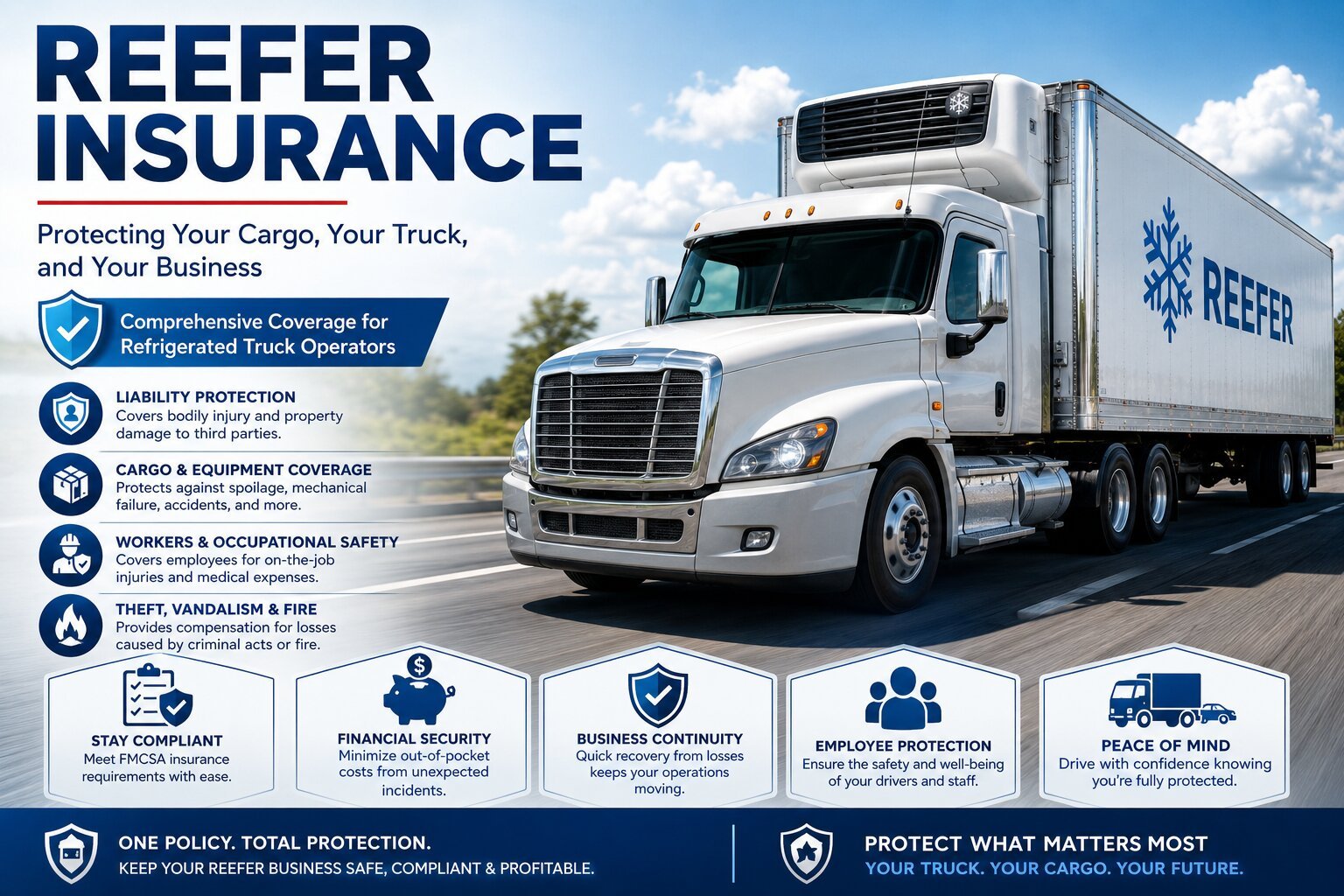
    Reefer insurance is a specialized set of insurance policies designed to protect refrigerated truck (reefer) operators, their vehicles, cargo, employees, and third parties from losses caused by accidents, equipment failure, or unexpected incidents.

    Quick Answers

    Reefer truck insurance protects refrigerated trucking businesses from financial losses caused by accidents, cargo spoilage, theft, equipment damage, and liability claims. It typically includes trucking liability, cargo insurance, physical damage coverage, workers’ compensation, and non-trucking liability. Reefer insurance is essential for owner-operators and fleet owners transporting temperature-sensitive freight because it helps cover repair costs, spoiled cargo, employee injuries, and third-party damages. Insurance costs vary based on cargo type, truck value, driving history, coverage limits, operating radius, and deductibles. Choosing the right reefer insurance policy ensures FMCSA compliance, reduces business risks, and keeps your refrigerated freight operations running smoothly and securely.

    Why It’s Essential:
    Operating a reefer truck involves unique risks — from temperature fluctuations to cargo spoilage — making comprehensive insurance coverage crucial for financial and legal protection.

    What Reefer Insurance Covers:

    Third-Party Liability: Protects against injury or damage claims from others.

    Cargo and Equipment Damage: Covers losses due to spoilage, mechanical failure, or accidents.

    Workers’ Compensation & Occupational Accident: Safeguards drivers and employees in case of injury on the job.

    Theft, Vandalism, and Fire: Provides compensation for losses caused by criminal acts or fire incidents.

    In short, reefer insurance ensures you stay protected from costly disruptions — keeping your refrigerated freight business safe, compliant, and financially secure.

    How Reefer Insurance Works

    Reefer insurance operates by providing financial protection within the coverage limits outlined in your policy. It safeguards both your refrigerated trucking equipment and third parties involved in an accident or incident.

    Coverage Details:

    Third-Party Protection: Covers bodily injury or property damage caused to others during operations.

    Cargo Protection: Ensures compensation for damaged or spoiled freight resulting from reefer unit failure or other covered events.

    Equipment & Tractor Coverage: Protects against losses due to vandalism, theft, fire, or natural disasters.

    How Claims Work: When a covered incident occurs, you file a claim with your insurance provider. After review, the insurer compensates you according to the policy terms and coverage limits.

    Reefer Insurance Requirements for Owners and 

    Owner-Operators

    Reefer truck businesses operating in the U.S. must comply with insurance coverage limits set by the Federal Motor Carrier Safety Administration (FMCSA). These limits depend on factors such as truck weight, hauling distance, and cargo type. Generally, heavier trucks and higher-risk cargo require greater coverage and higher premiums.

    Below is a summary of the federal minimum insurance requirements for reefer operators:

    General Liability:

    • Coverage limit: $1,000,000
    • Estimated annual premium: $700–$7,000

    Trucking Liability (Interstate):

    • Coverage limit: $750,000
    • Estimated annual premium: $2,500–$4,000 per tractor

    Non-Trucking Liability:

    • Coverage limit: $250,000 
    • Estimated annual premium: $450–$5,000 per tractor

    Bobtail Insurance:

    • Coverage limit: $1,000,000
    • Estimated annual premium: $350–$450 per tractor

    Physical Damage:

    • Based on the truck’s actual or stated value
    • Premiums typically 2%–5% of the truck’s value

    Motor Truck Cargo:

    • Coverage limit: $20,000–$100,000 (varies by state)
    • Estimated annual premium: $500–$1,000

    Workers’ Compensation:

    • Depends on cargo type
    • Estimated annual premium: around $2,500

    Occupational Accident Insurance:

    • Based on type of load
    • Estimated annual premium: $1,600–$2,200

    These insurance types together ensure comprehensive protection for reefer truck owners — covering liability, equipment, cargo, and personnel.

    In short, reefer insurance acts as a safety net — covering repair costs, cargo loss, and third-party liabilities so your operations can recover quickly and continue running smoothly.

    Reefer Insurance Cost

    The annual premiums for reefer truck insurance typically range between $1,000 and $10,000, depending on several key factors. Your overall cost is influenced by your operations, driving history, and policy structure.

    Factors Affecting Reefer Insurance Premiums:

    Driver’s record: Clean driving history helps lower your premium.

    Type of cargo: Riskier or perishable loads can increase costs.

    Trailer or equipment value: More expensive equipment requires higher coverage.

    Operating radius: Long-haul operations generally cost more to insure.

    Coverage type and limits: Broader coverage and higher limits increase premiums.

    Deductible amount: Higher deductibles lower premiums but raise out-of-pocket expenses after a claim.

    Credit history: Good credit can help reduce premium rates.

    Payment plan: Annual payments are often cheaper than monthly installments.

    Tips for Managing Costs:

    If you’re seeking a budget-friendly reefer insurance policy, you can compare quotes online through platforms like CoverWallet, or work with an insurance agent to customize a plan with a low limit, high deductible, or minimal coverage — though this comes with higher risk.

    Keep in mind that a low-limit or high-deductible policy might not offer enough protection in case of a serious accident. Paying a large deductible after a major incident can cause significant financial strain.

    Because insurance premiums are a major overhead expense, owner-operators should prioritize finding a balance between affordability and comprehensive protection — choosing a policy that offers solid coverage, fair premiums, and reasonable deductibles. 

    Factors That Affect the Cost of Reefer Insurance Policies

    What are the factors that affect the cost of reefer insurance?

    As an owner-operator, finding the right reefer insurance is about balance — not just choosing the cheapest option, but selecting a policy that truly protects you in multiple situations. The cost of reefer insurance varies based on several factors specific to your operation and risk level.

    Key Factors That Affect Insurance Premiums:

    Ownership Status: Whether you lease or own your truck and trailer can influence premium amounts.

    Cargo Types: The type of perishable goods you transport plays a major role; higher-value or sensitive items raise the risk.

    Freight Weights: Heavier loads typically result in higher premiums due to increased accident risk.

    Distance Hauled: Long-haul routes mean more time on the road, increasing exposure to accidents or loss.

    Truck Value: The more expensive your truck or trailer, the higher the cost to insure it.

    Type of Physical Damage Coverage: Comprehensive vs. limited coverage affects the total premium.

    Driver or Owner’s Credit History: A strong credit history can reduce premiums, while poor credit can raise them.

    Loss History: Prior insurance claims or accidents can significantly increase costs.

    CDL and Driving Experience: Experienced drivers with a clean record pay less than new or high-risk drivers.

    Deductible Amount: Higher deductibles lower premiums but increase out-of-pocket expenses after an incident.

    Coverage Limits: The higher your policy limits, the more you’ll pay for coverage — but with greater financial protection.

    A well-balanced reefer insurance plan should fit your business size, cargo risk, and budget — providing reliable protection without unnecessary costs.

    Finding Cheap Reefer Insurance

    How to Find Affordable Reefer Insurance?

    Securing low-cost reefer insurance can be challenging, as several factors influence premium rates. Understanding these factors and taking the right steps can help you reduce your overall insurance expenses without sacrificing essential coverage.

    Key Factors to Consider:

    Heavy loads, long-haul routes, and the transportation of sensitive or hazardous cargo all increase the cost of insurance. New MC (Motor Carrier) owners often pay higher premiums, while experienced drivers with clean records benefit from lower rates.

    Tips to Get Affordable Reefer Insurance:

    Compare Multiple Quotes: Always shop around and get quotes from several insurance companies to find the most competitive rates.

    Ask for Discounts: Inquire about available discounts for safe driving, bundled policies, or upfront payments.

    Pay Premiums in Full: Paying your entire annual premium upfront often reduces overall costs.

    Choose the Right Coverage: Avoid paying for unnecessary add-ons while ensuring your essential risks are covered.

    Increase Deductibles: Opting for a higher deductible can significantly lower your monthly or annual premium — just make sure you can afford it if an incident occurs.

    Stay Updated: Regularly check for new insurance options or promotional offers from insurers.

    By maintaining a clean driving record, choosing the right level of coverage, and actively comparing policies, you can secure a more affordable reefer insurance plan that fits your business needs.

    Reefer Insurance Protects Your Trucking Business

    How Does Reefer Insurance Protect You?

    Reefer insurance provides essential financial protection for trucking professionals—whether you’re an independent owner-operator or leased under a carrier. The type of coverage you need depends on your business status and operational risks.

    Coverage Based on Operator Type:

    Leased owner-operators often have some insurance needs covered by their carrier, while independent owner-operators must secure full coverage on their own.

    Below are the most common types of truck insurance, along with what they cover and who they’re meant for:

    General Liability: Covers third-party bodily injury and property damage caused by your driver or equipment. Ideal for motor carriers and drivers with authority.

    Primary Trucking Liability: Provides coverage for physical injury, bodily harm, and property damage resulting from trucking accidents. Required for motor carriers and drivers with their own authority.

    Non-Trucking Liability: Covers third-party damages when the truck is used for non-business (personal) purposes. Designed for leased drivers.

    Physical Damage Coverage: Pays for damage to your truck, trailer, or equipment due to collision, fire, theft, or vandalism. Recommended for owner-operators and fleet owners.

    Motor Truck Cargo Insurance: Protects the cargo or freight you’re transporting against losses from fire, collision, or other covered events. Suitable for carriers responsible for cargo.  

    Bobtail Insurance: Covers damages to your truck when it’s operated without a trailer or not under dispatch. Intended for leased drivers.

    Workers’ Compensation Insurance: Covers employees injured or disabled while working, paying for medical bills and lost wages. Required for all trucking companies with employees.

    In Summary:

    Reefer insurance shields your business from financial loss due to accidents, cargo damage, theft, or employee injury. By understanding your operational setup and choosing the right combination of coverages, you ensure your trucking business stays protected and compliant.

    Other Insurance Coverages Reefer Owners or Owner-Operators Should Consider for Extended Protection

    To ensure full protection and minimize financial risks, reefer owners and owner-operators should consider adding the following insurance coverages to their portfolio:

    Occupational Accident Insurance Coverage (OAIC):

    This coverage provides financial protection for job-related injuries sustained by employers or employees. It helps cover wages, salaries, medical expenses, and death benefits up to the policy limit.
    A key advantage of OAIC is its flexibility — reefer businesses can choose their preferred deductible amount and customize their disability coverage level based on their needs.

    Trailer Interchange Endorsement:

    This endorsement protects you when hauling a trailer you don’t own. It provides coverage if a third-party trailer is damaged due to theft, vandalism, fire, explosion, or collision. It’s a must-have for owner-operators who regularly haul trailers under interchange agreements.

    Hazmat Truck Insurance:

    For reefer operators transporting hazardous materials, federal law mandates higher liability limits ranging from $1,000,000 to $5,000,000 per accident, depending on the type of materials hauled. This coverage ensures compliance and protection against costly accidents involving hazardous cargo.

    Trucking Umbrella Insurance:

    Umbrella insurance provides an extra layer of liability protection beyond the limits of your primary policies. It covers potential gaps and extends your liability coverage for major incidents.
    However, it’s important to carefully review the policy terms — some umbrella policies exclude specific risks, so understanding the exclusions before purchasing is essential.

    Uninsured & Underinsured Motorist Coverage:

    Uninsured Motorist Coverage protects you if you’re involved in an accident with an at-fault driver who has no insurance.

    Underinsured Motorist Coverage helps when the at-fault driver’s liability limits are too low to cover the medical or repair costs from the accident.

    In Summary:

    Extended insurance coverage ensures reefer owners and operators are financially protected in almost every possible situation — from on-the-job injuries to third-party trailer damage, hazardous cargo risks, and uninsured drivers. Investing in these policies strengthens your risk management and keeps your operations secure.
  • Physical Damage Truck Insurance

    Physical Damage Truck Insurance

    Truck Insurance Coverage to Get You Back on the Road

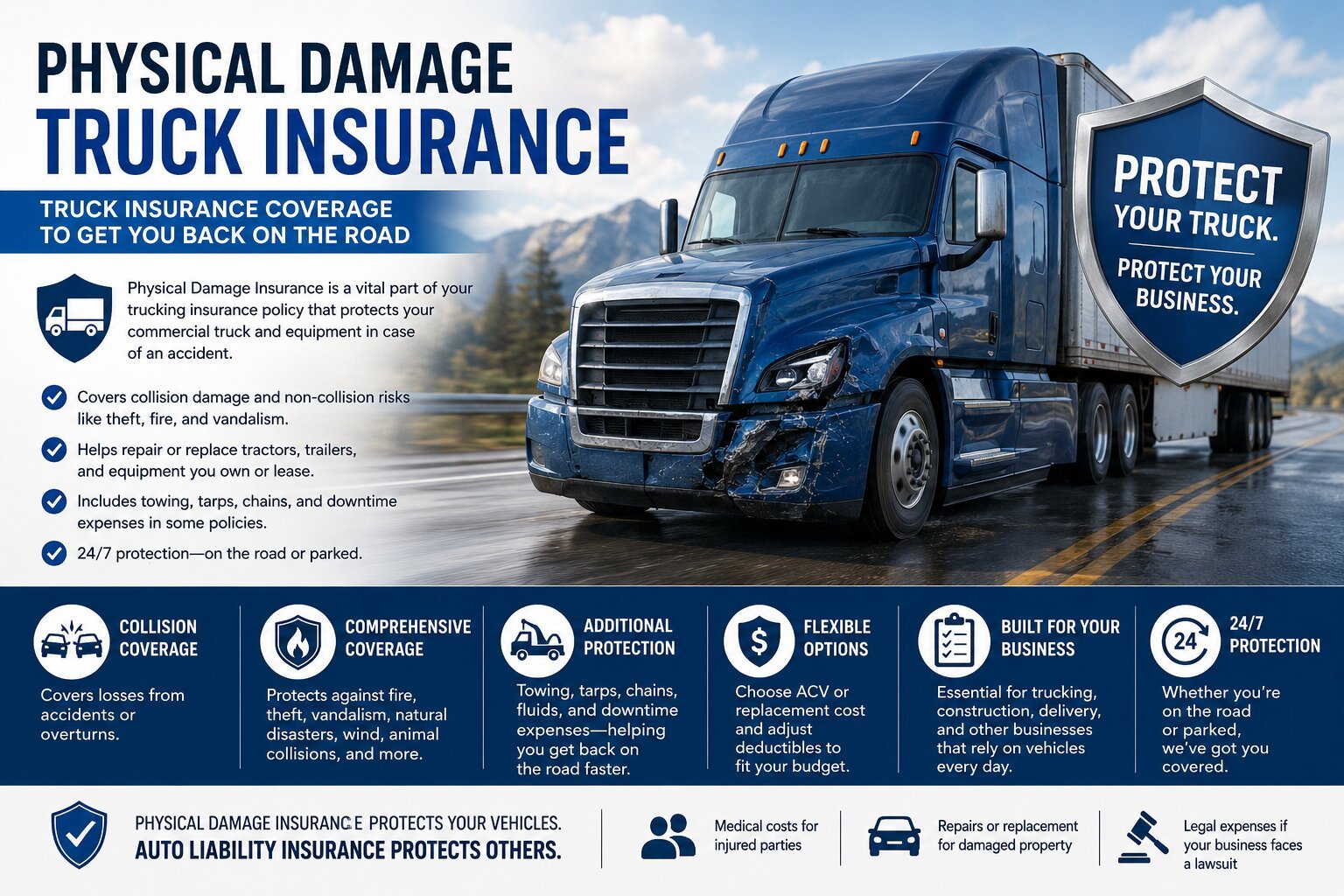
    Physical Damage Insurance is a vital part of your trucking insurance policy that protects your commercial truck and equipment in case of an accident.

    This coverage helps pay to repair or replace tractors, trailers, and equipment that you own or lease if they’re damaged in a crash. It provides 24/7 protection, ensuring your truck stays covered whether it’s on the road or parked.

    Quick Answers

    Physical Damage Truck Insurance protects your truck and equipment from accident-related losses.
    It covers collision damage and non-collision risks like theft, fire, and vandalism.
    It helps repair or replace tractors, trailers, and equipment you own or lease.
    Coverage also includes towing, tarps, chains, and downtime expenses in some policies.
    It does not cover medical bills or damage to other vehicles or property.
    Those costs are handled by commercial auto liability insurance.
    Business owners can choose Actual Cash Value or replacement cost coverage options.
    You can also adjust deductibles to reduce premiums and manage costs.
    This insurance is essential for trucking, construction, and delivery businesses.
    It keeps your operations running with minimal downtime after accidents.

    What’s Covered by Physical Damage Insurance

    When your truck is involved in an accident or suffers equipment loss (excluding mechanical breakdown), Physical Damage Insurance provides two main types of protection:

    • Collision Coverage: Covers losses from accidents or overturns. 
    • Comprehensive Coverage: Covers non-collision damages such as fire, theft, vandalism, natural disasters, wind damage, animal collisions, glass breakage, and more.
    • Physical Damage Insurance from Great West also includes additional protection for accident-related expenses, such as:
    • Repair or replacement of your truck and equipment
    • Towing expenses
    • Damaged tarps, chains, and binders on owned trailers
    • Payments for specific fluids
    • Downtime coverage
    • Single Deductible endorsement

    This coverage ensures your truck is repaired or replaced quickly—getting you back on the road with minimal downtime.

    Fire and Theft with Combined Additional Coverage (CAC)

    Fire and Theft with Combined Additional Coverage (CAC) is a type of physical damage insurance that protects your truck and equipment from specific, named risks.

    This policy combines fire and theft protection with coverage for other listed perils, offering a more affordable alternative to full comprehensive coverage.

    Also known as limited comprehensive insurance or specified perils insurance, CAC only covers losses caused by the specific events named in the policy—giving policyholders targeted protection at a lower cost. 

    Who Needs Physical Damage Coverage?

    Every small business owner should consider adding physical damage coverage to their auto insurance policy to protect against costly repairs or replacement after an accident.

    Even if your business only operates one or two vehicles, an unexpected loss can have a serious financial impact—both from repair costs and lost income while your vehicle is out of service.

    Some industries face a higher risk of vehicle damage than others, including: 

    • Construction and Building Contractors: Job sites are busy environments with constant movement of people and equipment, increasing the likelihood of vehicle damage during hauling or supply runs.
    • Trucking: Trucking and towing operators spend extensive hours on the road, making them vulnerable to accidents, theft, and vandalism. A damaged truck can halt operations and cause major revenue loss.
    • Landscaping: Lawn care and tree service businesses face exposure to hazards such as falling limbs, storms, and fires that can damage vehicles or equipment.
    • Retailers: Florists, grocers, and other retail businesses rely on vehicles for deliveries and supply runs. Any downtime due to accidents or repairs can disrupt operations and lead to income loss.

    In short: If your business depends on vehicles for daily operations, physical damage coverage is essential to keeping your business moving. 

    Customize Auto Coverage to Fit Your Business

    When purchasing commercial auto insurance, you can tailor your policy to match your company’s unique risks and needs.

    If your business owns multiple vehicles, you have the flexibility to decide which ones should have physical damage coverage. For instance, you might choose higher protection for newer or more valuable vehicles, while opting for limited or no coverage on older ones.

    Some business owners prefer to insure newer vehicles against physical damage while self-insuring older vehicles by setting aside reserve funds for potential repairs or replacement.

    You can also choose specified perils coverage instead of comprehensive coverage to lower premiums. For example, if theft and vandalism are your main concerns—but fire or hail damage is unlikely—you can insure specifically against those risks to save on costs.

    When it comes to vehicle value, you have two options:

    Actual Cash Value (ACV): Covers the current market value of your vehicle, factoring in depreciation.

    Replacement Cost: Pays to replace your vehicle with a new one of similar type, minus your deductible.

    To further manage expenses, consider opting for a higher deductible. This approach reduces your premium while keeping your insurance intact for major losses—allowing you to pay smaller repair costs out of pocket. 

    What Does Physical Damage Insurance Not Cover?

    While physical damage insurance is vital for protecting your company’s vehicles, it doesn’t cover every type of loss. There are several important exclusions to keep in mind. This coverage does not include:

    • Medical expenses for anyone injured in an accident 
    • Damage to another person’s vehicle or property
    • Legal fees, judgments, or settlements related to an accident
    • These types of expenses are typically covered under your commercial auto liability insurance, not your physical damage policy.

    If your vehicle is involved in an accident that causes bodily injury or property damage to others, auto liability insurance will help pay for:

    • Medical costs for injured parties 
    • Repairs or replacement for damaged property
    • Legal expenses if your business faces a lawsuit

    In short, physical damage insurance protects your own vehicles, while auto liability insurance protects your business from third-party claims.