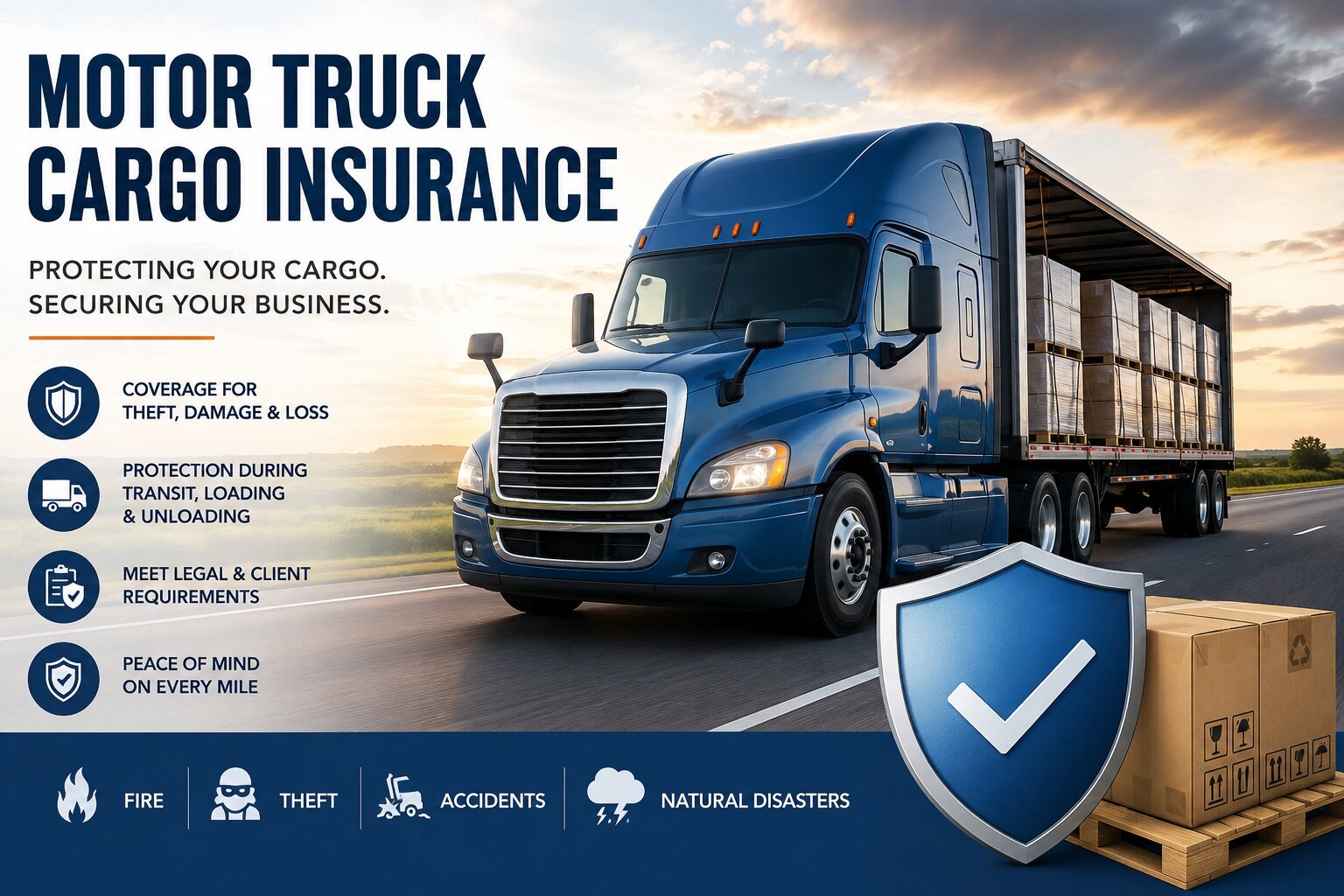
Motor Truck Cargo (MTC) insurance protects your shipments in case of accidents, fire, or theft. It’s often required by law and by clients before signing contracts.
Quick Answers
Motor Truck Cargo Insurance protects trucking businesses against cargo loss or damage caused by theft, accidents, fire, or other covered risks during transit. It covers freight while loading, transporting, and unloading goods. This insurance is commonly required by shippers, brokers, and federal regulations for certain carriers. Coverage may also include cleanup costs, legal expenses, and refrigeration breakdowns for perishable items. Costs vary based on cargo type, truck value, driving history, operating area, and policy limits. Businesses using dump trucks, box trucks, refrigerated trucks, vans, or car haulers can benefit from this protection. Motor Truck Cargo Insurance helps reduce financial risk, ensures contract compliance, and keeps trucking operations secure and reliable.
What Is Motor Truck Cargo Insurance?
Also called commercial freight insurance or cargo truck insurance, MTC is designed for trucking and transportation businesses. It’s a type of inland marine insurance that covers your cargo during loading, transit, and unloading.
Who Needs It?
This insurance is suitable for a wide range of vehicles and businesses, such as:
- Dump trucks delivering gravel to construction sites
- Box trucks moving household goods
- Car haulers transporting new vehicles
- Refrigerated trucks delivering groceries
- Vans delivering flowers or other products
What Does It Cover?
Motor truck cargo insurance protects against stolen, damaged, or destroyed cargo. For example, a dump truck accident could spill gravel, or valuables could be stolen from a parked truck.
It can also cover related expenses like cleanup costs from spills or legal defense costs arising from cargo disputes, giving trucking businesses peace of mind while transporting goods.
What Does Motor Truck Cargo Insurance Cover?
Motor truck cargo insurance protects your shipments from loading to delivery and also covers legal liability if a client sues for lost or damaged cargo.
It can help cover losses related to:
- Accidents during loading or unloading that damage cargo
- Cleanup or removal expenses if cargo is accidentally spilled
- Lawsuits from clients claiming lost or undelivered items
- Lost profits from undelivered freight (if your policy includes earned freight coverage)
Most policies cover incidents like fire, theft, accidents, and natural disasters. Some can also cover equipment failures, such as a refrigeration breakdown that ruins perishable goods.
Your policy limits determine how much you can be reimbursed, so higher-value shipments require higher limits. Keeping accurate records of cargo and its value is essential for filing claims successfully.
Types of Motor Truck Cargo Insurance
There are two main types of cargo insurance:
- Open Perils Coverage: Protects against all risks except those specifically excluded in the policy.
- Named Perils Coverage: Only protects against specific risks listed in the policy.
Since open perils coverage provides broader protection, it usually costs more than named perils coverage.
How Much Does Cargo Insurance Cost for Trucking?
On average, cargo insurance costs about $129 per month for trucking companies that purchase coverage through providers like Insureon.
The exact price depends on several factors, including:
- Type of trucking business and its specific risks
- Vehicles owned and their value
- Cargo transported and its value
- Operating area or region
- Annual business revenue
- Employee driving records
- Policy limits and deductibles
- Claims history
Understanding these factors can help you budget for cargo insurance and choose a policy that provides the right protection at a fair cost.
Who Needs Motor Truck Cargo Insurance?
Any trucking business that transports shipments should have cargo insurance to ensure financial protection and peace of mind.
Key reasons to invest in this coverage include:
Required by Law: The FMCSA mandates cargo insurance for motor carriers and freight forwarders transporting household goods.
Client and Shipper Requirements: Many contracts with clients or shippers require proof of cargo coverage to ensure their shipments are protected.
Financial Protection: Without cargo insurance, your business could face out-of-pocket costs for lost shipments, legal disputes, or cleanup after a spill.
Support for Small Businesses: Small fleets often lack the resources to cover expensive losses, making cargo insurance especially important for companies of all sizes.
Cargo insurance helps trucking businesses stay compliant and secure while minimizing financial risks on the road.
Do Private Carriers Need Motor Truck Cargo Insurance?
Yes — private carriers should also have motor truck cargo insurance. Even if you only transport your own goods, you’re still subject to similar regulations as common carriers that haul freight for others.
In many cases, cargo insurance is also required to sign contracts with shippers or brokers, even if the law doesn’t mandate it.
Simply put, cargo insurance is an essential part of running a trucking business. At the very least, your policy should cover the full value of your cargo in case of theft, accidents, or total loss.
What Are the Exclusions for Motor Truck Cargo Insurance?
While motor truck cargo insurance offers broad protection, it doesn’t cover every possible event that could cause damage or loss. Typically, extreme risks, negligence, or uninsurable causes are excluded from standard policies.
Common exclusions include:
- Intentional or dishonest acts
- Inherent vice (natural spoilage or deterioration of perishable goods)
- Market delays or loss of value over time
- Normal wear and tear
- Acts of war or terrorism
Additionally, you may need a special endorsement for high-value or risky cargo, such as jewelry, artwork, live animals, pharmaceuticals, or hazardous materials. Some types of vehicles — including garbage trucks, limousines, or ice cream trucks — may also be ineligible for coverage under standard cargo insurance policies.
What Is the Difference Between Motor Truck Cargo and Cargo Legal Liability Insurance?
While motor truck cargo insurance and cargo legal liability insurance both protect against losses involving transported goods, they differ in how and when they apply.
Here’s the key distinction:
- Motor Truck Cargo Insurance covers direct property losses — for example, if your cargo is damaged in a collision, fire, or theft, regardless of who’s at fault.
- Cargo Legal Liability Insurance covers your legal responsibility when a client sues your business for lost, damaged, or destroyed goods under your care, custody, or control. This type of policy requires proof of negligence before coverage applies.
These liability responsibilities are typically outlined in the bill of lading, which lists the goods being transported and their destination.
Other Key Policies for Trucking Companies
To build a comprehensive risk management plan, trucking businesses should consider adding these essential insurance coverages:
Commercial Auto Insurance: Covers accidents involving company-owned trucks, including property damage, injuries, and legal expenses. This coverage is required in most states for business-owned vehicles.
General Liability Insurance: Protects against common third-party accidents, such as a client slipping at your office or yard. It’s also often required for commercial leases.
Workers’ Compensation Insurance: Provides medical benefits and wage replacement for employees injured on the job. Mandatory in most states for businesses with staff.
Business Owner’s Policy (BOP): Combines general liability and commercial property insurance into a single, affordable package for small or low-risk trucking companies.
Cyber Insurance: Helps protect against data breaches, cyberattacks, and identity theft. Recommended for trucking businesses that handle customer or payment information online.