The Complete Guide to ELD Compliance and GPS Fleet Tracking
For modern fleet management, successful trucking operations depend on combining ELD, ELDs, GPS tracking, and fleet tracking into a single integrated solution. From my experience working with transportation technology, the biggest challenge is pinpointing the exact location of vehicles at any given moment while also meeting compliance demands.
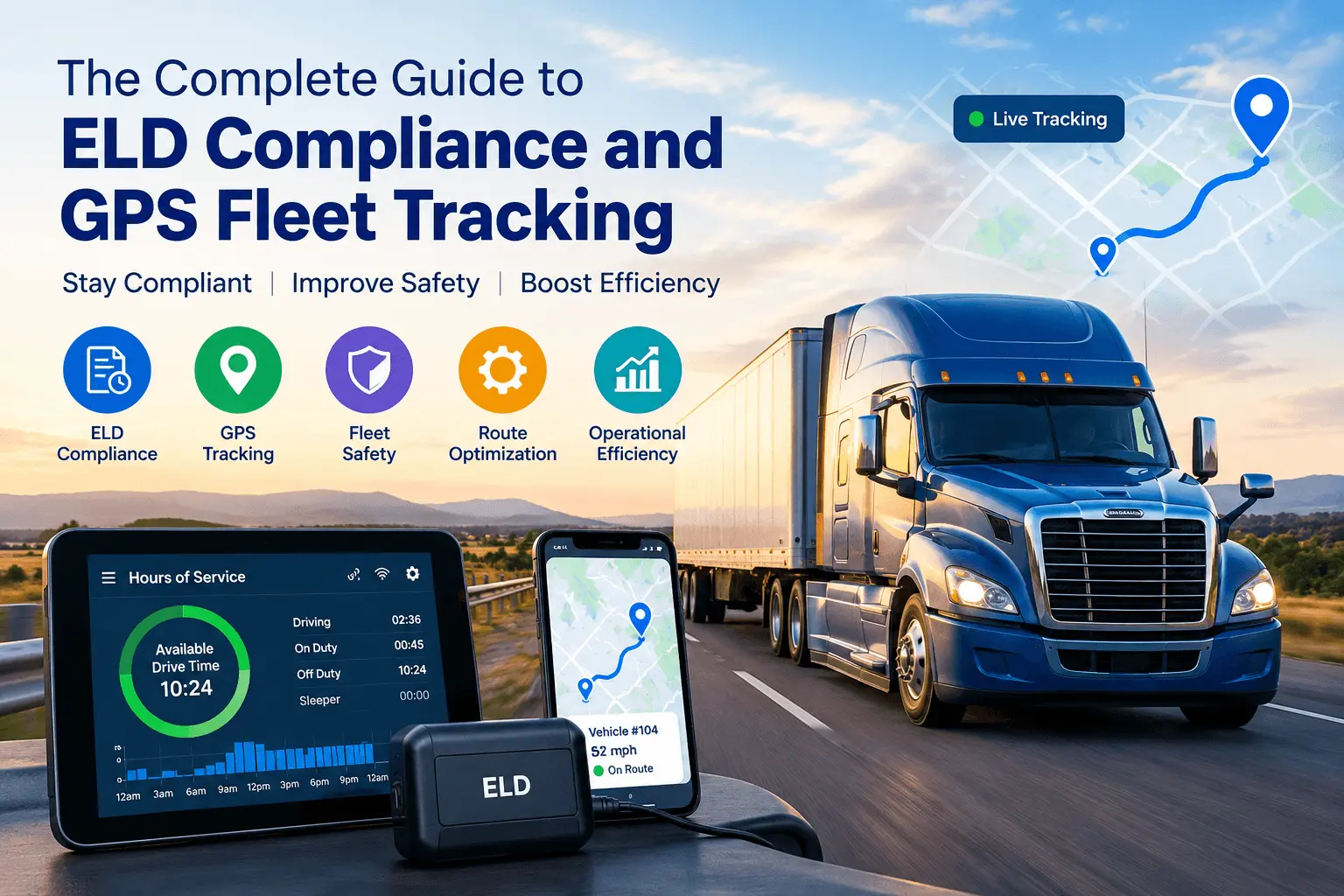
A reliable tracking solution uses electronic logging devices, real-time monitoring, vehicle monitoring, live tracking, and location tracking to monitor vehicle locations, support route management, improve communication, streamline dispatch, and increase operational efficiency. These tools help a driver during driving, create accurate record keeping, strengthen reporting, improve visibility, and provide better oversight of valuable assets across daily transportation and logistics activities.
For any company or business considering an upgrade, a strong compliance system should support FMCSA regulations, hours of service requirements, and other mandatory regulatory standards. The right platform delivers compliance management, operational management, and fleet operations support through telematics, actionable data, and a user-friendly approach.
This complete system helps manage and maintain safety, productivity, fleet performance, and overall performance while helping protect against theft through stronger asset protection. Whether serving small fleets or large trucking companies in the trucking industry, solutions such as HOS247 address critical needs, enhance tracking, monitoring, and technology capabilities, and provide the solution needed for long-term business success, ensuring full compliance, better operations, and improved results.
Quick Answers
ELD compliance and GPS fleet tracking help trucking companies improve safety, meet FMCSA regulations, and manage fleet operations more efficiently. Electronic Logging Devices (ELDs) automatically record Hours of Service (HOS) data, reducing paperwork and improving compliance.
GPS tracking provides real-time vehicle visibility, helping dispatchers optimize routes, monitor driver performance, and enhance fleet security. Together, these technologies streamline operations, reduce administrative work, improve maintenance planning, and provide valuable business insights. Carriers can also benefit from fuel tax reporting, vehicle inspection tracking, engine diagnostics, and productivity improvements through a single integrated platform.
What Is ELD Tracking? Understanding the Integrated Approach
ELD tracking uses an integrated approach that combines electronic logging devices with GPS fleet tracking to improve compliance and operational visibility. These federally mandated devices automatically record driving time, hours of service data, vehicle motion, miles driven, duration of operation, and engine power status through a connection to the vehicle engine.
In my experience, fleets gain better control when GPS tracking technology monitors vehicle locations in real-time and captures movement patterns, speeds, stops, and route histories.
This process helps fleet managers strengthen operations, improve dispatching, support route optimization, and enhance performance monitoring while maintaining hours of service regulations.
An integrated ELD truck tracking solution creates a powerful fleet management system that supports FMCSA requirements, increases visibility into vehicle status, and helps monitor driver behavior and overall performance. The system also enables efficient routing, improves vehicle maintenance scheduling, and increases security for drivers, vehicles, and cargo. By using a single system for operational tracking needs, fleets can streamline their technology stack, reduce administrative burden, and gain valuable insights that are often difficult to achieve with separate systems.
Who Needs to Use an ELD?
An individual operating under the FMCSA rules generally needs an ELD when duty status logs are required for more than eight days within a 30-day period. The regulation centers on accurate logging, compliance, and maintaining Record of Duty Status (RODS) documentation. In my experience, many fleets become confused about eligibility because not every driver falls under the same requirements.
Drivers who qualify for ELD exempt status may continue using paper logs instead of an electronic system, depending on their operating conditions and recordkeeping obligations. This distinction helps simplify verification and supports proper transportation management across daily trucking operations.
Several common exemption categories exist under the federal mandate. These include drivers who maintain RODS for no more than eight days during a 30-day period, driveaway-towaway drivers when the vehicle being moved is part of the shipment, and operators of vehicles built before model year 2000.
A motor carrier should keep proper documentation to confirm exemption status when necessary. Before applying the ELD trucking rule across a fleet, it is essential to review commercial motor vehicle regulations and confirm whether specific operations meet the required compliance standards established by the FMCSA.
What Are the Benefits of ELDs?
Choosing the best ELD for trucks gives carriers several important benefits beyond basic regulatory requirements. In my experience, electronic logging improves driver safety by supporting compliance with Hours of Service regulations and helping reduce driver fatigue. Replacing paper logbooks increases accuracy in record-keeping, helps save time, and simplifies management of Records of Duty Status (RODS).
By using Recording of Duty Status automation, drivers, office staff, and fleet managers can reduce paperwork, lower office administration costs, minimize errors, and improve overall fleet management through reliable automated tracking.
Modern ELDs built on open platform telematics technology deliver additional extended benefits that support daily transportation operations. These systems assist with fuel tax reporting through IFTA (International Fuel Tax Agreement) requirements and IRP (International Registration Plan) mileage reporting.
They also provide vehicle inspection reporting, fuel usage monitoring, engine fault reporting, and proactive vehicle maintenance capabilities. Features such as receipt scanning, invoice scanning, and access to real-time data help fleets improve fleet productivity, increase efficiency, strengthen monitoring, enhance tracking, and achieve better operational performance across the entire business.