Truck Insurance Coverage to Get You Back on the Road
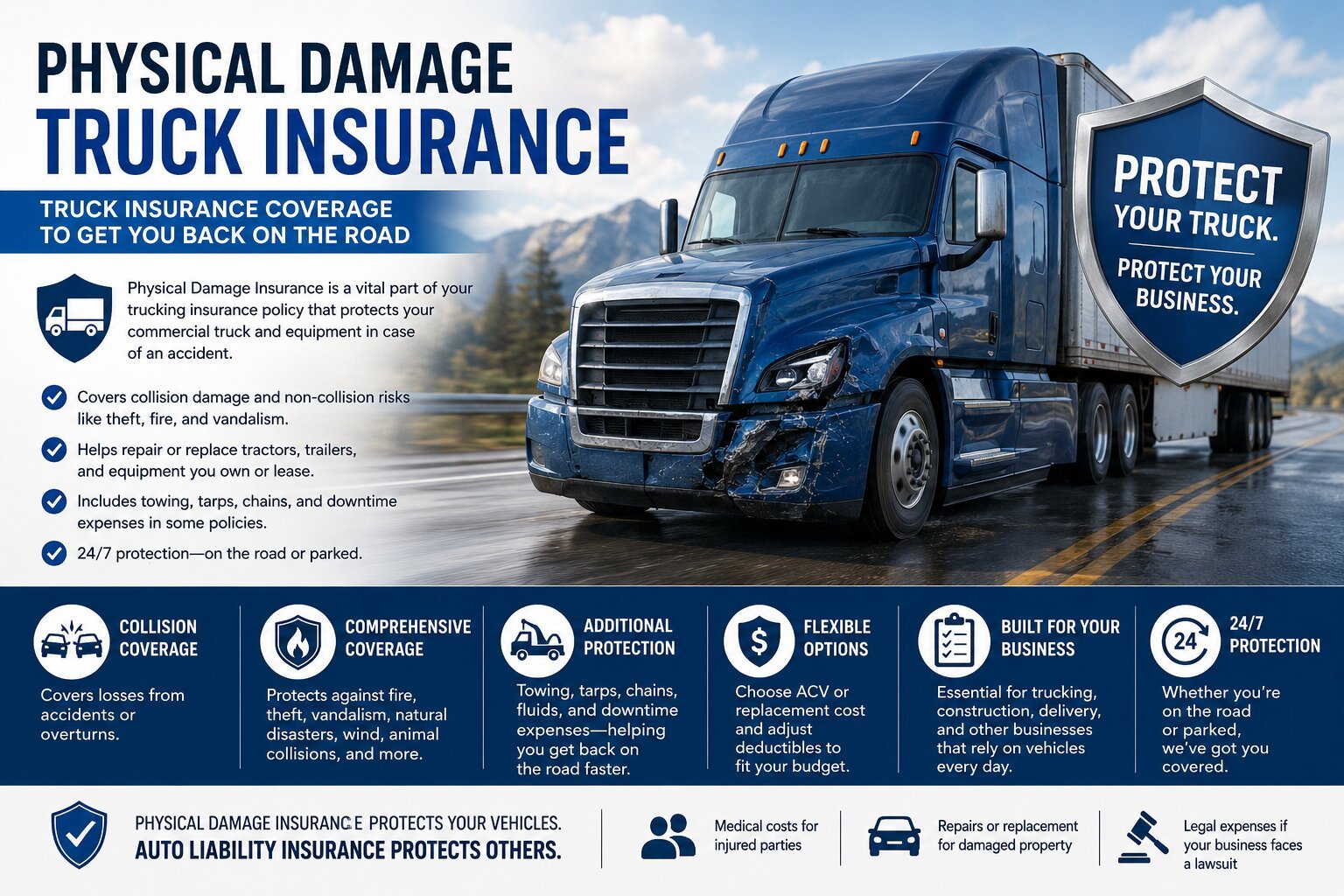
Physical Damage Insurance is a vital part of your trucking insurance policy that protects your commercial truck and equipment in case of an accident.
This coverage helps pay to repair or replace tractors, trailers, and equipment that you own or lease if they’re damaged in a crash. It provides 24/7 protection, ensuring your truck stays covered whether it’s on the road or parked.
Quick Answers
Physical Damage Truck Insurance protects your truck and equipment from accident-related losses.
It covers collision damage and non-collision risks like theft, fire, and vandalism.
It helps repair or replace tractors, trailers, and equipment you own or lease.
Coverage also includes towing, tarps, chains, and downtime expenses in some policies.
It does not cover medical bills or damage to other vehicles or property.
Those costs are handled by commercial auto liability insurance.
Business owners can choose Actual Cash Value or replacement cost coverage options.
You can also adjust deductibles to reduce premiums and manage costs.
This insurance is essential for trucking, construction, and delivery businesses.
It keeps your operations running with minimal downtime after accidents.
What’s Covered by Physical Damage Insurance
When your truck is involved in an accident or suffers equipment loss (excluding mechanical breakdown), Physical Damage Insurance provides two main types of protection:
- Collision Coverage: Covers losses from accidents or overturns.
- Comprehensive Coverage: Covers non-collision damages such as fire, theft, vandalism, natural disasters, wind damage, animal collisions, glass breakage, and more.
- Physical Damage Insurance from Great West also includes additional protection for accident-related expenses, such as:
- Repair or replacement of your truck and equipment
- Towing expenses
- Damaged tarps, chains, and binders on owned trailers
- Payments for specific fluids
- Downtime coverage
- Single Deductible endorsement
This coverage ensures your truck is repaired or replaced quickly—getting you back on the road with minimal downtime.
Fire and Theft with Combined Additional Coverage (CAC)
Fire and Theft with Combined Additional Coverage (CAC) is a type of physical damage insurance that protects your truck and equipment from specific, named risks.
This policy combines fire and theft protection with coverage for other listed perils, offering a more affordable alternative to full comprehensive coverage.
Also known as limited comprehensive insurance or specified perils insurance, CAC only covers losses caused by the specific events named in the policy—giving policyholders targeted protection at a lower cost.
Who Needs Physical Damage Coverage?
Every small business owner should consider adding physical damage coverage to their auto insurance policy to protect against costly repairs or replacement after an accident.
Even if your business only operates one or two vehicles, an unexpected loss can have a serious financial impact—both from repair costs and lost income while your vehicle is out of service.
Some industries face a higher risk of vehicle damage than others, including:
- Construction and Building Contractors: Job sites are busy environments with constant movement of people and equipment, increasing the likelihood of vehicle damage during hauling or supply runs.
- Trucking: Trucking and towing operators spend extensive hours on the road, making them vulnerable to accidents, theft, and vandalism. A damaged truck can halt operations and cause major revenue loss.
- Landscaping: Lawn care and tree service businesses face exposure to hazards such as falling limbs, storms, and fires that can damage vehicles or equipment.
- Retailers: Florists, grocers, and other retail businesses rely on vehicles for deliveries and supply runs. Any downtime due to accidents or repairs can disrupt operations and lead to income loss.
In short: If your business depends on vehicles for daily operations, physical damage coverage is essential to keeping your business moving.
Customize Auto Coverage to Fit Your Business
When purchasing commercial auto insurance, you can tailor your policy to match your company’s unique risks and needs.
If your business owns multiple vehicles, you have the flexibility to decide which ones should have physical damage coverage. For instance, you might choose higher protection for newer or more valuable vehicles, while opting for limited or no coverage on older ones.
Some business owners prefer to insure newer vehicles against physical damage while self-insuring older vehicles by setting aside reserve funds for potential repairs or replacement.
You can also choose specified perils coverage instead of comprehensive coverage to lower premiums. For example, if theft and vandalism are your main concerns—but fire or hail damage is unlikely—you can insure specifically against those risks to save on costs.
When it comes to vehicle value, you have two options:
Actual Cash Value (ACV): Covers the current market value of your vehicle, factoring in depreciation.
Replacement Cost: Pays to replace your vehicle with a new one of similar type, minus your deductible.
To further manage expenses, consider opting for a higher deductible. This approach reduces your premium while keeping your insurance intact for major losses—allowing you to pay smaller repair costs out of pocket.
What Does Physical Damage Insurance Not Cover?
While physical damage insurance is vital for protecting your company’s vehicles, it doesn’t cover every type of loss. There are several important exclusions to keep in mind. This coverage does not include:
- Medical expenses for anyone injured in an accident
- Damage to another person’s vehicle or property
- Legal fees, judgments, or settlements related to an accident
- These types of expenses are typically covered under your commercial auto liability insurance, not your physical damage policy.
If your vehicle is involved in an accident that causes bodily injury or property damage to others, auto liability insurance will help pay for:
- Medical costs for injured parties
- Repairs or replacement for damaged property
- Legal expenses if your business faces a lawsuit
In short, physical damage insurance protects your own vehicles, while auto liability insurance protects your business from third-party claims.