In the fast-moving trucking industry, every mile matters. Drivers handle the road, while dispatchers manage the logistics behind the scenes. They connect carriers with shippers, coordinate routes, and keep schedules organized. As a result, trucks stay loaded and businesses stay profitable.
Truck dispatchers do much more than assign loads. They research freight opportunities, negotiate rates, and solve delivery problems quickly. Moreover, they help reduce empty miles and improve overall efficiency. Without dispatchers, many trucking companies would struggle to maintain steady operations.
Quick Answer
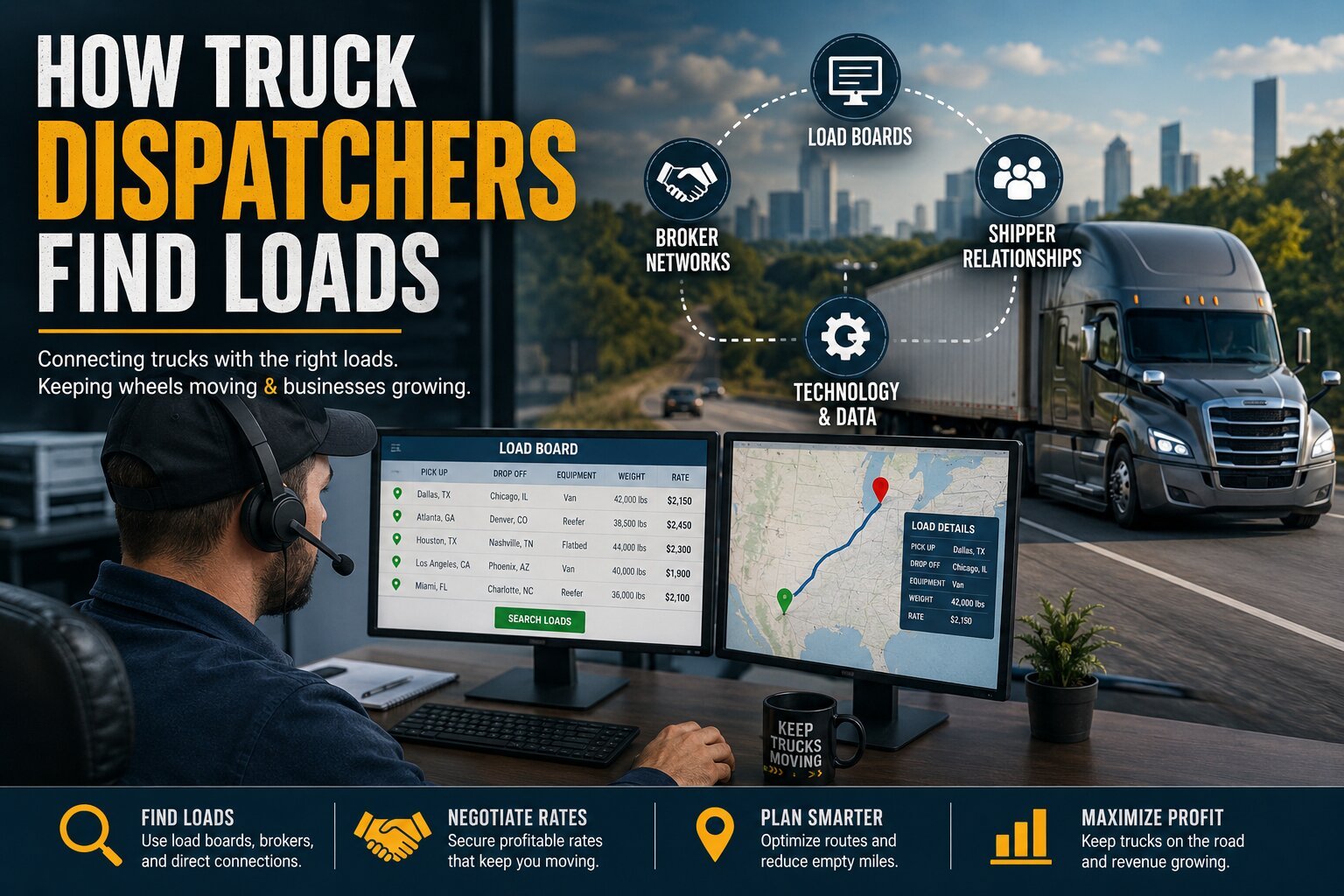
Truck dispatchers find loads through load boards, freight brokers, and direct shipper relationships. They match trucks with shipments based on location, equipment, and availability. In addition, dispatchers negotiate rates to maximize profits and reduce downtime.
Modern dispatchers also use software, ELD data, and freight apps for real-time updates. Furthermore, they analyze routes, manage paperwork, and maintain communication between drivers and clients. Their main goal is simple: keep trucks moving and revenue growing.
How Truck Dispatching Really Works
Truck dispatching works like a matchmaking system for freight transportation. Dispatchers connect drivers with shippers who need goods delivered. At the same time, they manage communication, schedules, and logistics.
Their responsibilities usually include the following tasks:
Keeping Track of Trucks
Dispatchers monitor truck locations, capacities, and driver availability daily. Therefore, they can quickly assign the right truck to the right shipment.
Finding Loads
Dispatchers search for available freight using load boards, broker contacts, and freight platforms. Additionally, they contact existing clients for repeat business opportunities.
Matching Trucks with Loads
After finding a shipment, dispatchers select the best truck for the job. They consider equipment type, distance, timing, and cargo requirements.
Negotiating Rates
Dispatchers negotiate rates between carriers and shippers. As a result, both sides receive fair and profitable agreements.
Managing Logistics
Dispatchers oversee pickups, deliveries, paperwork, and route planning. Moreover, they solve unexpected issues before they become major problems.
Smart Strategies Dispatchers Use to Find Loads
Successful dispatchers rely on several strategies to secure profitable freight consistently. Each method helps trucks stay loaded and productive.
Using Load Boards
Load boards are online marketplaces for freight transportation. They connect shippers, brokers, and carriers in one place. Consequently, dispatchers can quickly search for available shipments.
Most load boards allow filtering by location, equipment type, and destination. Therefore, dispatchers can find suitable loads faster and reduce downtime.
Building Direct Shipper Relationships
Strong shipper relationships create steady freight opportunities. Therefore, experienced dispatchers focus heavily on networking and communication.
Reliable service also helps build trust with clients. Over time, loyal shippers often provide consistent and higher-paying loads.
Working with Freight Brokers
Freight brokers give dispatchers access to a larger pool of shipments. In addition, brokers help carriers find loads in unfamiliar markets.
Strong broker partnerships can reduce empty miles significantly. As a result, trucking companies improve efficiency and increase revenue.
Using Dispatch Software
Modern dispatch software simplifies daily operations. These tools automate load matching, optimize routes, and provide real-time tracking.
Furthermore, dispatch software improves communication between dispatchers and drivers. This leads to faster decisions and smoother deliveries.
Finding Loads Through Freight Brokers
Freight brokers play a major role in the trucking industry. They connect shippers with carriers and help dispatchers secure loads quickly.
By working with brokers, dispatchers gain access to more freight opportunities. Moreover, brokers help reduce deadhead miles and improve scheduling efficiency.
Brokers also assist with paperwork, coordination, and payment processing. Therefore, dispatchers can focus more on operations and customer service.
Strong broker relationships often lead to consistent work opportunities. Consequently, carriers enjoy better stability and predictable revenue.
Load Boards and Their Importance
Load boards have become essential tools for dispatchers. They work as digital marketplaces where freight and trucks are posted daily.
Dispatchers use these platforms to search for loads manually or automatically. In addition, load boards provide shipment details, rates, and pickup locations instantly.
Many dispatchers combine load boards with personal connections. As a result, they secure loads faster and maintain better workflow efficiency.
Popular load boards also offer mobile apps and tracking features. Therefore, dispatchers can manage freight operations from almost anywhere.
How Technology is Changing Load Finding
Technology continues to improve how dispatchers manage freight operations. Today, dispatchers make faster and smarter decisions using advanced tools.
Electronic Logging Devices (ELDs)
ELDs provide real-time information about truck locations and driver hours. Therefore, dispatchers can optimize routes and maintain legal compliance easily.
These devices also improve scheduling accuracy. As a result, deliveries become more efficient and reliable.
Freight Matching Apps
Freight matching apps help dispatchers find loads quickly while traveling. Many apps include messaging, GPS tracking, and live rate updates.
Consequently, dispatchers stay connected with drivers and clients at all times.
Data Analytics
Data analytics helps dispatchers identify trends and improve route planning. By analyzing historical data, they make smarter operational decisions.
Additionally, analytics reduce fuel costs and improve delivery times. Therefore, trucking companies increase overall profitability.
The Human Side of Dispatching
Technology is important, but human skills still matter greatly in dispatching. Experienced dispatchers understand the industry and make informed decisions quickly.
Building Strong Relationships
Successful dispatchers build trust with shippers, brokers, and drivers. Strong relationships improve communication and create long-term business opportunities.
Furthermore, reliable partnerships help secure steady freight during slow periods.
Problem-Solving Skills
Transportation issues happen regularly in trucking operations. Therefore, dispatchers must solve problems quickly and efficiently.
Strong problem-solving skills help avoid delays and customer complaints. As a result, operations continue smoothly even during unexpected situations.
Negotiation Skills
Negotiation is another critical dispatcher skill. Dispatchers must balance fair rates for both carriers and shippers.
Good negotiation improves profitability while maintaining positive relationships. Consequently, both parties benefit from long-term cooperation.
Strengthening Industry Connections
Networking is essential in the trucking industry. Dispatchers, brokers, shippers, and drivers all rely on strong professional relationships.
Industry events, webinars, and social media create valuable networking opportunities. Additionally, these connections help dispatchers find more loads and grow their business.
Freight brokers remain especially valuable industry partners. They assist with load finding, coordination, and paperwork management.
Maintaining strong relationships ensures consistent freight opportunities. Therefore, dispatchers can keep trucks moving and operations profitable.
Final Thoughts
Truck dispatchers play a vital role in the transportation industry. They combine technology, strategy, and communication to keep freight moving efficiently.
From load boards to broker relationships, dispatchers use many tools to secure profitable shipments. In addition, they solve problems, negotiate rates, and manage daily logistics.
Their work keeps trucks loaded, reduces downtime, and supports business growth. Ultimately, skilled dispatchers are essential for successful trucking operations.