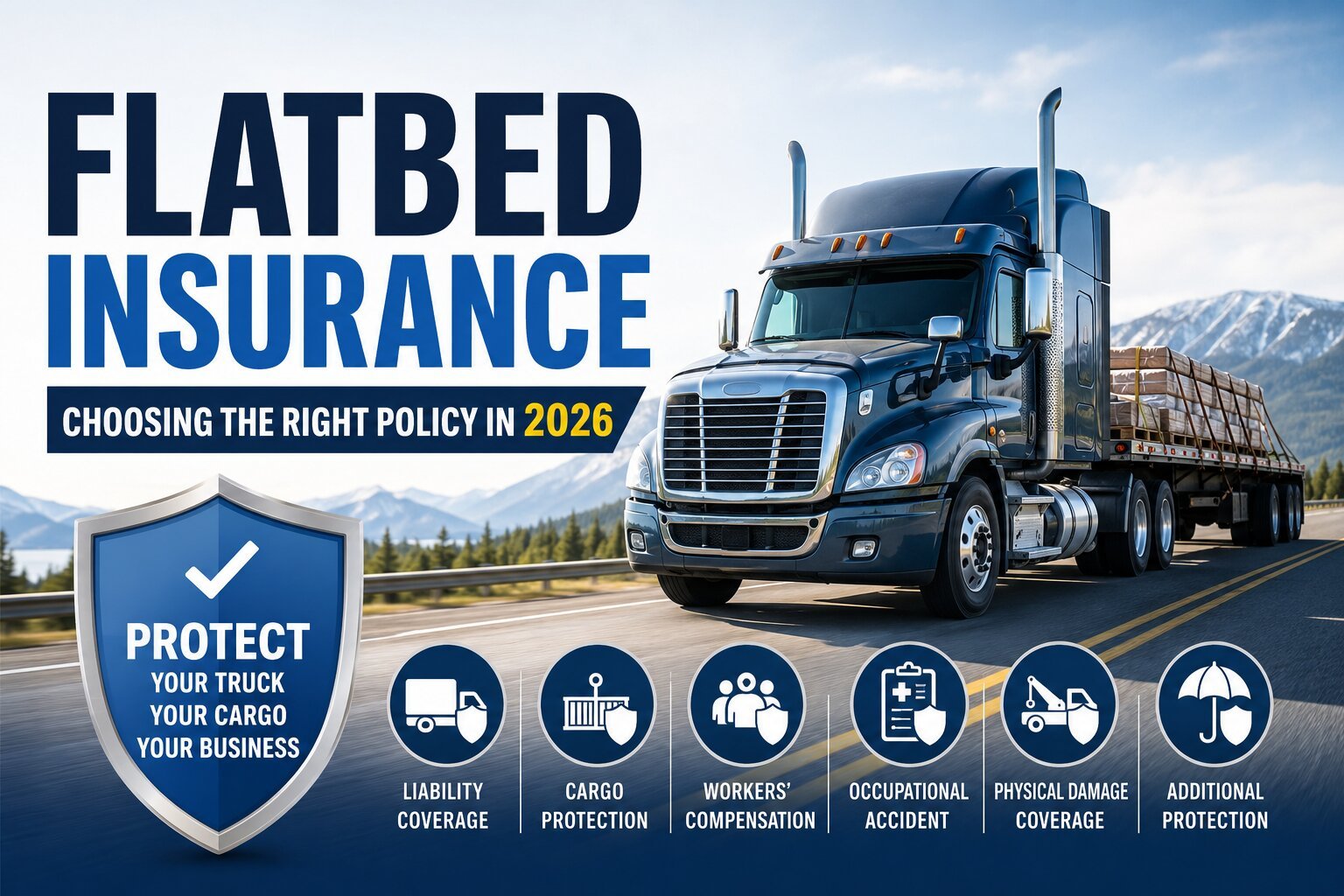
Flatbed insurance 2026 is designed to protect your truck, drivers, cargo, and business from accidents, damages, and other risks. It acts as a financial and legal safety net for your trucking operation.
Quick Answer
Flatbed insurance 2026 protects trucks, trailers, cargo, drivers, and businesses from financial losses caused by accidents, theft, damage, or legal claims. Coverage may include liability, physical damage, cargo insurance, workers’ compensation, occupational accident insurance, and bobtail insurance. Costs typically range from $3,000–$10,000 annually, depending on cargo type, truck value, driving history, coverage limits, and operating radius. Flatbed operators must also meet federal insurance requirements set by regulators. Comparing quotes, increasing deductibles, maintaining clean driving records, and choosing only necessary coverage can help reduce premiums while keeping your business protected.
Seven Key Benefits of Flatbed Insurance
- Property Damage Protection: Covers damage to your truck and trailers.
- Bodily Injury Protection: Provides coverage if anyone is injured in an accident.
- Trailer Damage Coverage: Helps recover costs if your trailer or a third-party trailer is damaged.
- Cargo/Freight Protection: Covers loss or damage to the goods you’re transporting.
- Accident Coverage: Serious accidents causing injury to drivers or third parties are protected.
- Occupational Accident Insurance: Pays for medical expenses and lost wages if a work-related incident occurs.
- Workers’ Compensation: Covers bodily injuries, wage loss, medical costs, and death benefits within policy limits for employees involved in work-related accidents.
Flatbed insurance ensures that your business, employees, and assets are financially protected against the risks of operating on the road.
How Flatbed Insurance Works
Flatbed insurance 2026 is a set of policies designed to protect your truck, cargo, drivers, and anyone affected from accidents, damage, theft, vandalism, fire, natural disasters, and more.
When an incident occurs that’s covered by your policy, the insurance company pays out within the coverage limits to help repair damages, replace lost cargo, or cover medical and legal costs.
Flatbed Insurance Requirements for Business Owners and Owner-Operators
Flatbed businesses must follow federal insurance regulations. The FMCSA sets minimum coverage limits based on truck weight, distance traveled, and cargo type. Heavier trucks and more hazardous cargo usually require higher insurance coverage.
Here’s a summary of typical federal minimum requirements and estimated annual premiums:
General Liability: $1 million coverage; $700–$7,000 per year
Trucking Liability: $750,000 for interstate trucks; $2,500–$4,000 per tractor per year
Non-Trucking Liability: $250,000 coverage; $450–$5,000 per tractor per year
Bobtail Insurance: $1,000,000 coverage; $350–$450 per tractor per year
Physical Damage: Premiums depend on truck value; typically 2–5% of the truck’s actual or stated value
Motor Truck Cargo: $20,000–$100,000 coverage depending on state; $500–$1,000 per year
Workers’ Compensation: Premium depends on cargo; around $2,500 per year
Occupational Accident Insurance: Premium varies by load; $1,600–$2,200 per year
Meeting these requirements ensures your flatbed operation is legally compliant and financially protected against accidents, cargo loss, or other incidents.
Flatbed Insurance Cost
Flatbed insurance 2026 premiums typically range from $3,000 to $10,000 per year, depending on several factors:
Driver records: Clean driving histories help lower premiums.
Type of cargo: Hazardous or high-value loads increase costs.
Value of equipment: The tractor and flatbed trailer’s worth affects your rate.
Operating radius: Longer routes or interstate travel can raise premiums.
Coverage, limits, and deductibles: More coverage or lower deductibles means higher costs.
Credit history: Insurers may consider your credit score.
Payment plan: How you pay your premium can influence the overall cost.
If keeping premiums low is a priority, you can opt for minimum coverage with higher deductibles, but remember that in the event of an accident, you may have to pay out-of-pocket for damages not covered.
Choosing an insurer who works to provide the best coverage at a reasonable rate is crucial, as insurance is often a significant part of your monthly operating costs.
Factors That Affect Flatbed Insurance Costs
The cost of flatbed insurance isn’t just about finding the cheapest policy—it’s about getting coverage that fits your needs. Premiums depend on a combination of factors that insurers consider when calculating rates.
Key factors that affect your insurance cost include:
Ownership status: Whether you own or lease your truck.
Cargo types: Hazardous or high-value loads increase premiums.
Freight weights: Heavier loads can raise insurance costs.
Distance hauled: Longer or interstate routes often cost more.
Truck value: More expensive trucks carry higher premiums.
Type of physical damage coverage: Comprehensive vs. limited coverage affects rates.
Credit history: Drivers’ or owners’ credit scores can impact cost.
Loss history: Previous claims can raise premiums.
CDL and experience: Experienced, licensed drivers may lower risk.
Deductible amount: Higher deductibles usually lower premiums.
Coverage limits: More coverage or higher limits increase the cost.
Understanding these factors helps you plan your budget and find the best balance between cost and protection.
How to Find Affordable Flatbed Insurance
Finding cheap flatbed insurance doesn’t mean cutting corners—it’s about getting the right coverage at a fair price. Premiums can be higher if you haul high-value, heavy, or hazardous cargo.
Here are some tips to help you save:
Compare Quotes: Get quotes from multiple insurance providers to find the best deal.
Ask for Discounts: Many insurers offer discounts for safety programs or clean driving records.
Pay Upfront: Paying your premium in full can sometimes lower costs.
Choose the Right Coverage: Avoid overpaying for unnecessary coverage while ensuring essential protection.
Increase Deductibles: Higher deductibles usually lower premiums.
Shop Regularly: Keep an eye out for better rates or promotions from different insurers.
Clean driver records and experienced CDL drivers also help reduce insurance costs, making it easier to get affordable coverage for your flatbed business.
How Flatbed Insurance Protects Your Business
The type of flatbed insurance you need depends on your operating status—whether you’re a leased driver, owner-operator, or independent owner-operator. Leased drivers may have some insurance requirements covered by the trucking company they work for.
Common Types of Truck Insurance and Who Needs Them
General Liability Insurance: Covers third-party property damage and bodily injury. Required for drivers with authority and motor carriers.
Primary Trucking Liability: Protects against property damage and injuries caused by trucking accidents. Needed for drivers with authority and motor carriers.
Non-Trucking Liability Insurance: Covers third-party damages when the truck is used for personal, non-business purposes. For leased drivers.
Bobtail Insurance: Covers damages to your truck from collisions, theft, vandalism, or natural disasters. For leased drivers.
Physical Damage Coverage: Protects cargo and your truck against damage. Essential for all owner-operators and fleet owners.
Motor Truck Cargo Insurance: Covers freight, commodities, or cargo against loss or damage from fire, collision, or other incidents. Needed by carriers transporting goods.
Workers’ Compensation: Covers employees’ medical expenses and lost wages after a work-related injury or illness. Required for all trucking companies with employees.
Flatbed insurance ensures your trucks, cargo, drivers, and business operations are protected from financial loss due to accidents, damages, or legal claims.
Additional Important Insurance Coverages for Flatbed Owner-Operators and Fleet Owners
To ensure extended protection for your flatbed business, consider the following coverages:
Occupational Accident Insurance (OAIC): Protects employers and employees if an on-the-job injury occurs. Covers lost wages, medical expenses, and death benefits up to the policy limit. You can choose the deductible and disability coverage that fits your needs.
Trailer Interchange Endorsement: Provides physical damage protection for third-party trailers you pull under a trailer interchange agreement. Covers fire, theft, vandalism, collision, or explosions.
Hazmat Truck Insurance: Required for hauling hazardous materials. Liability coverage ranges from $1,000,000 to $5,000,000 per accident, depending on the material class.
Trucking Umbrella Insurance: Covers uninsured exposures and gaps in your primary policies, increasing liability coverage. Always check the fine print, as some policies may exclude certain flatbed risks.
Uninsured & Underinsured Motorist Coverage:
Uninsured Motorist
Protects against accidents caused by drivers who have no liability insurance.
Underinsured Motorist
Covers costs when an at-fault driver’s insurance isn’t enough to pay for medical expenses of injured parties.
These coverages provide an extra layer of financial protection, helping flatbed operators and fleet owners stay secure against unexpected accidents and losses.